
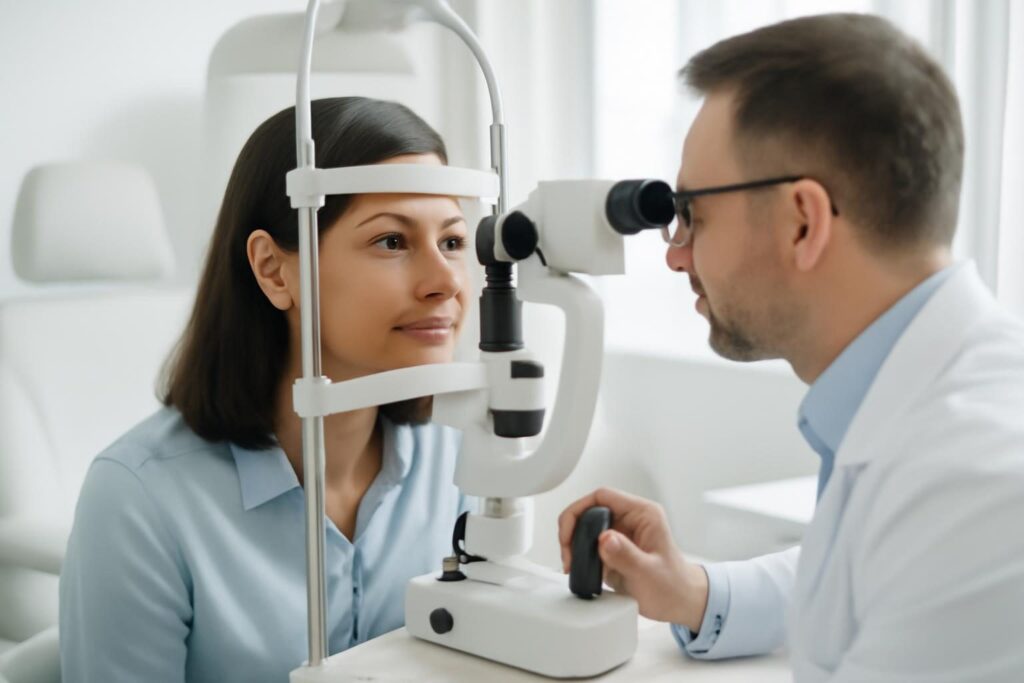
Quick answer. LASIK, SMILE and ICL all correct short-sightedness, long-sightedness and astigmatism, but they suit different eyes. LASIK is the most established laser procedure (a corneal flap plus excimer-laser reshaping) with fast recovery; SMILE is a flapless, small-incision laser technique that may mean less post-op dry eye and good corneal stability; and ICL implants a thin reversible lens inside the eye without removing corneal tissue, making it the usual choice for very high prescriptions or thin corneas. In Singapore, typical 2026 prices run roughly S$3,000-S$5,400 for LASIK, about S$5,300-S$6,000 for SMILE, and around S$6,900-S$11,000 for ICL (both eyes), though figures vary by clinic, surgeon and technology. Which one is right for you is decided only by a thorough pre-operative eye assessment with an ophthalmologist.
If you are tired of glasses or contact lenses, Singapore offers several modern vision-correction options — most commonly LASIK, SMILE and ICL. They achieve similar end goals (clearer vision without glasses) but work in very different ways, carry different trade-offs, and suit different eyes. This guide explains how each procedure works, who tends to be a good candidate, the pros and cons, safety considerations, and typical Singapore price ranges, so you can have a more informed conversation with your eye surgeon.
At a glance
| Feature | LASIK | SMILE | ICL |
|---|---|---|---|
| How it works | Corneal flap + excimer-laser reshaping | Flapless; small-incision lenticule removed by laser | Reversible collamer lens implanted inside the eye |
| Flap / incision | Hinged flap (~20 mm rim) | Small incision (~2-4 mm), no flap | Micro-incision (~2-3 mm), cornea intact |
| Best suited for | Low-moderate Rx, adequate corneal thickness | Myopia & astigmatism; active lifestyles; dry-eye concerns | High myopia, thin/irregular corneas, dry eyes |
| Dry eye risk | Higher (more corneal nerves cut) | Lower (fewer nerves cut) | Generally not procedure-driven (cornea untouched) |
| Reversibility | Not reversible (tissue removed) | Not reversible (tissue removed) | Reversible (lens can be removed/exchanged) |
| Recovery speed | Very fast (often next day) | Fast; sharpest vision may take longer | Fast; intraocular post-op schedule |
| Removes corneal tissue? | Yes | Yes | No |
| Typical SG cost (both eyes, 2026) | ~S$3,000-S$5,400 (private) | ~S$5,300-S$6,000 | ~S$6,900-S$11,000 |
How each procedure works
All three reshape how light focuses on the retina, but the route is different.
LASIK (Laser-Assisted In-Situ Keratomileusis) is the most established laser vision-correction procedure. The surgeon creates a thin hinged flap in the cornea — traditionally with a microkeratome blade, and in modern bladeless / FemtoLASIK with a femtosecond laser — then lifts the flap and uses an excimer laser to reshape the underlying corneal tissue. The flap is laid back into place and seals without stitches. Visual recovery is typically very fast, often within a day or two.
SMILE (Small-Incision Lenticule Extraction), marketed as ReLEx SMILE and the newer SMILE Pro, is flapless. A femtosecond laser shapes a small disc of tissue (a lenticule) inside the cornea, which the surgeon removes through a tiny incision of only about 2–4 mm — far smaller than the roughly 20 mm rim of a LASIK flap. Because no flap is made and fewer corneal nerves are cut, SMILE is associated with a lower risk of post-operative dry eye and good corneal stability. It is most commonly used for myopia and astigmatism.
ICL (Implantable Collamer Lens) is fundamentally different: it is additive rather than subtractive. Instead of removing corneal tissue, the surgeon inserts a soft, biocompatible collamer lens through a 2–3 mm micro-incision and positions it just behind the iris, in front of the eye’s natural lens. The cornea is left intact and the lens can be removed or exchanged later, so the procedure is considered reversible. Modern EVO ICL can correct very high prescriptions.
Who each procedure suits best
Suitability is individual and is confirmed only by a detailed pre-operative assessment, but some general patterns help frame the discussion.
- LASIK suits people with low-to-moderate prescriptions, adequate corneal thickness, and who want the fastest visual recovery. It is the most widely performed and longest-studied option.
- SMILE appeals to people with myopia and astigmatism who are concerned about dry eye, have an active or contact-sport lifestyle (no flap to dislodge), or want a minimally invasive flapless approach.
- ICL is often the recommended choice for people who are not good laser candidates — for example those with very high myopia, thin or irregular corneas, or significant dry eye — because it does not touch corneal tissue.
General requirements across all three usually include being at least 18–21 years old, having a stable prescription for about a year, no active eye disease, and not being pregnant or breastfeeding. Only an ophthalmologist can determine which (if any) procedure is appropriate for you.
Pros and cons at a glance
LASIK — Pros: very fast recovery; long track record; precise and predictable for suitable prescriptions; widely available. Cons: creates a permanent corneal flap (small lifelong risk of flap-related complications, e.g. with trauma); higher chance of temporary dry eye than SMILE; not ideal for thin corneas or very high prescriptions.
SMILE — Pros: flapless and minimally invasive; tends to cause less dry eye; preserves more corneal nerves and biomechanical strength; no flap to dislodge. Cons: primarily for myopia/astigmatism (more limited for long-sightedness); the sharpest vision can take a little longer to settle than LASIK; enhancement is handled differently from LASIK.
ICL — Pros: does not remove corneal tissue; excellent for high myopia and thin corneas; reversible/exchangeable; often high-quality night vision. Cons: it is intraocular surgery (an implant inside the eye), so the risk profile differs; higher cost; requires adequate space inside the eye; small possibility of needing lens repositioning or long-term monitoring.
Recovery, dry eye and safety
Recovery: LASIK usually offers the quickest functional vision, often the next day. SMILE recovery is comparable but the sharpest vision can take a little longer to settle. ICL vision often stabilises quickly too, but as intraocular surgery it involves a specific post-op care and review schedule.
Dry eye: Temporary dry eye is the most common side effect of laser correction. Because SMILE severs fewer corneal nerves than LASIK, studies and clinics report it tends to cause less dry eye, particularly in the first six months. ICL avoids corneal nerve disruption altogether, so dry eye is generally not a procedure-driven concern.
Safety: All three are considered well-established, generally safe procedures when performed on appropriately selected patients by an experienced eye surgeon. Each carries its own risks — flap-related issues (LASIK), under/over-correction or the need for enhancement (all laser methods), and the small risks inherent to intraocular surgery (ICL). The single most important safety step is a thorough pre-operative assessment — including corneal mapping, corneal thickness, pupil size, prescription stability and eye health — which is what ultimately determines candidacy and procedure choice.
Typical costs in Singapore (2026)
Prices depend heavily on the clinic, surgeon, laser platform and your prescription, and packages may or may not bundle pre-op evaluation, medications, follow-ups and enhancements. As a guide for both eyes in 2026:
- LASIK / FemtoLASIK: roughly S$3,000–S$5,400 in private clinics; public institutions (e.g. SNEC, NUH, TTSH) have been cited from around S$2,000–S$3,600.
- SMILE / SMILE Pro: roughly S$5,300–S$6,000.
- ICL: roughly S$6,900–S$11,000, often tiered by prescription strength.
- Surface ablation (TransPRK / Advanced Surface Ablation): a flapless laser alternative, typically around S$3,600–S$4,600.
Consultation and review fees (commonly S$100–S$300 each) may be additional. Always confirm exactly what a quoted package includes. These are typical market ranges, not a quote for any specific clinic.
Related guides
- Best LASIK Clinics in Singapore — our editorial shortlist
- LASIK & laser-eye clinics directory
- LASIK cost in Singapore (2026)
- Cataract surgery in Singapore: cost & process
- Am I suitable for LASIK?
Sources
- Urban Living – Comprehensive Guide on LASIK in Singapore (2026): Costs & Risks
- Clearvision Eye Clinic – Prices: SMILE Pro, TransPRK, ICL, LASIK (Singapore)
- Clearvision Eye Clinic – Implantable Collamer Contact Lens (ICL)
- Singapore National Eye Centre (SNEC) – Implantable Contact Lens (ICL)
- Dr Agarwals – SMILE vs LASIK Eye Surgery: Procedure, Benefits and Costs
Part of our Eye & vision guides · Browse all health topics