
Quick answer. Squint (strabismus) is misalignment of the eyes; lazy eye (amblyopia) is reduced vision in an eye whose visual pathway did not develop properly in childhood. In Singapore the commonest cause of amblyopia is uncorrected refractive error, followed by squint and deprivation (e.g. cataract, droopy eyelid). Early detection and treatment are critical: amblyopia is most treatable before about age 7-8, after which improvement becomes much harder and vision loss can be permanent. Treatment includes glasses, patching (or atropine penalisation) of the stronger eye, and squint surgery when needed. Children are screened through Singapore’s school and HPB programmes, but see an eye doctor early if you notice an eye turn or poor vision.
A squint (strabismus) means the eyes are not aligned — one eye may turn in, out, up or down. A lazy eye (amblyopia) means one (occasionally both) eye has reduced vision because its connection to the brain did not develop normally during early childhood. The two are linked: a constant squint is one of the main causes of amblyopia.
The single most important message for parents is timing. The visual system is still developing in young children, and amblyopia is most successfully treated when caught early — generally before about age 7-8. After this window, vision improvement becomes much harder and the loss can be permanent. This guide explains the signs, treatments and screening available in Singapore.
At a glance
| Condition / cause | What it is | Common treatment |
|---|---|---|
| Refractive amblyopia | Lazy eye from uncorrected/unequal long-sight, short-sight or astigmatism (commonest cause in Singapore) | Full-time glasses, then patching or atropine penalisation if needed |
| Strabismic amblyopia | Lazy eye because the brain suppresses a constantly misaligned (squinting) eye | Glasses, patching, plus squint surgery in selected cases |
| Deprivation amblyopia | Vision blocked early in life (e.g. cataract, droopy eyelid/ptosis) | Treat the cause (e.g. surgery) early, then glasses/patching |
| Squint (strabismus) | Eyes not aligned; can be constant or intermittent, inward or outward | Glasses, treat any amblyopia, squint surgery to align eyes if indicated |
Squint vs lazy eye: what's the difference?
Squint (strabismus) is about alignment — the eyes point in different directions. Amblyopia (lazy eye) is about vision — one eye sees less well because its visual pathway did not develop. They often occur together: when an eye constantly turns, the brain may ignore (suppress) its image to avoid double vision, and that eye can become amblyopic. In Singapore, the most common cause of amblyopia is actually uncorrected refractive error (including a big difference in prescription between the two eyes), followed by squint and deprivation causes such as childhood cataract or a droopy eyelid.
Why early detection is critical
The part of the brain responsible for vision develops mainly in the first years of life. Amblyopia is most treatable when caught early — commonly before around age 7-8, and ideally younger. SNEC patient education notes amblyopia can usually be treated successfully when diagnosed before about age six; beyond this, it becomes less responsive and may become permanent. Delayed treatment is often unsuccessful, which is why prompt assessment of any eye turn or suspected poor vision is so important.
Vision screening in Singapore
Singapore has structured childhood eye screening:
- Newborn and early childhood checks pick up obvious problems such as cataract or a droopy eyelid.
- The Health Promotion Board runs vision screening in schools from the early years, helping detect refractive errors and amblyopia.
- KK Women’s and Children’s Hospital (KKH) runs a dedicated paediatric eye centre, and SNEC’s Paediatric Ophthalmology & Adult Strabismus service manages squint and amblyopia.
Screening is valuable, but parents should not wait if they notice a problem — arrange an eye check directly.
How squint and lazy eye are treated
Treatment is tailored to the cause and usually combines several steps:
- Glasses: correcting refractive error is often the first step and must be worn full-time; sometimes glasses alone improve both vision and alignment.
- Patching: covering the stronger eye for a set number of hours daily forces the weaker eye to work and strengthens its vision. This can take months, and persistence is essential.
- Atropine penalisation: a drop that blurs the stronger eye is an alternative to patching in some children.
- Squint surgery: when eyes remain misaligned, surgery on the eye muscles can realign them; any amblyopia is usually treated first or alongside.
Signs parents should watch for
See an eye doctor or optometrist if your child shows:
- An eye that turns in, out, up or down (constant or frequent).
- Tilting or turning the head to look at things, or closing one eye.
- Sitting very close to the TV, squinting, or poor school vision.
- A white or unusual reflection in the pupil in photos, or a droopy eyelid.
Note: a young baby’s eyes can occasionally drift in the first few months, but a constant turn, or any turn after about 3-4 months, should be checked promptly.
What to expect at the eye clinic
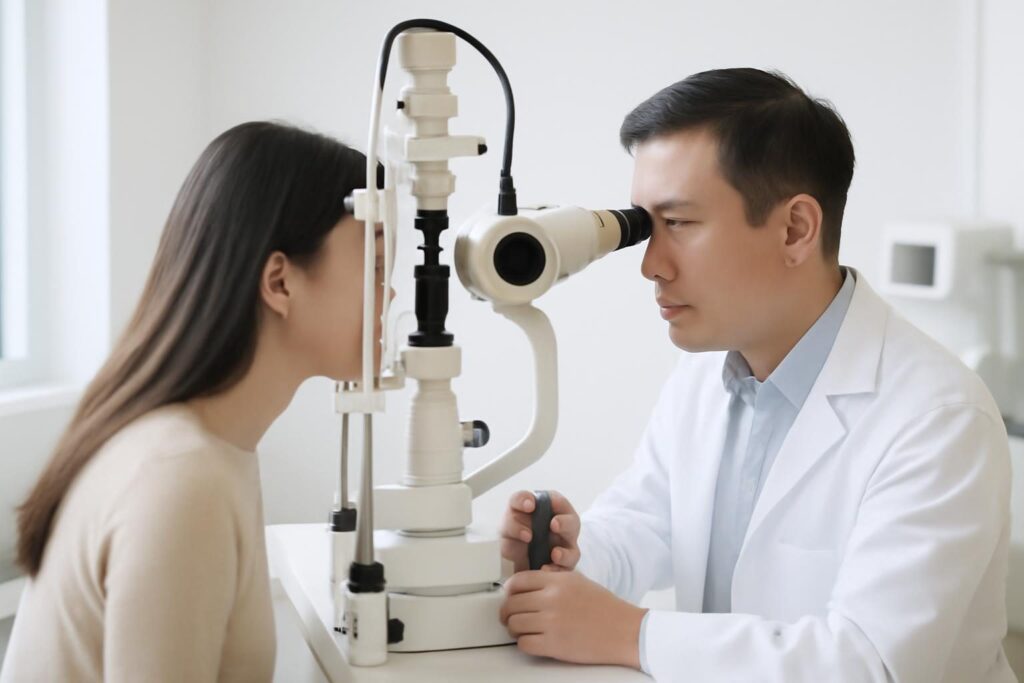
An eye doctor or orthoptist will assess each eye’s vision, check alignment and eye movements, and dilate the pupils to measure the refractive error and examine the back of the eye. This identifies the cause of the squint or amblyopia and guides whether glasses, patching, penalisation or surgery is needed. Because the treatment window matters, follow-up appointments and sticking to the patching/glasses plan are key to a good outcome.
Related guides
- Best Eye Clinics in Singapore — our editorial shortlist
- eye clinics directory
- Myopia control in children
- Pterygium (surfer's eye)
- Macular degeneration (AMD)
Sources
- SingHealth – Amblyopia (Lazy Eye)
- HealthXchange/SNEC – Lazy Eye in Children (Amblyopia)
- SNEC – Paediatric Ophthalmology & Adult Strabismus
- KKH – Eye Centre (paediatric eye care)
- NUH – Paediatric Ophthalmology
Related conditions & guides
Related conditions and guides you may find useful:
- Cataract Surgery in Singapore
- Diabetic Retinopathy in Singapore
- Dry Eye Syndrome in Singapore
- Eye Floaters and Flashes in Singapore
- Glaucoma in Singapore
- LASIK Cost in Singapore
Part of our Eye & vision guides · Browse all health topics