
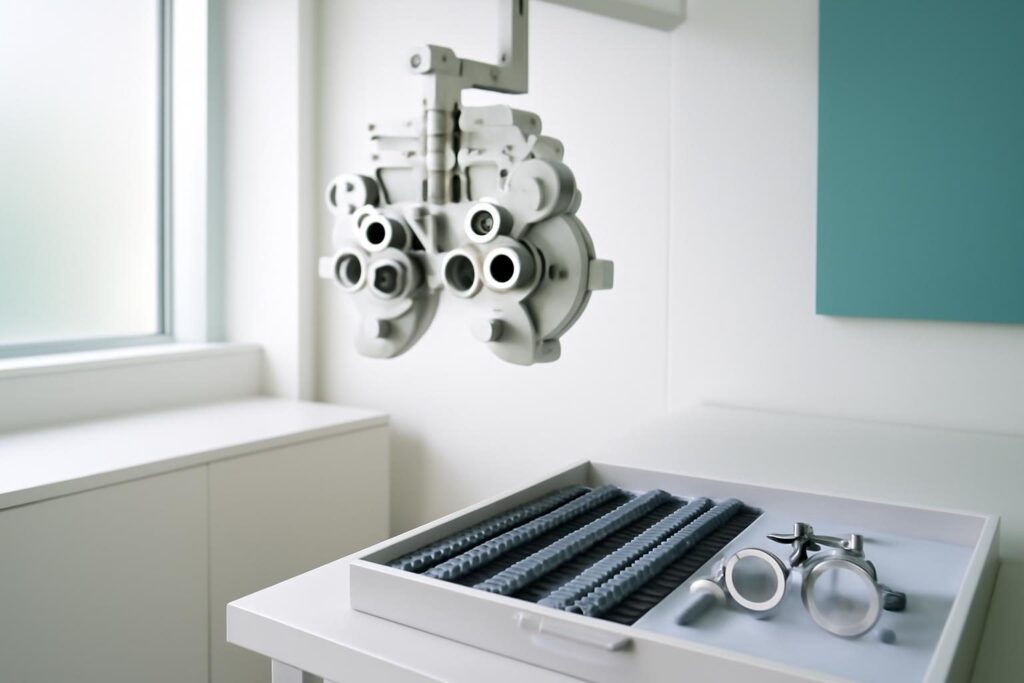
Dr Tony Ho is the founding director of The Eye Care Clinic (established 1993) and Clearvision Eye Clinic & LASIK Centre (established 2001). He trained in ophthalmology in Singapore and the United Kingdom, and was accredited in medical retinal and vitreo-retinal surgery at the Bascom Palmer Eye Institute in the United States.
His clinical work focuses on flapless, bladeless vision correction procedures including SMILE Pro, TransPRK and implantable collamer lens (ICL) implantation, alongside cataract surgery and myopia control.
Clinical focus
General refractive surgery (flapless/bladeless).
Qualifications (as publicly listed)
MBBS, FRCS (Glasgow), FRCOphth (United Kingdom), FAMS.
Where they practise
- Clinic / practice: Clearvision Eye Clinic & LASIK Centre (see our clinic listing) — Nutmeg Road (Orchard)
Getting to the clinic
Dr Tony Ho practises at Clearvision Eye Clinic & LASIK Centre on Nutmeg Road, in the Orchard area. Nutmeg Road runs just off Orchard Road near the Scotts Road junction, so the clinic is within the central Orchard belt.
- By MRT: The nearest station is Orchard (NS22 / TE14). From Orchard MRT it is a short walk through the Orchard area to Nutmeg Road, much of it sheltered.
- By bus: Many services run along Orchard Road and Scotts Road nearby; check your route to the Orchard area.
- By car or taxi: Taxis and ride-hailing can drop off near the clinic, and paid visitor parking is available in the Orchard buildings, though it can be busy at peak times.
If your appointment involves dilating drops, your near vision will be blurred and your eyes light-sensitive for a few hours, so many patients prefer public transport or a lift home rather than driving themselves.
Not sure which lasik & refractive surgeon you need?
Looking for the right lasik & refractive surgeon, or want help comparing your options? Message our care team on WhatsApp — free, with no obligation.
Chat with our care team on WhatsAppNot sure who to see? Find the right specialist →
In a medical emergency, or for severe or sudden symptoms such as breathing difficulty, chest pain, fainting or stroke signs, call 995 immediately.
What flapless, bladeless refractive surgery covers
Dr Ho’s focus is flapless, bladeless vision correction, alongside cataract surgery and myopia control. Refractive surgery aims to reduce dependence on glasses or contact lenses, and flapless, bladeless techniques avoid creating a traditional corneal flap.
- SMILE Pro: a keyhole laser procedure that reshapes the cornea through a small incision without a traditional flap.
- TransPRK: a surface-based laser technique applied at the cornea without a flap, performed without touching the eye to create one.
- Implantable collamer lens (ICL): a lens placed inside the eye, often considered for higher prescriptions or where laser surgery on the cornea is less suitable.
- Cataract surgery: removing a clouded natural lens and replacing it with an intraocular lens.
- Myopia control: measures aimed at slowing the progression of short-sightedness, particularly relevant in younger patients.
Which option suits you depends on your refractive error, corneal thickness and shape, the state of your natural lens and how you use your eyes, and the assessment is about matching the safest, most suitable approach to your individual eyes.
What to expect at a consultation
A first visit usually begins with your symptoms, vision and spectacle history, contact-lens use, general health and any eye conditions. Your vision and refraction are measured, and the front and back of the eye are examined. For refractive planning, detailed measurements of the cornea, its surface shape, the length of the eye and the health of the retina are commonly taken.
Dr Ho will explain the findings, whether SMILE Pro, TransPRK, ICL, cataract surgery, myopia control measures or spectacles best suit your eyes, and the benefits and limits of each, so any decision is well informed.
Preparing for your appointment
- Photo identification and any GP, optometrist or polyclinic referral letter.
- Your current glasses and contact-lens details, including type and power.
- Previous eye records, scans or operation notes from earlier eye care.
- A list of current medicines, supplements and eye drops.
- A written list of symptoms and questions; for children seen for myopia control, a note of how their vision has changed over time is helpful.
If you wear soft contact lenses, you may be asked to leave them out for a period before corneal measurements, as they can temporarily alter corneal shape. Bring sunglasses for light sensitivity after dilating drops, and consider arranging transport home.
After your consultation and follow-up
You should leave understanding your diagnosis and the options. If a refractive or cataract procedure is recommended, the clinic will explain the steps, any preparation and the expected recovery, which usually includes eye drops and review visits to monitor healing and vision. Surface-based procedures such as TransPRK may have a different recovery pattern, which will be explained. Myopia control is usually managed with regular review to track progression. You are free to take time and to seek a second opinion before proceeding.
Seek urgent attention if, after any eye procedure, you notice sudden vision loss, increasing pain, marked redness, or new flashing lights, floaters or a shadow across your vision, as these need prompt assessment.
Booking, referrals and fees
At a private clinic an appointment can usually be arranged without a referral, though a referral letter and previous records help with continuity and may be relevant for subsidies in the public system. For eligible procedures such as cataract surgery, MediSave, MediShield Life and Integrated Shield Plans may apply within set limits, while routine consultations and elective refractive surgery are generally paid out of pocket. Confirm current fees and insurance coverage directly with the clinic.
Common questions
What does flapless or bladeless mean?
These techniques correct vision without creating a traditional corneal flap. SMILE Pro works through a small incision, and TransPRK works at the corneal surface. The choice depends on your eyes.
What is myopia control?
It refers to measures aimed at slowing the progression of short-sightedness, particularly in children and younger patients, and usually involves regular review.
When is ICL considered?
An implantable collamer lens may be considered for higher prescriptions or where laser surgery is less suitable, following a detailed assessment.
Do I need a referral?
No referral is strictly required at a private clinic, but any letter and earlier records help the consultation.
Related guides
See also: our editorial directory of LASIK & refractive surgeons in Singapore and our shortlist of LASIK clinics.
This is an independent, factual profile compiled from the public sources listed above — not a paid listing, advertisement or endorsement. Details can change; always verify a doctor’s current registration on the Singapore Medical Council public register and confirm specifics directly with the clinic. This page is general information, not medical advice or a recommendation of any individual practitioner. See our editorial policy.
Don’t agree with this listing? If this is your profile and you’d like the details corrected, updated or removed — or you’d like to be featured — please reach out to us or use our contact form. We’ll sort it out quickly.