
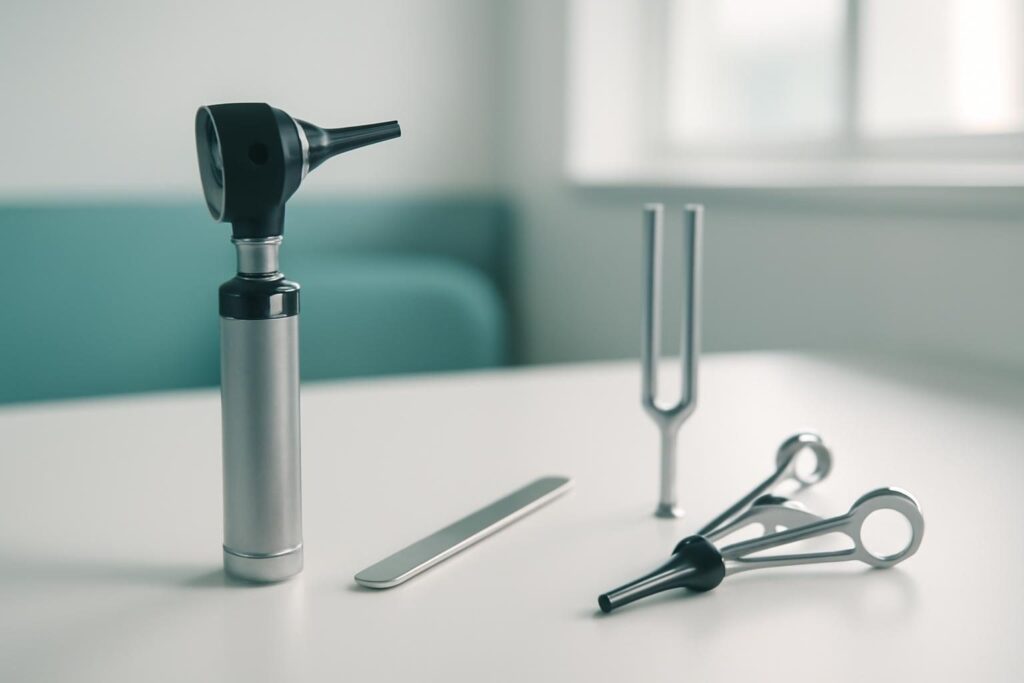
Adj Assoc Prof Dr Low Wong Kein Christopher is an ENT specialist subspecialising in otology and neuro-otology, treating ear disorders such as hearing loss, vertigo, tinnitus and ear tumours. He previously served as Head of the ENT Department and Director of the Centre for Hearing and Ear Implants at Singapore General Hospital. He now practises at the Novena ENT – Head & Neck Surgery Specialist Centre at Mount Elizabeth Novena.
Clinical focus
Otology & neuro-otology (hearing & ear).
Qualifications (as publicly listed)
MBBS (Singapore), PhD (Singapore), FRCS (Glasgow), FRCS (Edinburgh), DLO RCS (England), FAMS (ORL).
Where they practise
- Clinic / practice: Novena ENT – Head & Neck Surgery Specialist Centre — Novena
- Hospital / training affiliation(s): Mount Elizabeth Novena; former Head of ENT and Director of the Centre for Hearing and Ear Implants, Singapore General Hospital
Getting to the clinic
Adj Assoc Prof Dr Low Wong Kein Christopher practises at the Novena ENT – Head & Neck Surgery Specialist Centre at Mount Elizabeth Novena on Irrawaddy Road, within the Novena medical district. The nearest station is Novena MRT (NS20) on the North-South line, a few minutes’ ride from the city and Orchard. From the station, the medical cluster is a short, largely sheltered walk through the surrounding developments.
Not sure which ear & hearing (otology) specialist you need?
Looking for the right ear & hearing (otology) specialist, or want help comparing your options? Message our care team on WhatsApp — free, with no obligation.
Chat with our care team on WhatsAppNot sure who to see? Find the right specialist →
In a medical emergency, or for severe or sudden symptoms such as breathing difficulty, chest pain, fainting or stroke signs, call 995 immediately.
Buses serve Thomson Road and Irrawaddy Road close by. If you arrive by car or taxi, Mount Elizabeth Novena has a paid visitor carpark, with taxi and ride-hailing drop-off at the hospital entrance. As the Novena area has several connected medical buildings, check the clinic suite and level on your appointment confirmation, and allow time to park during peak clinic periods.
What otology and neuro-otology cover
Otology is the branch of ENT focused on the ear, while neuro-otology deals with the balance and hearing nerves and their connections, and Dr Low’s stated focus spans both. Conditions managed in this field include hearing loss, tinnitus (ringing or noise in the ears), vertigo and imbalance, ear infections, and tumours affecting the ear and the nerves nearby. Many of these conditions affect not just hearing but balance, communication and daily confidence.
Care ranges from medical treatment of ear infections and inflammation to surgery for the eardrum and middle ear, and the assessment of dizziness arising from the inner ear. Hearing rehabilitation may involve hearing aids or, in suitable cases, implantable devices such as cochlear implants for severe hearing loss. Tinnitus and vertigo often need careful evaluation to identify the cause before targeted treatment, since they can stem from a range of inner-ear and neurological conditions. Because hearing and balance are so important to everyday life, care looks beyond the test results to how the problem affects communication, work, driving and confidence, and may involve hearing devices, balance rehabilitation or counselling alongside any medical or surgical treatment.
What to expect at a consultation
A first visit usually begins with a history of your ear symptoms, their onset and pattern, any dizziness, noise exposure, medicines and previous ear problems. The specialist will examine the ears, often using a microscope, and may look at the eardrum and ear canal in detail.
Investigations frequently include a hearing test (audiogram) and, where balance is affected, tests of inner-ear and balance function. Imaging such as CT or MRI may be arranged to look at the structures of the ear and the nearby nerves. The specialist will explain the findings and discuss options, which may include medication, hearing devices, balance therapy or surgery depending on the diagnosis.
Preparing for your appointment
- Photo identification and any GP or polyclinic referral letter.
- Previous hearing test results, ear scan reports and earlier ENT records.
- Details of any current hearing aids and how well they work for you.
- A list of current medicines, including any that may affect hearing or balance.
- A written note of symptoms such as hearing loss, tinnitus, dizziness or discharge, and when they occur.
- Any history of noise exposure or ear surgery that may be relevant.
- If dizziness is the main concern, a note of its triggers and how long episodes last.
- Questions you would like to ask about treatment or hearing devices.
After your consultation and follow-up
You may leave with a treatment plan, a request for hearing or balance tests, or arrangements for imaging, with a review to discuss results. Ear and balance conditions are often managed over several visits, particularly where hearing rehabilitation or balance therapy is involved. If surgery or an implantable device is recommended, the clinic will explain the procedure, recovery and follow-up.
Continuity is helpful for ongoing tinnitus, hearing loss and balance problems. You may seek a second opinion at any time. Seek urgent attention for sudden hearing loss, severe spinning vertigo with vomiting, sudden facial weakness, or severe ear pain with fever, as some of these need prompt assessment to give the best chance of recovery.
Booking, referrals and fees
As a private clinic, you can usually book without a referral, though a GP or polyclinic referral may help with subsidies if you are later seen at a public clinic. MediSave, MediShield Life and Integrated Shield Plans may apply to eligible surgical procedures within set limits, while consultations and hearing devices are generally out of pocket. Costs vary with the tests and treatment needed, so confirm fees directly with the clinic.
Common questions
What causes tinnitus?
Tinnitus has many causes, including hearing loss, noise exposure and inner-ear conditions; assessment aims to identify the cause and guide treatment.
Is sudden hearing loss an emergency?
Sudden hearing loss in one ear should be assessed promptly, as early treatment can improve the chance of recovery.
How is dizziness from the ear assessed?
Through a history, examination and tests of hearing and balance, sometimes with imaging, to distinguish inner-ear causes from other conditions.
When are hearing implants considered?
Implantable devices such as cochlear implants may be considered for severe hearing loss that hearing aids cannot adequately help, after careful assessment of the ear and the likely benefit.
Related guides
See also: our editorial directory of ENT specialists in Singapore and our shortlist of ENT clinics.
This is an independent, factual profile compiled from the public sources listed above — not a paid listing, advertisement or endorsement. Details can change; always verify a doctor’s current registration on the Singapore Medical Council public register and confirm specifics directly with the clinic. This page is general information, not medical advice or a recommendation of any individual practitioner. See our editorial policy.
Don’t agree with this listing? If this is your profile and you’d like the details corrected, updated or removed — or you’d like to be featured — please reach out to us or use our contact form. We’ll sort it out quickly.