
Dealing with a stubborn rash, acne or a changing mole?
Message our care team on WhatsApp. Tell us what’s going on and we’ll help you find the right best dermatologist — free, with no obligation.
Chat with our care team on WhatsAppNot sure who to see? Find the right specialist →
In a medical emergency, or for severe or sudden symptoms such as breathing difficulty, chest pain, fainting or stroke signs, call 995 immediately.
At a glance
- Contact dermatitis is an itchy, red rash caused by something touching the skin.
- There are two main types: irritant (direct damage from harsh substances) and allergic (a delayed immune reaction to a specific allergen).
- Common triggers include soaps and detergents, cleaning products, metals such as nickel, fragrances, cosmetics, rubber and some plants.
- Identifying and avoiding the cause is the central part of treatment; moisturisers and topical anti-inflammatory creams settle flares.
- It is common on the hands and is often linked to work, particularly jobs involving wet work or chemicals.
Symptoms
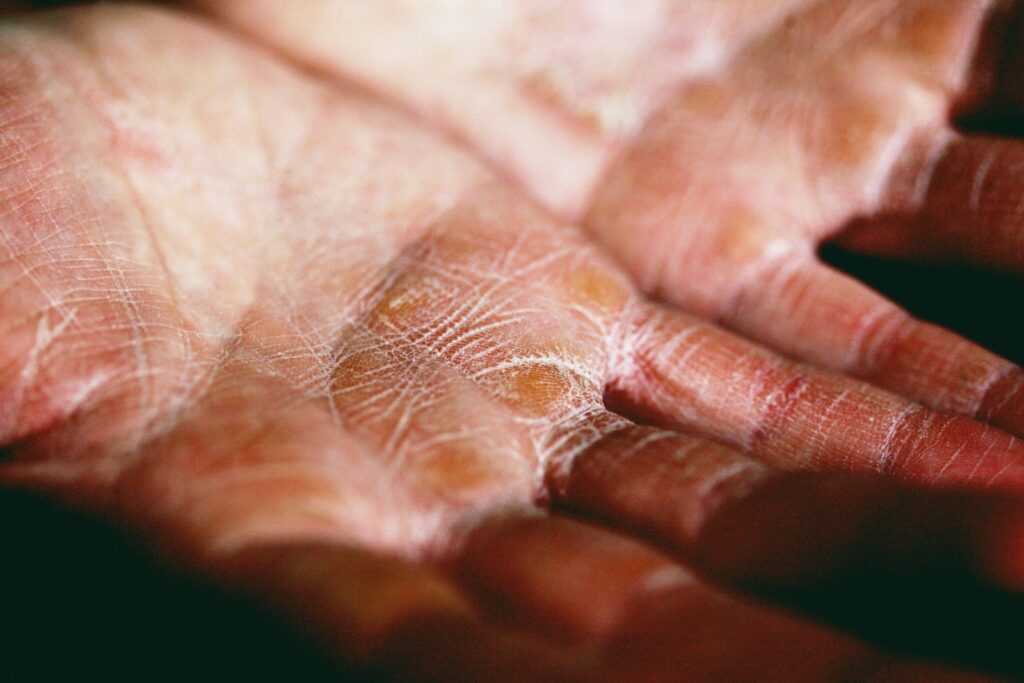
The rash appears where the skin has met the trigger and is usually red, itchy and inflamed. In an acute flare the skin may look swollen, weepy or blistered, and in more severe cases small fluid-filled blisters can form and burst. Burning or stinging is common with the irritant type, while intense itch is typical of the allergic type. Over time, or with repeated exposure (chronic contact dermatitis), the skin tends to become dry, scaly, thickened and cracked, and painful fissures can develop over the knuckles and fingertips.
The location often gives a clue to the cause. Hands and wrists are affected by soaps, gloves and cleaning products; the face and eyelids by cosmetics, nail products or airborne substances; the neck and ears by fragrances or jewellery; and areas under clothing fastenings by nickel in buckles, studs and zips. The eyelids are particularly thin and sensitive, so they can react even when the hands look normal.
Types and causes
Irritant contact dermatitis is the commoner type and results from direct physical or chemical damage to the skin’s protective barrier. It does not involve the immune system in the same way as an allergy, and can affect anyone if the exposure is strong or repeated enough. Frequent culprits include soaps and detergents, cleaning fluids and solvents, disinfectants, acids and alkalis, dust, and simple repeated wetting and drying of the hands. Healthcare, cleaning, catering, hairdressing and construction workers are commonly affected.
Allergic contact dermatitis is a delayed immune reaction that develops in people who have become sensitised to a specific substance. Once sensitised, even a small amount of the allergen can trigger a rash, typically a day or two after contact. Well-recognised allergens include nickel (jewellery, watches, belt buckles, spectacle frames), fragrances and cosmetics, preservatives in toiletries, rubber chemicals in gloves and elastic, hair dye, and some plants. Many cases of hand dermatitis, especially at work, involve a mix of both irritant and allergic factors.
Who is at risk
Anyone can develop contact dermatitis, but some people are more prone to it. Risk is higher in those whose work or daily routine involves wet work or contact with chemicals — for example nurses and other healthcare staff, cleaners, hairdressers, mechanics, cooks and food handlers, florists and construction workers. Frequent hand-washing and glove use, which increased for many people in recent years, can also strip the skin barrier and provoke irritant dermatitis. People with a personal or family history of eczema, asthma or hay fever have a more sensitive skin barrier and tend to react more easily. Repeated or long-standing exposure to a trigger raises the chance of becoming sensitised over time.
How it is diagnosed
Diagnosis usually starts with a careful history and examination. A doctor will ask what the rash looks like, where it appears, how it behaves through the week (for example whether it improves on days off work or on holiday), and what substances the skin is exposed to at home, at work and in hobbies. The pattern and site of the rash often point to the likely cause.
Where an allergic cause is suspected and the trigger is not obvious, a dermatologist may arrange patch testing. Small amounts of a standard series of common allergens are applied to the skin of the back under adhesive patches, usually left in place for about two days, then removed and read on one or more later visits to see which, if any, provoke a reaction. This helps identify specific allergens to avoid. Patch testing is different from the skin-prick allergy tests used for hay fever or food allergy. In Singapore, this is available through dermatology services, including specialist centres such as the National Skin Centre, on referral.
Complications
Persistent scratching can break the skin and allow a bacterial infection to set in; warning signs include increasing pain, swelling, warmth, yellow crusting, pus or spreading redness. Long-standing disease can lead to chronic hand dermatitis, with dry, cracked and fissured skin that is slow to heal and prone to repeated flares. Because the hands and face are so visible and so much used, ongoing contact dermatitis can affect work, sleep and quality of life — some people find it difficult to continue in jobs that keep exposing them to the trigger. Poor sleep from itch and the frustration of a recurring rash can also take a toll on mood.
How it is treated
The single most important step is to identify and avoid the trigger. For irritant dermatitis this means reducing wet work and chemical contact; for allergic dermatitis it means avoiding the specific allergen once patch testing has identified it. Because the substance is often encountered at work, changes to gloves, products or routines can make a real difference.
Emollients (moisturisers) are the mainstay of care, used generously and often to repair and protect the skin barrier — a bland, fragrance-free product is best. During a flare, a topical anti-inflammatory treatment, most commonly a topical steroid of a strength matched to the site and severity, is used for a short period to settle inflammation. Antihistamines are sometimes used to ease itch, particularly at night. Severe or widespread cases may need assessment for stronger treatment under specialist care. If the skin becomes infected, a doctor may treat the infection as well. Protecting the skin — wearing suitable gloves for wet or chemical work, applying moisturiser regularly and using gentle products — is part of treatment, not just prevention.
Living with it and prevention
Once you know your triggers, prevention becomes largely about routine. Read labels and choose fragrance-free, gentle skincare and cleaning products. Wash hands with lukewarm water and a mild cleanser rather than harsh soap, dry them properly, and moisturise straight afterwards. For wet or dirty tasks, wear protective gloves — cotton liners under waterproof gloves can reduce sweating and irritation — and remove them as soon as the task is done. Barrier creams can add some protection for exposed skin, but they do not replace gloves or moisturisers. If nickel is the problem, choose nickel-free jewellery and fasteners.
At work, simple workplace measures help: substituting gentler products where possible, providing gloves and moisturisers, and taking care with hand hygiene routines. If a rash keeps returning despite these steps, occupational advice may be worthwhile. Keeping the skin barrier in good condition between flares — with regular moisturising — makes future flares less likely and less severe.
When to see a doctor
See a GP or polyclinic doctor if a rash is severe, spreading or widespread, is not settling with simple skincare, or keeps coming back. Seek prompt care if there are signs of infection — increasing pain, swelling, warmth, pus, yellow crusting or fever. It is also worth seeing a doctor when the rash affects the face or eyelids, when you cannot identify the cause, or when the problem seems related to your work, so that patch testing and effective treatment can be arranged, with referral to a dermatologist where needed.
Common questions
What is the difference between irritant and allergic contact dermatitis?
Irritant type is direct damage to the skin from harsh substances and can affect anyone with enough exposure; allergic type is a delayed immune reaction to a specific allergen in people who have become sensitised to it.
What is patch testing?
A test in which small amounts of common allergens are applied to the skin of the back and read over the following days to identify what you are allergic to, so you know what to avoid.
How do I stop it coming back?
Identify and avoid the trigger, protect the skin (for example with gloves and barrier creams for wet or chemical work), and use gentle, fragrance-free products with regular moisturising.
Is contact dermatitis contagious?
No. It is a reaction of your own skin to something it has touched and cannot be passed to other people.
Will the allergy ever go away?
An irritant reaction usually settles once the skin recovers and the exposure stops. A true contact allergy tends to be long-lasting, so ongoing avoidance of that allergen is the key to staying clear.
Related guides
Sources
- Dermatological Society of Singapore — contact dermatitis.
- National Skin Centre — contact dermatitis and patch testing.
- HealthHub (Singapore) — skin conditions and skin care.
- UK NHS — contact dermatitis.
- American Academy of Dermatology — contact dermatitis.
This article is for general information only and does not replace a consultation with a qualified doctor. Please seek personalised medical advice for your situation.