
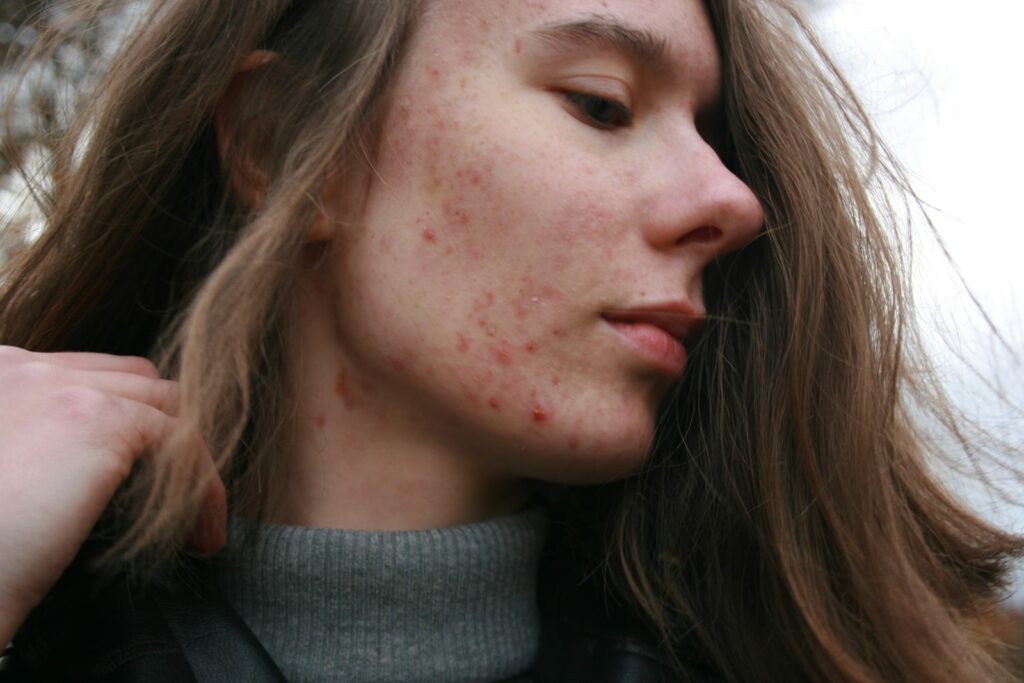
Dealing with a stubborn rash, acne or a changing mole?
Message our care team on WhatsApp. Tell us what’s going on and we’ll help you find the right best dermatologist — free, with no obligation.
Chat with our care team on WhatsAppNot sure who to see? Find the right specialist →
In a medical emergency, or for severe or sudden symptoms such as breathing difficulty, chest pain, fainting or stroke signs, call 995 immediately.
At a glance
- Seborrhoeic dermatitis is a common, chronic condition causing red, flaky, sometimes itchy skin.
- It affects oily areas — the scalp (dandruff), sides of the nose, eyebrows, ears and chest.
- It flares and settles over time and is linked to a common yeast on the skin.
- It is not caused by poor hygiene and is not contagious.
- It is manageable with medicated products, though it tends to recur, so ongoing care matters.
Symptoms
Seborrhoeic dermatitis tends to appear where the skin has the most oil (sebaceous) glands. The most familiar form is dandruff on the scalp — white or yellowish flakes that shed onto the hair and shoulders, often with mild itching, an oily feel and patches of redness underneath.
On the face it produces redness and fine, greasy scaling in the creases beside the nose (the nasolabial folds), across the eyebrows and along the hairline. It can also affect the eyelids and lash line (a form of blepharitis), the skin behind and inside the ears, the beard area in men, and the central chest and upper back. The scale is typically greasy and yellowish rather than dry and silvery.
In babies the condition appears as cradle cap — thick, yellow, greasy scales on the scalp, sometimes spreading to the face, ears or nappy area. It is usually harmless and clears on its own over weeks to months. In adults the condition tends to come and go, often worsening with stress, tiredness, illness or changes in weather.
What causes it
The exact cause is not fully understood, but it is closely linked to an overgrowth of a normal skin yeast called Malassezia and to the skin’s inflammatory reaction to it. Because this yeast feeds on skin oils, the condition tends to settle in oily areas and in people with naturally oily skin. Individual susceptibility — how a person’s immune system and skin respond — plays a large part, which is why some people are affected and others are not.
It is important to know what seborrhoeic dermatitis is not. It is not caused by poor hygiene or by being “dirty”, it is not an allergy, and it cannot be caught from or passed to another person. Common triggers that can set off or worsen a flare include emotional or physical stress, tiredness, cold or dry weather, certain illnesses, hormonal changes, and using harsh or drying skincare on the affected areas.
Who is at risk
Seborrhoeic dermatitis is very common and can affect anyone, but some groups are more prone to it:
- Infants in the first few months of life (cradle cap), and again adults from young adulthood onwards, with a further peak in older age.
- People with naturally oily skin or a tendency to dandruff.
- Men more often than women.
- People with certain neurological conditions (such as Parkinson’s disease) or those recovering from a stroke.
- People whose immune system is weakened by illness or medical treatment.
- Those living or working in conditions that stress the skin. Singapore’s warm, humid climate, air-conditioning and sweat can all influence how oily areas behave and how the condition flares.
How it is diagnosed
Seborrhoeic dermatitis is usually diagnosed clinically — a doctor recognises it from its typical appearance and the pattern of where it occurs (scalp, sides of the nose, brows, ears and chest). No blood test or biopsy is normally needed.
Part of the assessment is telling it apart from conditions that can look similar. Psoriasis tends to cause thicker, well-defined plaques with dry, silvery scale, often on the elbows, knees and scalp edges. Eczema (atopic dermatitis) is usually itchier and favours the skin creases. Rosacea, fungal infections and simple contact reactions can also resemble it. A doctor may occasionally take a skin scraping or, rarely, a biopsy if the diagnosis is unclear or the rash does not respond to usual treatment. If the picture is uncertain or severe, a GP or polyclinic doctor may refer you to a dermatologist.
Complications and course
Seborrhoeic dermatitis is a long-term, relapsing condition: it typically flares and settles over months and years rather than clearing once and for all. Most people manage it well, but a few problems can arise. Scratching or a severe flare can allow a secondary bacterial or fungal infection to develop, with increased redness, crusting, weeping or discomfort. Long-standing scalp involvement occasionally leads to temporary thinning of the hair in the affected area, which usually recovers once inflammation is controlled.
Because it affects visible areas such as the face and scalp, the condition can also have an emotional impact — self-consciousness, frustration and lower confidence, especially during flares. This is a normal reaction, and effective treatment usually improves both the skin and how a person feels about it.
How it is treated
Treatment aims to control the condition rather than cure it, reducing scale, redness and itch and keeping flares to a minimum. The approach depends on which areas are involved.
For the scalp, regular use of medicated anti-dandruff shampoos is the mainstay. These contain active ingredients such as antifungal agents (for example ketoconazole), zinc pyrithione, selenium sulphide, coal tar or salicylic acid to lift scale. They work best when left on the scalp for a few minutes before rinsing, and used regularly rather than only during a bad patch.
For the face and body, doctors often prescribe antifungal creams to reduce the yeast, sometimes alongside a short course of a mild anti-inflammatory (such as a low-strength topical steroid or a non-steroid anti-inflammatory cream) to calm redness during a flare. Anti-inflammatory creams are used for limited periods under guidance, particularly on the delicate skin of the face and eyelids. For cradle cap in babies, gentle measures such as softening the scale with a bland emollient and washing with a mild shampoo are usually enough; harsh picking should be avoided.
Because the condition recurs, maintenance treatment — for example using a medicated shampoo once or twice a week even when the skin is clear — helps prevent flares from returning. Your doctor or pharmacist can help you choose products and a routine that suits your skin.
Living with it and self-care
Alongside medical treatment, simple day-to-day habits help keep seborrhoeic dermatitis under control:
- Wash affected areas regularly and gently. Cleansing removes excess oil and scale; avoid vigorous scrubbing, which can worsen irritation.
- Keep to a maintenance routine. Continue medicated shampoo or cream on a reduced schedule even when the skin looks clear, as advised.
- Use gentle, non-oily skincare. Fragrance-free, non-greasy moisturisers and cleansers are usually kinder to affected skin; harsh soaps and alcohol-based products can trigger flares.
- Manage known triggers. Getting enough rest, managing stress and looking after general health can reduce how often flares occur.
- Care for the face and eyelids carefully. Warm compresses and gentle cleansing of the lid margins can help when the eyelids are involved.
- Be patient and consistent. Improvement usually comes with steady, regular care rather than one-off intensive treatment.
When to see a doctor
See a doctor — a GP, polyclinic doctor or dermatologist — if flaking and redness persist despite over-the-counter shampoos, if the face, eyelids or ears are affected, if the itch or discomfort is troubling, or if the skin becomes very inflamed, weepy or looks infected. Sudden, widespread or unusually severe rashes, or a rash in a baby that spreads or does not improve, are also worth having checked so that stronger or targeted treatment can be arranged. You do not need an emergency service for seborrhoeic dermatitis itself.
Common questions
Is seborrhoeic dermatitis the same as dandruff?
Dandruff is the mild scalp form of seborrhoeic dermatitis; the same condition can also affect the face, ears and chest, sometimes with more redness and scaling.
Can it be cured?
It cannot be cured but is well controlled with medicated products, and regular maintenance use helps prevent flares from returning.
Is it caused by poor hygiene?
No. It relates to a normal skin yeast and individual susceptibility, not to cleanliness, and it is not contagious.
Will washing my hair more often make dandruff worse?
Not usually. Regular, gentle washing helps remove excess oil and scale. The key is using a suitable medicated shampoo and avoiding harsh scrubbing.
Does cradle cap in my baby need treatment?
Cradle cap is common and harmless and usually clears on its own with gentle care. See a doctor if it spreads, looks infected or does not improve.
Related guides
Sources
- Dermatological Society of Singapore — seborrhoeic dermatitis.
- National Skin Centre — dandruff and seborrhoeic dermatitis.
- American Academy of Dermatology — seborrheic dermatitis.
- UK NHS — seborrhoeic dermatitis and dandruff.
- HealthHub (Singapore) — skin conditions and general skin care.
This article is for general information only and does not replace a consultation with a qualified doctor. Please seek personalised medical advice for your situation.