
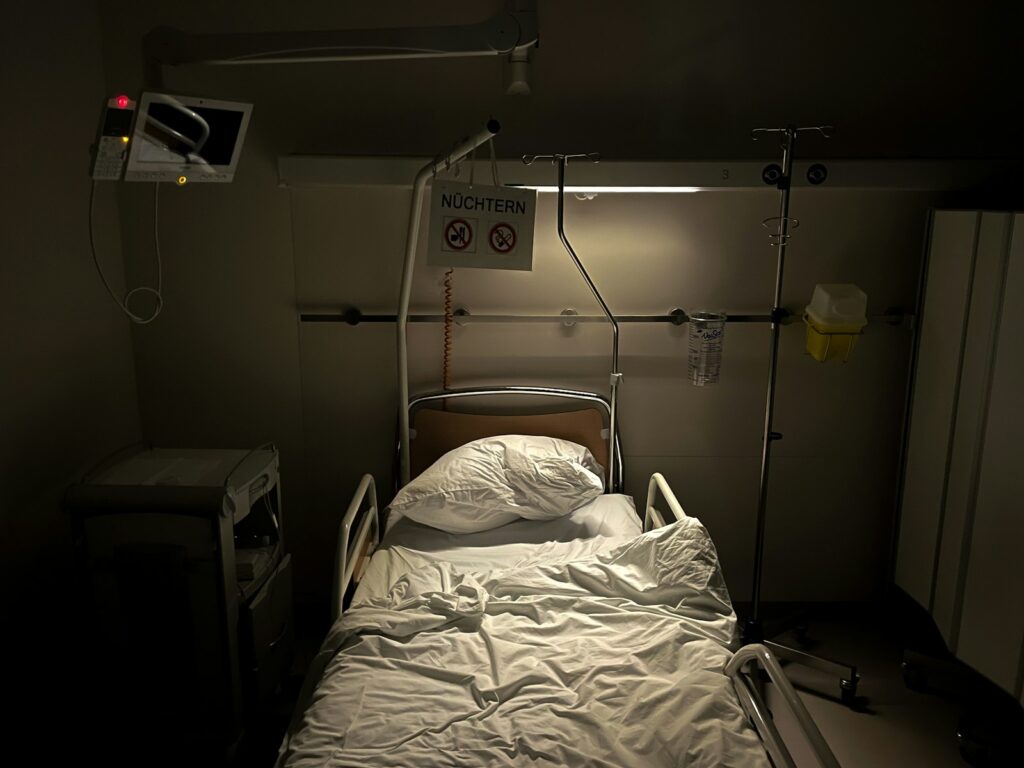
Sedation uses medicine to make you feel relaxed, calm and drowsy during a procedure while, in most cases, you keep breathing on your own. It sits on a spectrum from light sedation, where you are awake but relaxed, to deep sedation, where you are very drowsy and may sleep through the procedure. It is commonly used for tests and procedures such as endoscopy or minor operations, often alongside local anaesthetic. This guide explains what to expect and the recovery rules, which are the same 24-hour precautions as a general anaesthetic.
Not sure which general surgeon you need?
Message our care team on WhatsApp. Tell us what’s going on and we’ll help you find the right general surgeon — free, with no obligation.
Chat with our care team on WhatsAppNot sure who to see? Find the right specialist →
In a medical emergency, or for severe or sudden symptoms such as breathing difficulty, chest pain, fainting or stroke signs, call 995 immediately.
Sedation is generally very safe and you are monitored throughout, but it still affects your judgment and coordination afterwards. For about 24 hours after sedation, do not drive, operate machinery, drink alcohol, or make important decisions, and have a responsible adult take you home and ideally stay with you overnight. Tell the team about your medicines, allergies and health conditions beforehand.
What sedation is
Sedation, sometimes called conscious sedation or procedural sedation, uses medicine given usually through a drip in a vein to make you feel relaxed and sleepy, ease anxiety and reduce awareness or discomfort during a procedure. Unlike general anaesthesia, where you are fully unconscious and your breathing is supported, most sedation leaves you breathing on your own and able to respond, though you may remember little or nothing afterwards. It is often combined with a local anaesthetic that numbs the specific area being treated.
The spectrum of sedation
Sedation is not one fixed state but a range. Light or minimal sedation leaves you awake and relaxed, able to talk and follow instructions. Moderate sedation makes you drowsy and may make you doze, and you may not remember much of the procedure. Deep sedation makes you very sleepy, so that you may sleep through the procedure and are roused only with difficulty. The team chooses and adjusts the level to suit the procedure and how you respond, and a trained professional monitors you throughout at every level.
When it is used
Sedation is widely used for procedures that do not need full general anaesthesia but would be uncomfortable or distressing while fully alert — for example endoscopy such as gastroscopy or colonoscopy, some dental and minor surgical procedures, certain scans or biopsies, and procedures in people who are very anxious. Whether you have local anaesthetic alone, sedation, or a general anaesthetic depends on the procedure, your health and your preferences, and your team will discuss the options with you.
Before your procedure
As with any procedure involving sedation you will usually be given fasting instructions, because sedation can affect your protective reflexes; follow the times you are given exactly. Tell the team about all your medicines and supplements, any allergies, past reactions to sedation or anaesthesia, and health conditions such as heart, lung or sleep problems — and never stop a prescribed medicine on your own. Arrange for a responsible adult to take you home, as you will not be able to travel alone or drive afterwards.
During the procedure
A cannula is usually placed in a vein so medicine can be given and adjusted. Throughout the procedure your breathing, oxygen level, heart rate and blood pressure are monitored, and extra oxygen is often given through a soft tube or mask. Many people feel pleasantly relaxed and drowsy and find that time seems to pass quickly; with moderate or deep sedation you may remember little or nothing of the procedure, which is normal and often welcome.
Waking and recovery
After the procedure you rest in a recovery area while the sedation wears off and staff monitor you. You may feel drowsy, a little unsteady, or forgetful for a few hours, and it is common not to remember parts of the procedure or even the early recovery. You will be offered a drink and something light to eat once it is safe, and you are discharged once you are alert enough and stable — but the medicine can still affect you for the rest of the day even when you feel clearer.
The 24-hour rules
Because sedation affects judgment, memory and coordination, the same precautions apply as after a general anaesthetic: for about 24 hours do not drive or operate machinery, drink alcohol, sign legal or financial documents or make important decisions, or be solely responsible for young children. A responsible adult should take you home and, ideally, stay with you overnight. Rest, eat lightly, and follow the specific after-care instructions for your procedure.
Safety, red flags and the Singapore picture
Sedation is generally very safe when carried out and monitored by trained staff, which is exactly why you are watched so closely; serious problems are uncommon. In Singapore, sedation is used across public and private hospitals, endoscopy centres and clinics, and HealthHub offers general information. After you go home, seek medical advice for breathing difficulty, a high fever, severe or unexpected pain, or any warning sign specific to your procedure, and call 995 for an emergency such as severe breathlessness, chest pain or collapse. The reassuring bottom line is that sedation is designed to make an uncomfortable or anxiety-provoking procedure easier to get through, with a professional watching over you the whole time — and that the simple 24-hour rules exist so that the calm, hazy feeling it leaves behind does not catch you out once you are home.
Related procedure & surgery topics
- Preparing for surgery
- Fasting before surgery
- General anaesthesia
- Day surgery
- Keyhole (laparoscopic) surgery
- Stitches & wound closure
- Wound care after surgery
- IV drip & cannula
- Blood transfusion
- How to pay for surgery
- General surgeons in Singapore
Sources
- NHS — Anaesthesia: nhs.uk
- NHS — General anaesthesia: nhs.uk
- HealthHub Singapore: healthhub.sg