
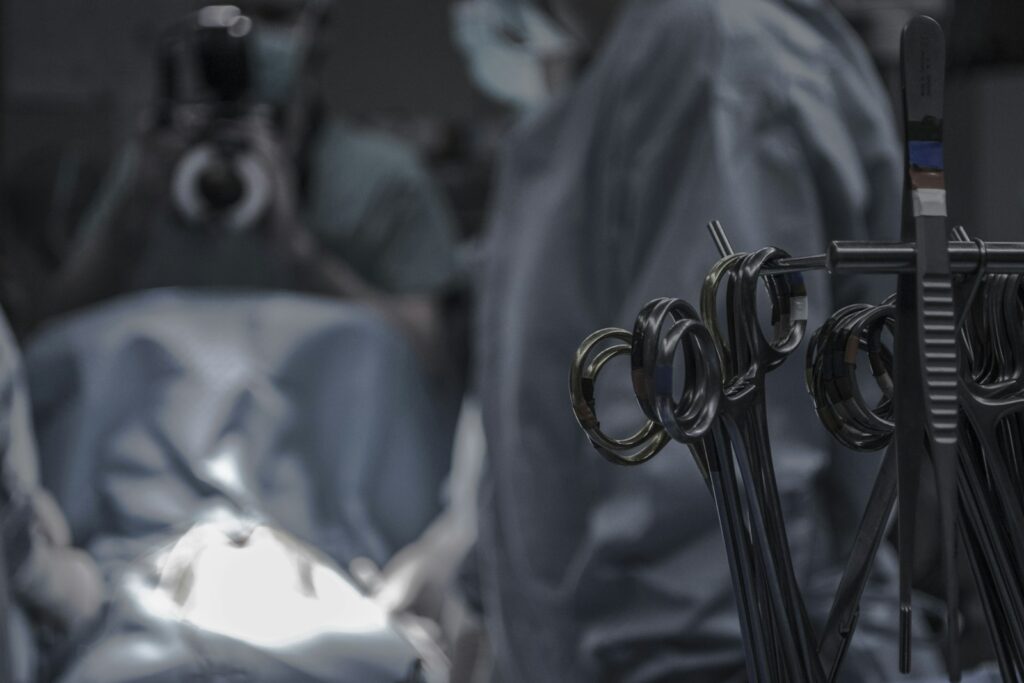
Keyhole surgery — also called laparoscopic or minimally invasive surgery — lets a surgeon operate inside the abdomen or pelvis through several small cuts rather than one large one, using a tiny camera (a laparoscope) and long, slim instruments. Compared with open surgery it is generally associated with smaller scars, less pain and a quicker recovery, though this varies with the operation and the person. This guide explains how it works, what to expect afterwards, why a surgeon may switch to open surgery mid-operation, and the warning signs to watch for.
Not sure which general surgeon you need?
Message our care team on WhatsApp. Tell us what’s going on and we’ll help you find the right general surgeon — free, with no obligation.
Chat with our care team on WhatsAppNot sure who to see? Find the right specialist →
In a medical emergency, or for severe or sudden symptoms such as breathing difficulty, chest pain, fainting or stroke signs, call 995 immediately.
If a surgeon decides during the operation to convert to open surgery, this is a considered safety decision, not a failure or a complication — it means they judged open surgery safer for you. After keyhole surgery, seek urgent help for worsening tummy pain, a fever, a wound that is increasingly red or discharging, or breathlessness or a painful swollen calf — and call 995 for severe breathlessness or chest pain.
What keyhole surgery is
In keyhole surgery the surgeon makes a few small cuts, usually around one to one-and-a-half centimetres, and inserts a laparoscope — a thin tube with a light and camera that sends a magnified view to a screen — along with long, narrow instruments through the other cuts. Gas, usually carbon dioxide, is used to gently inflate the abdomen so there is space to see and work. It is widely used for operations on the gallbladder, appendix, hernias, and many gynaecological, bowel and other abdominal procedures.
Why it is used
Because the cuts are small, keyhole surgery is generally associated with smaller scars, less post-operative pain, a shorter hospital stay and a faster return to normal activities than the equivalent open operation, and it is often done as day surgery. These are general advantages rather than guarantees, and how much benefit you get depends on the specific operation, your health and how your recovery goes. Your surgeon can explain what is realistic for your situation.
Before the operation
Preparation is much like any planned operation: a pre-operative assessment, fasting instructions, and a discussion of the anaesthetic, which is usually general anaesthesia. Your surgeon explains the procedure, its benefits and risks, and the alternatives during informed consent, and this is a good time to ask questions. Tell the team about your medicines and health conditions, and never stop a prescribed medicine on your own — they will advise what to take or hold.
What to expect afterwards
You wake with a few small dressings rather than one long wound. Many people go home the same day or after a short stay, though this depends on the operation. Some tenderness around the cuts is normal, and the small wounds are closed with dissolvable stitches, strips or glue — see our stitches and wound closure guide. You will be given advice on activity, when you can drive and return to work, and how to care for the wounds, which usually heal quickly.
The shoulder-tip pain
A common and often surprising after-effect is pain felt in the shoulder or the tip of the shoulder, along with some bloating. This comes from the gas used to inflate the abdomen irritating the diaphragm, which shares nerve signals with the shoulder, and from gas that has not yet been absorbed. It is not a sign that anything is wrong, and it usually eases over a day or two as the remaining gas is absorbed; gentle walking, warmth and the pain relief you are given all help.
Why an operation may convert to open
Sometimes a surgeon decides during keyhole surgery to switch to open surgery, making a larger incision to finish safely. This can happen because of unexpected findings, scarring or adhesions from previous surgery, bleeding, or simply because the view or access is not good enough to proceed safely by keyhole. It is important to understand this as a sound safety decision made in your interest, not as a failure or a complication — the surgeon’s priority is always to complete the operation as safely as possible, and consent forms usually mention this possibility in advance.
Recovery and red flags
Recovery is generally quicker than open surgery, but you should still take it steadily and follow your activity advice. Seek prompt medical advice if you develop worsening or severe tummy pain, a high temperature or chills, a wound that becomes increasingly red, hot, swollen or leaking pus, persistent vomiting, or difficulty passing urine or opening your bowels. A painful, swollen, hot calf can signal a clot, and breathlessness or chest pain can signal a clot that has travelled to the lungs — call 995 immediately for severe breathlessness or chest pain, as this is a medical emergency.
The Singapore picture and bottom line
Keyhole techniques are widely available in Singapore’s public and private hospitals across many specialties, and some centres also offer robot-assisted keyhole surgery; your surgeon advises whether a keyhole or open approach suits your case. HealthHub offers general information, and our how to pay for surgery guide covers financing. The reassuring bottom line is that keyhole surgery is a mature, everyday technique that lets surgeons do inside the body what once needed a large cut, usually with less pain and a quicker recovery — and that the built-in option to convert to open surgery is one of the things that keeps it safe. If you are weighing an operation, ask your surgeon whether a keyhole approach is suitable for you, what recovery to expect, and what the plan is if a switch to open surgery is needed on the day.
Related procedure & surgery topics
- Preparing for surgery
- Fasting before surgery
- General anaesthesia
- Sedation for procedures
- Day surgery
- Stitches & wound closure
- Wound care after surgery
- IV drip & cannula
- Blood transfusion
- How to pay for surgery
- General surgeons in Singapore
Sources
- NHS — Laparoscopy (keyhole surgery): nhs.uk
- NHS — DVT (deep vein thrombosis): nhs.uk
- HealthHub Singapore: healthhub.sg