
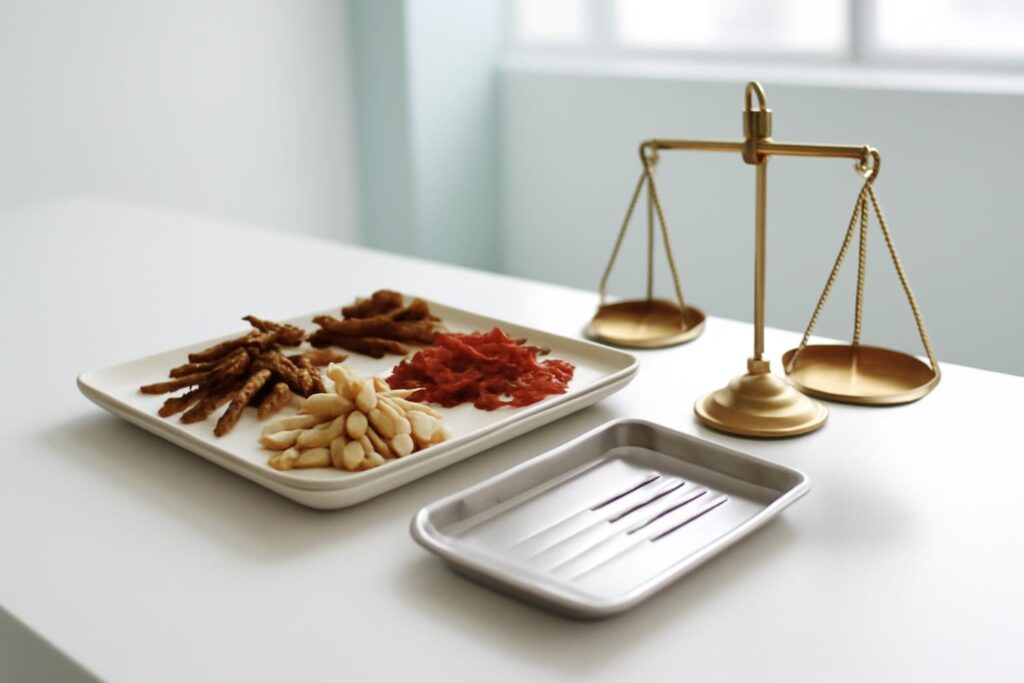
Senior Physician Ho Chin Ee is a registered TCM physician at Thomson Chinese Medicine, fully registered with the TCM Practitioners Board (TCMPB) in Singapore.
She holds a double degree in Biomedical Sciences (Nanyang Technological University) and Chinese Medicine, and went on to complete Bachelor and Master degrees in TCM at Beijing University of Chinese Medicine. She is a member of the Academy of Chinese Medicine Singapore and the World Federation of Chinese Medicine Societies.
Her clinical expertise includes TCM paediatric tui na and herbal medicine for children with common respiratory and digestive conditions, alongside women’s health and TCM dermatology. She consults in English and Mandarin.
Clinical focus
Paediatric TCM (tui na).
Qualifications (as publicly listed)
Master of TCM & Bachelor of TCM (Beijing University of Chinese Medicine); BSc (Hons) Biomedical Sciences (NTU); registered TCM physician.
Where they practise
- Clinic / practice: Thomson Chinese Medicine (see our clinic listing) — Waterway Point, Punggol
- Hospital / training affiliation(s): TCM Practitioners Board-registered TCM physician
Getting to the clinic
Senior Physician Ho Chin Ee practises at Thomson Chinese Medicine at Waterway Point in Punggol, in the north-east of Singapore. Waterway Point is a mall built directly above Punggol MRT and LRT station, which makes the clinic especially easy to reach by public transport. Punggol (NE17) is the terminus of the North-East Line, and the Punggol LRT loops connect the surrounding residential estates to the same interchange, so for many families in the north-east the journey is a single, sheltered trip from station to mall.
The Punggol bus interchange is also located at the same transport hub, so numerous bus services bring you directly to Waterway Point. Taxi and ride-hailing drop-off is straightforward at the mall’s entrances. If you are driving, Waterway Point has a paid visitor carpark, which is convenient if you are bringing a child to an appointment, though it is busier at weekends. As the clinic is within the mall, confirm the exact unit and floor, and the nearest lift or entrance, with Thomson Chinese Medicine when you book, especially if you are arriving with young children or a pram.
What paediatric TCM and tui na covers
Senior Physician Ho Chin Ee’s clinical expertise includes TCM paediatric tui na and herbal medicine for children with common respiratory and digestive conditions, alongside women’s health and TCM dermatology. Paediatric tui na is a gentle, hands-on form of Chinese therapeutic massage adapted for children, using light techniques suited to a child’s age and size, and used within TCM for common childhood complaints. The respiratory and digestive concerns referred to here — the everyday coughs, colds, appetite and tummy troubles of childhood — are among the most common reasons families seek paediatric TCM, and treatment is tailored to the child after assessment. The physician’s listed expertise also extends to women’s health and TCM dermatology, so families may see her for a range of concerns.
Her academic background combines biomedical sciences with Chinese medicine, and care is delivered in a way intended to be calm and child-friendly. Paediatric TCM care of this kind is complementary to, not a replacement for, conventional medical and paediatric care. For any child who is acutely unwell, has a high or persistent fever, is feeding poorly, has breathing difficulty or seems unusually lethargic, conventional medical assessment is the priority. Keeping your paediatrician or family doctor informed is sensible, particularly where herbal medicine is being used.
What to expect at a consultation
A first consultation for a child usually begins with a detailed discussion of the child’s symptoms, general health, feeding and any relevant history. The physician carries out a TCM assessment appropriate to a child and forms a TCM diagnosis. Treatment may involve paediatric tui na, gentle techniques or child-appropriate herbal medicine, depending on the assessment, and is generally kept short and gentle to suit a young child. Consultations are offered in English and Mandarin. The physician should explain what each treatment involves, and parents should feel free to ask questions and to stay with their child throughout, raising any concerns before a technique is used.
Preparing for your appointment
To make the visit smoother, it helps to bring:
- Photo identification for yourself and relevant health records for your child.
- Any medical records, and details of your child’s symptoms and how long they have lasted.
- A current list of any medications and supplements your child is taking.
- A written list of your concerns and questions.
- For young children, the usual comfort, feeding and changing items, plus a note of feeding or sleep patterns where these are relevant.
After your consultation and follow-up
After the session you may be given a course of paediatric tui na, herbal medicine or advice, with review visits to assess progress and adjust the approach as your child responds. For common childhood complaints, a short series of gentle sessions is often suggested rather than a single visit. Keep your paediatrician or family doctor informed if your child is also under their care, especially when herbal medicine is combined with prescribed treatment. See a doctor first for any acute or red-flag symptoms. Seek urgent medical attention if your child has a high or persistent fever, breathing difficulty, poor feeding or unusual lethargy, as these are matters for conventional medical care rather than TCM.
Booking, referrals and fees
You can usually book directly with the clinic without a referral. TCM consultations and treatments such as paediatric tui na are generally a private, out-of-pocket cost and are not covered by MediSave or MediShield Life, which apply to defined medical procedures. As fees vary by clinic and treatment, confirm current charges directly with Thomson Chinese Medicine when you book.
Common questions
What is paediatric tui na?
It is a gentle, hands-on form of Chinese therapeutic massage adapted for children, used within TCM for common childhood complaints.
Does this replace my child’s paediatrician?
No. Paediatric TCM complements conventional care. Keep your paediatrician informed and seek medical assessment for any acute or red-flag symptoms.
What conditions are commonly seen?
This physician’s focus includes common respiratory and digestive conditions in children, alongside women’s health and TCM dermatology.
What languages are consultations in?
This physician consults in English and Mandarin.
Related guides
Sources & verification
See also: our editorial directory of TCM physicians & acupuncturists in Singapore and our shortlist of acupuncture & TCM clinics.
This is an independent, factual profile compiled from the public sources listed above — not a paid listing, advertisement or endorsement. Registered TCM physicians in Singapore are regulated by the TCM Practitioners Board (TCMPB); always verify current registration there and confirm specifics directly with the clinic. A TCM physician is not a medical doctor. This page is general information, not medical advice. See our editorial policy.
Part of our Allied health & therapy guides · Browse all health topics
Don’t agree with this listing? If this is your profile and you’d like the details corrected, updated or removed — or you’d like to be featured — please reach out to us or use our contact form. We’ll sort it out quickly.