
Singapore has a long-established network of Traditional Chinese Medicine (TCM) providers, from heritage charitable institutions to hospital-affiliated centres, all staffed by physicians registered with the TCM Practitioners Board under MOH. The clinics below are real, established providers offering acupuncture and related TCM treatments.
How we chose
This is an editorial shortlist, not paid placement. We prioritise providers accredited by Singapore’s Ministry of Health (MOH) and listed on the Specialist Register where applicable, with relevant experience, genuine patient feedback and transparency about who treats you. We don’t publish a clinic’s rating or price unless we can verify it from a reliable source.
At a glance
| Clinic | Lead doctor | Known for | Area |
|---|---|---|---|
| Eu Yan Sang Integrative Health TCM Centres | — | Heritage TCM brand offering acupuncture, internal medicine, gynaecology and post-stroke recovery | Multiple locations islandwide (e.g. Orchard Paragon, Woodleigh Mall) |
| Raffles Chinese Medicine | — | Hospital-affiliated TCM integrating Eastern and Western medicine | Raffles Hospital, 585 North Bridge Road |
| Singapore Thong Chai Medical Institution | — | Heritage charitable institution providing free TCM and acupuncture | Chin Swee Road (HQ), with branches in Ang Mo Kio, Sengkang, Bedok and Bukit Batok |
| Singapore Chung Hwa Medical Institution | — | Non-profit TCM institution with charitable acupuncture and moxibustion services | Toa Payoh (HQ), with branches in Yishun, Woodlands, Bukit Panjang, Marine Parade and Novena |
| Thomson Chinese Medicine | — | Hospital group TCM centre with focus on fertility, women's health and rehabilitation | Paragon Medical Centre, Waterway Point, The Woodleigh Mall and United Square |
The clinics, in detail
1. Eu Yan Sang Integrative Health TCM Centres
Eu Yan Sang operates Integrative Health TCM Centres across Singapore offering acupuncture, moxibustion, cupping, gua sha and therapeutic tuina massage. Specialties include internal medicine, gynaecology, paediatrics and post-stroke recovery, alongside customised herbal prescriptions. Its practitioners are graduates from renowned TCM universities and institutes in China. Official site. Source.
2. Raffles Chinese Medicine
Raffles Chinese Medicine is the TCM arm of Raffles Medical Group, based at Raffles Hospital. It offers acupuncture, Chinese herbal medicine, cupping, auricular therapy and tui na massage, with programmes spanning fertility, women’s health, pain management and complementary cancer care. Its TCM physicians are registered with the TCM Practitioners Board in Singapore. Official site. Source.
3. Singapore Thong Chai Medical Institution
Founded in 1867, Singapore Thong Chai Medical Institution is a long-running charity that provides free TCM consultations and medicines regardless of race, religion or nationality. It offers TCM internal medicine and acupuncture, with specialised clinics for stroke and pain management, oncology, fertility, kidney disease and paediatrics. The institution employs more than 50 MOH-registered physicians across its headquarters and branches. Official site. Source.
4. Singapore Chung Hwa Medical Institution
Singapore Chung Hwa Medical Institution is a non-profit TCM organisation headquartered at Lorong 4 Toa Payoh and affiliated with the Singapore College of Traditional Chinese Medicine. It provides charitable Chinese medicine services including acupuncture and moxibustion, TCM internal medicine and specialty clinics across six branches. Many elderly and needy patients receive subsidised or waived consultation fees. Official site. Source.
5. Thomson Chinese Medicine
Thomson Chinese Medicine is the TCM centre of Thomson Medical, with clinics at Paragon Medical Centre, Waterway Point, The Woodleigh Mall and United Square. It offers acupuncture, moxibustion and herbal medicine, with particular focus on fertility and women’s health, pain and rehabilitation, paediatric care and skin conditions. The centre’s care is delivered by registered TCM practitioners. Official site. Source.
Prices and patient ratings are being independently verified and will be added as we confirm them. This guide is general information, not medical advice — always confirm a provider’s MOH accreditation and current fees directly.
What acupuncture is used for
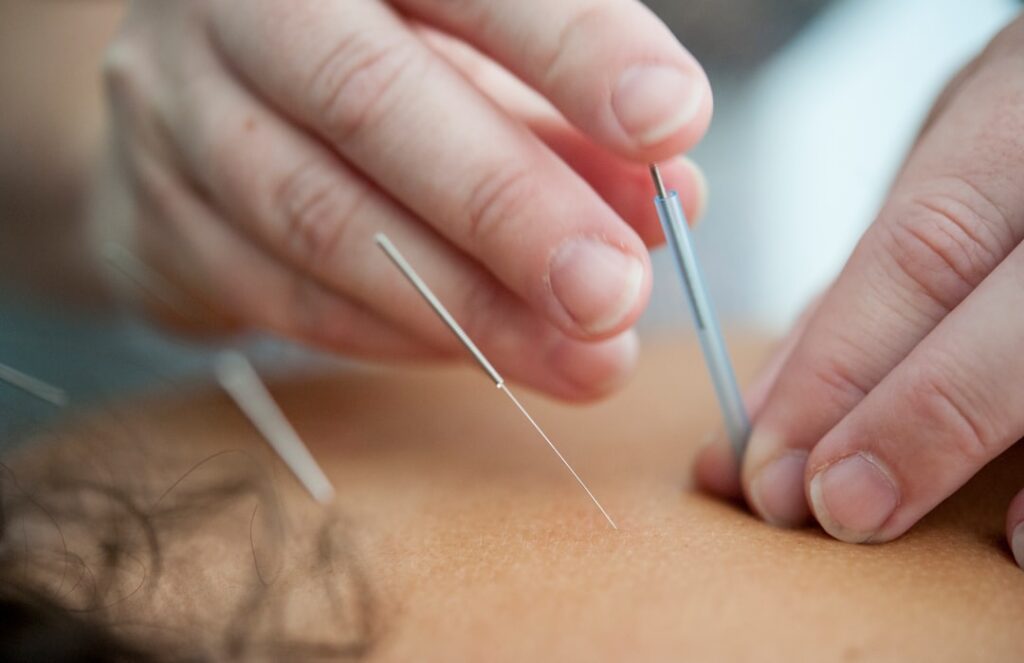
Acupuncture is a Traditional Chinese Medicine (TCM) treatment involving the insertion of fine needles at specific points on the body. In Singapore it is commonly sought for pain conditions such as back, neck and joint pain, headaches, and as supportive care for stroke rehabilitation, women’s health and general wellbeing. Evidence is stronger for some uses than others, so it is reasonable to ask a practitioner what to realistically expect and over how many sessions.
How acupuncture and TCM are regulated
TCM is one of the regulated practices in Singapore. Acupuncturists and TCM physicians must be registered with the TCM Practitioners Board (TCMPB) under the Ministry of Health. When choosing a clinic, confirm the physician is TCMPB-registered, ask about their training and areas of focus, and check that single-use sterile needles are used. Established institutions and hospital-affiliated TCM centres often publish their physicians’ credentials.
What to look for when choosing
- TCMPB registration for the treating physician.
- Single-use, sterile needles and clear hygiene practice.
- A practitioner who asks about your medical history and current medications, and who is willing to coordinate with your doctor.
Costs
Acupuncture and TCM consultations are generally paid out of pocket and are typically not claimable under MediSave or CHAS. Some employer health benefits or private insurance plans include limited TCM coverage, so check your policy. Charitable TCM institutions may offer subsidised or free services for those in need.
Common questions
Is acupuncture safe?
When performed by a TCMPB-registered practitioner using sterile single-use needles, acupuncture is generally low-risk. Tell your practitioner about pregnancy, bleeding disorders or blood-thinning medication.
Should I stop my regular medical treatment?
No. Acupuncture is best used alongside, not instead of, conventional care. Keep your doctor informed.
Can I claim acupuncture under MediSave?
Generally no. Most TCM and acupuncture is self-funded; check whether any insurance or employer benefit applies.
TCM & acupuncture guides
In-depth guides to help you understand symptoms, treatment and costs in Singapore:
- Acupuncture in Singapore: Uses, Evidence, Safety & Cost
- Cupping & Gua Sha in Singapore: Benefits, Evidence & Safety
- TCM & Acupuncture for Fertility in Singapore: Evidence
- TCM for Chronic Pain in Singapore: Evidence & Safety
Find a TCM physician
Prefer a named specialist over a clinic? See our independent, sub-specialty-grouped directory of TCM physicians & acupuncturists in Singapore.
Part of our Allied health & therapy guides · Browse all health topics
Listed here, or want to be? If you are a doctor or clinic featured on this page and would like your entry corrected, updated or removed — or you would like to be added or featured — please reach out to us or use our contact form.