
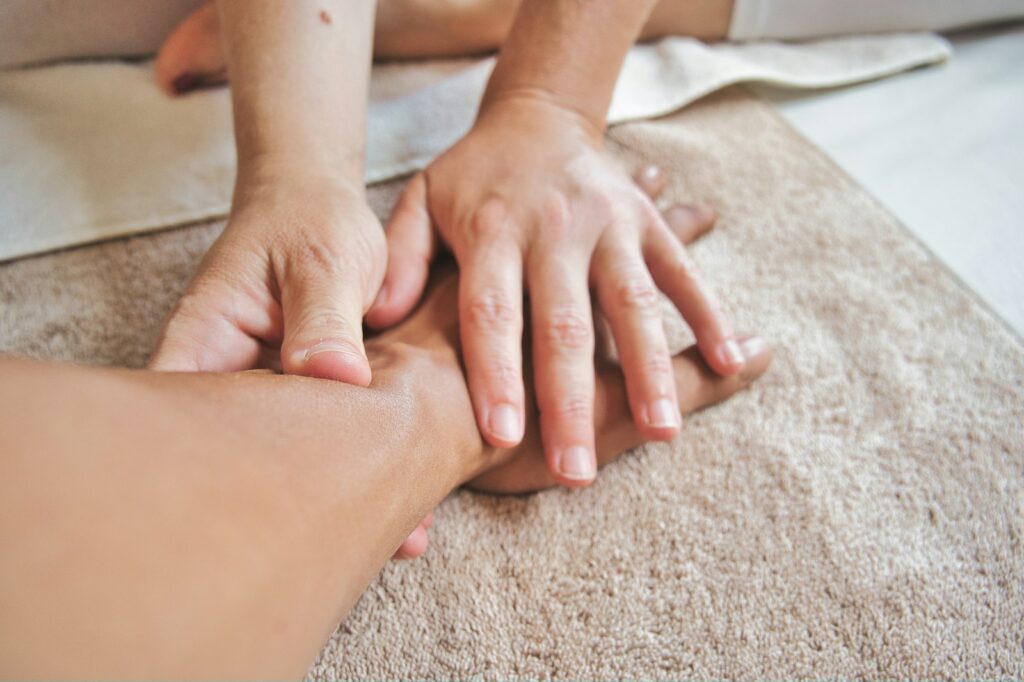
Quick answer. Manual lymphatic drainage (MLD) is a light, slow, rhythmic form of specialised massage performed by a trained lymphoedema therapist to encourage lymph fluid to move from a swollen area towards parts of the body that still drain well. A simpler self-massage version, called simple lymphatic drainage (SLD), can be taught to you to do at home as part of your daily routine. It is important to understand that this is not the same as ordinary or deep massage, which can actually be harmful in lymphoedema, and that some people should not have it.
Recovering from injury, pain or surgery and want to move better?
Message our care team on WhatsApp. Tell us what’s going on and we’ll help you find the right physiotherapist — free, with no obligation.
Chat with our care team on WhatsAppNot sure who to see? Find the right specialist →
In a medical emergency, or for severe or sudden symptoms such as breathing difficulty, chest pain, fainting or stroke signs, call 995 immediately.
What manual lymphatic drainage is
MLD uses very light, precise skin movements rather than the firm kneading of an ordinary massage. The therapist gently stretches and releases the skin in specific directions to encourage fluid along the lymphatic pathways, usually clearing areas that drain normally first before working on the swollen part. Cancer Research UK describes recognised techniques such as the Vodder, Foldi and Casley-Smith methods. It is typically part of an intensive phase of treatment known as decongestive lymphatic therapy, alongside compression, skin care and exercise.
Why it is different from ordinary massage
This is a crucial point. Lymphatic vessels sit just under the skin, so the technique is deliberately gentle; a firm, deep tissue massage can overload the area, worsen swelling or damage fragile skin. For this reason, MLD should only be done by a therapist trained in lymphoedema, and a general spa or sports massage of a swollen limb is not a substitute. If you are considering any massage for a lymphoedema limb, check first with your lymphoedema team.
Simple lymphatic drainage you can learn
Many therapists teach a simplified self-massage, often called simple lymphatic drainage, that you can carry out yourself at home. It uses the same principle of gentle, light movements to encourage fluid away from the swollen area, and is usually combined with deep breathing, which helps lymph flow. Because technique matters, it is best learned directly from your therapist rather than copied from a video, so ask them to show you and to check that you are doing it correctly and safely.
The role of breathing
Deep, slow abdominal breathing is often taught as part of drainage. The movement of the diaphragm acts as a gentle pump that helps move lymph through the deeper vessels in the trunk, which is why therapists frequently begin a self-drainage routine with a few deep breaths. It is simple, costs nothing, and can be done anywhere. Building a minute or two of relaxed breathing into your routine supports the rest of your self-care.
What drainage can and cannot do
MLD and self-massage can help move fluid and may ease feelings of tightness or discomfort, and they work best as one part of a full routine rather than on their own. They are not a cure, and compression and movement usually do more of the day-to-day work of keeping swelling down. Set realistic expectations: drainage is a helpful supporting technique that complements your garment and exercise, not a replacement for them. Thinking of drainage as the finishing touch on top of compression and movement, rather than the main event, keeps your expectations realistic and your effort focused where it helps most.
Who should not have lymphatic drainage
Drainage is not suitable for everyone. It should generally be avoided, or only done with specific medical advice, if you have an active skin infection such as cellulitis or inflammation in the area, a blood clot such as a deep vein thrombosis, certain heart conditions, active cancer in the area being treated, or a blockage of a major vein. Your therapist will check for these before starting. If any of these apply to you, tell your therapist and doctor so your care can be adjusted safely.
Getting drainage in Singapore
Trained lymphoedema therapists work within hospital physiotherapy and lymphoedema services in Singapore, including at Singapore General Hospital, Tan Tock Seng Hospital, Changi General Hospital and Sengkang General Hospital, and many hold recognised international certifications. The Lymphedema Society of Singapore is a local body that promotes evidence-based care. Ask your doctor for a referral, and make sure anyone performing MLD on a lymphoedema limb is specifically trained, rather than assuming a general massage therapist can provide it.
Making it part of your routine
Once your therapist has taught you self-drainage, the aim is to fold a few minutes of it into your day, often alongside your skin care and breathing. Consistency matters more than doing a long session occasionally. If you are unsure whether you are doing it correctly, or the limb feels worse afterwards, go back to your therapist for a refresher. Used sensibly and combined with compression and exercise, drainage is a gentle, useful addition to your daily care. Some people find a set time, such as after a morning shower while the skin is clean, makes the habit easier to keep. If your swelling changes or you begin a new phase of treatment, your therapist may adjust the technique they want you to use, so it is worth checking in with them periodically rather than assuming the same routine always applies.
Related lymphoedema topics
- Living with lymphoedema
- Understanding lymphoedema: causes & types
- Compression garments & bandaging
- Skin care & preventing infection
- Exercise & movement
- Lymphoedema after cancer treatment
- Managing swelling & daily life
- Lipoedema & lymphoedema: the difference
- Emotional wellbeing & support
- Physiotherapists in Singapore
Sources
- NHS – Lymphoedema treatment: nhs.uk
- Macmillan – Lymphatic drainage for lymphoedema: macmillan.org.uk
- Cancer Research UK – Manual lymphatic drainage for lymphoedema: cancerresearchuk.org
- Breast Cancer Now – Managing lymphoedema: breastcancernow.org
- Lymphoedema Support Network – Your questions answered: lymphoedema.org