
Quick answer. Compression is one of the main treatments for lymphoedema. A fitted compression garment, such as a sleeve, glove, stocking or tights, provides gentle counter-pressure that supports the tissues and helps stop fluid pooling, while your muscles work against it to move lymph along. In the more intensive phase, or for severe or fragile-skinned limbs, a therapist may use multilayer bandaging for a period before moving you to a garment. Compression should always be fitted and guided by a lymphoedema therapist, and worn as part of a daily routine rather than now and then.
Recovering from injury, pain or surgery and want to move better?
Message our care team on WhatsApp. Tell us what’s going on and we’ll help you find the right physiotherapist — free, with no obligation.
Chat with our care team on WhatsAppNot sure who to see? Find the right specialist →
In a medical emergency, or for severe or sudden symptoms such as breathing difficulty, chest pain, fainting or stroke signs, call 995 immediately.
Why compression works
Compression garments apply graduated pressure to the swollen area, firmer lower down and easing higher up, so that fluid is encouraged back towards the body. Cancer Research UK and Macmillan describe compression as a way of supporting the limb so the muscle pump can push lymph along more effectively. On its own a garment does not remove fluid; it works with movement, skin care and drainage. That is why therapists talk about compression as one pillar of a routine rather than a stand-alone fix.
Types of compression
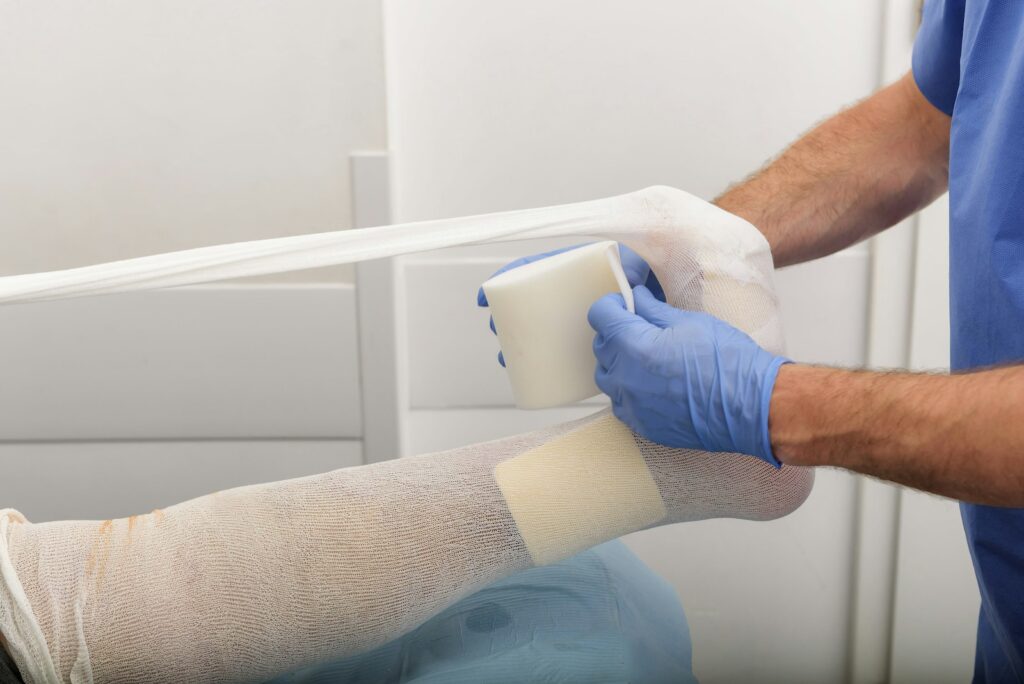
Compression comes in several forms. Ready-made and made-to-measure elastic garments include arm sleeves, gloves, stockings and tights, chosen to fit the affected area. For people who find elastic garments hard to pull on, adjustable wrap systems fastened with Velcro can be easier to apply and adjust. In the intensive phase, therapists may use multilayer lymphatic bandaging, building up layers of padding and bandages that are changed every day or two. Your therapist will recommend the type that suits your swelling, skin and dexterity.
Getting the right fit
A correct fit is essential, which is why garments are measured and prescribed by a trained lymphoedema therapist rather than bought at random. The therapist measures the limb, often when the swelling is at its lowest, and selects the compression level and size for you. Garments come in different strengths, and the right one balances effectiveness with comfort. A garment that is too tight can cause harm, and one that is too loose will not help, so professional fitting matters. In Singapore, hospital physiotherapy and lymphoedema services carry out this fitting.
Putting your garment on
Most people put their garment on first thing in the morning, when the limb is at its smallest, and take it off at night unless advised otherwise. Applying it can take practice. Smooth out any creases or wrinkles, as these concentrate pressure and can dig in; wearing household rubber gloves helps you grip the fabric and ease it into place without over-stretching it. Special sliding aids can make it easier to pull garments on. If putting the garment on is a struggle, tell your therapist, who can suggest an easier style or technique.
Caring for your garments
Garments lose their stretch with use, so they need replacing regularly, often after a few months of daily wear, and your therapist will advise when. It helps to have at least two, so one can be worn while the other is washed and dried. Gentle hand-washing and air-drying away from direct heat prolongs the life of the fabric and keeps the compression working. Treating garments as medical equipment rather than ordinary clothing, and replacing them on schedule, keeps your swelling better controlled.
Multilayer bandaging
When swelling is severe, the limb is a difficult shape, or the skin is fragile or leaking, a therapist may use multilayer lymphatic bandaging for a period first. This builds up tubular lining, soft padding and bandages that are reapplied every day or two, often during an intensive block of treatment lasting a couple of weeks. Movement and exercise while bandaged help the bandages work. Once the limb has reduced and settled, most people move on to a fitted garment for long-term maintenance.
When not to wear it, and when to seek help
Compression is not always appropriate. Do not wear a garment over broken skin or an active skin infection such as cellulitis, and pause and seek advice if this happens. Take the garment off and contact your therapist or doctor if you notice numbness, tingling, increasing pain, or a change in colour or coldness of the fingers or toes, as these suggest the fit or pressure is wrong. A garment should feel supportive, not painful. Never persist with a garment that is clearly hurting you.
Making compression part of life
Wearing compression every day can feel like a lot at first, especially in Singapore’s heat, but it becomes routine. Lighter-coloured or breathable styles, putting the garment on before the day warms up, and keeping a spare all help. If heat, comfort or appearance are putting you off wearing it, tell your therapist rather than quietly stopping, because consistent wear is what keeps swelling down. Small adjustments to style and routine usually make daily compression far more livable. Keeping a spare garment at work or in your bag also means an accidental spill or tear need not interrupt your day, which makes it easier to stay consistent over the long term.
Related lymphoedema topics
- Living with lymphoedema
- Understanding lymphoedema: causes & types
- Skin care & preventing infection
- Manual lymphatic drainage & massage
- Exercise & movement
- Lymphoedema after cancer treatment
- Managing swelling & daily life
- Lipoedema & lymphoedema: the difference
- Emotional wellbeing & support
- Physiotherapists in Singapore
Sources
- Macmillan – Compression treatment for lymphoedema: macmillan.org.uk
- Cancer Research UK – Compression treatment for lymphoedema: cancerresearchuk.org
- NHS – Lymphoedema treatment: nhs.uk
- NHS – Lymphoedema prevention: nhs.uk
- Better Health Channel – Lymphoedema: betterhealth.vic.gov.au