
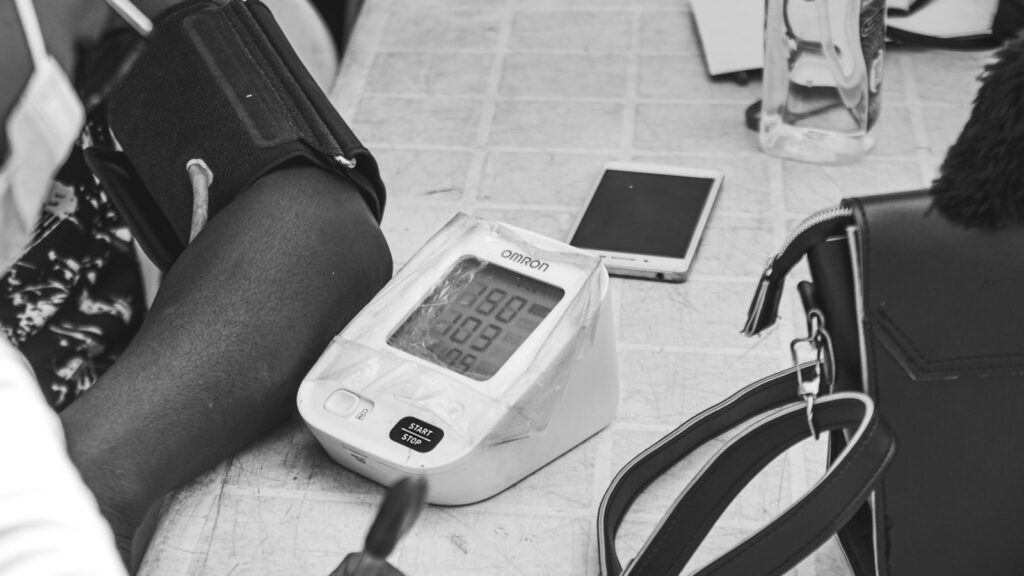
Measuring your blood pressure at home gives a fuller, more realistic picture than occasional clinic visits — more readings, avoiding the “white-coat” effect where anxiety in a clinic raises the reading, and helping both to diagnose and to manage high blood pressure. The key is to measure correctly and to look at the average over several days rather than any single reading. This guide gives no target numbers — those are individual and set by your doctor — and the golden rule is never to stop or change blood-pressure medicine on your own.
Not sure which gp clinic you need?
Message our care team on WhatsApp. Tell us what’s going on and we’ll help you find the right gp clinic — free, with no obligation.
Chat with our care team on WhatsAppNot sure who to see? Find the right specialist →
In a medical emergency, or for severe or sudden symptoms such as breathing difficulty, chest pain, fainting or stroke signs, call 995 immediately.
A very high reading with symptoms — severe headache, chest pain, breathlessness, visual changes, or weakness or difficulty speaking — is an emergency: call 995 (possible hypertensive emergency or stroke). Consistently high home averages mean see your doctor; do not adjust medication yourself.
Why home monitoring helps
Home monitoring avoids the white-coat effect, where the anxiety of a clinic visit can temporarily push readings up, and it gives many more readings across ordinary days than a doctor could take, which helps both diagnose high blood pressure and manage it over time. Many people also find that measuring at home helps them feel more in control of their condition. In Singapore, blood-pressure monitors are available from pharmacies, and your readings are reviewed by your GP.
Choosing a monitor
Where possible, use a validated automatic (digital) upper-arm cuff rather than a wrist or finger device, as arm cuffs are generally more reliable. Getting the right cuff size matters, because the wrong size skews the reading — measure around your upper arm, midway between shoulder and elbow, to check the fit. It is also worth having the monitor checked or recalibrated roughly every couple of years so you can trust its readings.
How to measure correctly
Prepare by resting for about five minutes first, and avoid caffeine, smoking or exercise in the half hour before, and empty your bladder. Sit with your back supported and feet flat on the floor, without crossing your legs, and rest your arm on a firm surface with the cuff at heart level, staying relaxed and quiet without talking during the reading. The cuff goes just above the elbow on a bare upper arm. Take two, or sometimes three, readings about a minute apart; if the first is much higher than the rest, it can be discarded.
When and how often
Measure at the same times each day — typically morning and evening — over several days, about a week, especially when blood pressure is first being assessed, and record every reading. An important habit is not to measure only when you feel unwell, because that biases the picture toward spikes and gives a misleading impression. A simple log, or the memory on the monitor, that you can show your doctor is the most useful output.
Understanding the readings
Blood pressure is written as two numbers, the systolic (the higher number, the pressure when the heart beats) “over” the diastolic (the lower number, between beats). A single high reading is common and usually not a crisis, because it is normal for the numbers to vary through the day, so what matters is the average over several days rather than one-off spikes. This guide does not give fixed target numbers, because they are individual — depending on age, other conditions and pregnancy — and your doctor will tell you what range is right for you.
When readings need action
Two situations call for action. A very high reading together with symptoms — severe headache, chest pain, breathlessness, visual changes, or weakness or difficulty speaking — can signal a hypertensive emergency or a stroke and is a 995 emergency. Separately, if your home averages are consistently high over several days, see your doctor with your recorded readings. Crucially, never stop or change any blood-pressure medicine on your own; any adjustment should be guided by the doctor, and this guide gives no doses.
Making it work in Singapore
Home monitors are available from pharmacies, and your GP reviews the readings and fits them into your overall care, alongside lifestyle steps such as the eating pattern in our DASH diet guide and the wider picture in our high blood pressure guide. HealthHub and HPB offer general blood-pressure information. Bring your log to appointments, measure consistently rather than only when worried, and let your doctor — not a single number — guide any change to treatment. Done properly, home monitoring is one of the most empowering things you can do for your heart health: it turns blood pressure from something checked once a year into something you understand and can act on with your doctor, and it often reveals a truer, calmer picture than a one-off clinic reading ever could. The habit that matters most is measuring the right way, at the same times, and looking at the trend. And if a reading ever alarms you, sit quietly for a few minutes and measure again before drawing any conclusion — unless you have the emergency symptoms above, in which case do not wait and call 995.
Related tests & diagnostics topics
- Blood test results explained
- X-ray: what to expect
- Echocardiogram (heart ultrasound)
- Holter monitor & ambulatory ECG
- Thyroid function tests
- Urine test explained
- Stool tests explained
- Contrast scans & dye
- Biopsy: what to expect
- ECG (electrocardiogram)
- GP clinics in Singapore
Sources
- Blood Pressure UK — Monitoring your blood pressure at home: bloodpressureuk.org
- Blood Pressure UK — How to measure your blood pressure at home: bloodpressureuk.org
- HealthHub Singapore: healthhub.sg