
Quick answer. A heart murmur is an extra whooshing sound heard between heartbeats, and many are harmless (innocent) and need no treatment. A murmur that comes with breathlessness, chest pain or fainting, however, should be assessed by a cardiologist because it may point to a valve problem.
Chest pain, palpitations or breathlessness on your mind?
Message our care team on WhatsApp. Tell us what’s going on and we’ll help you find the right cardiologist — free, with no obligation.
Chat with our care team on WhatsAppNot sure who to see? Find the right specialist →
In a medical emergency, or for severe or sudden symptoms such as breathing difficulty, chest pain, fainting or stroke signs, call 995 immediately.
A heart murmur is an unusual sound, often described as a whoosh or swish, that a doctor hears through a stethoscope as blood moves through the heart. It is a finding, not a diagnosis in itself. Many murmurs are completely harmless and are picked up by chance during a routine check in Singapore, particularly in children.
The important question is whether a murmur is innocent or whether it signals an underlying problem such as a heart valve disorder. This guide explains the difference, what causes murmurs, how they are diagnosed with an echocardiogram, and the symptoms that mean you should see a cardiologist rather than wait.
At a glance
| Feature | Innocent murmur | Abnormal murmur |
|---|---|---|
| Underlying heart | Structurally normal | Often a valve or structural problem |
| Symptoms | None | May have breathlessness, chest pain or fainting |
| Common in | Children, pregnancy, fever, anaemia | Valve disease, congenital defects |
| Loudness | Usually soft | Can be louder or harsher |
| Action needed | Reassurance, often no treatment | Echocardiogram and cardiology review |
What is a heart murmur?
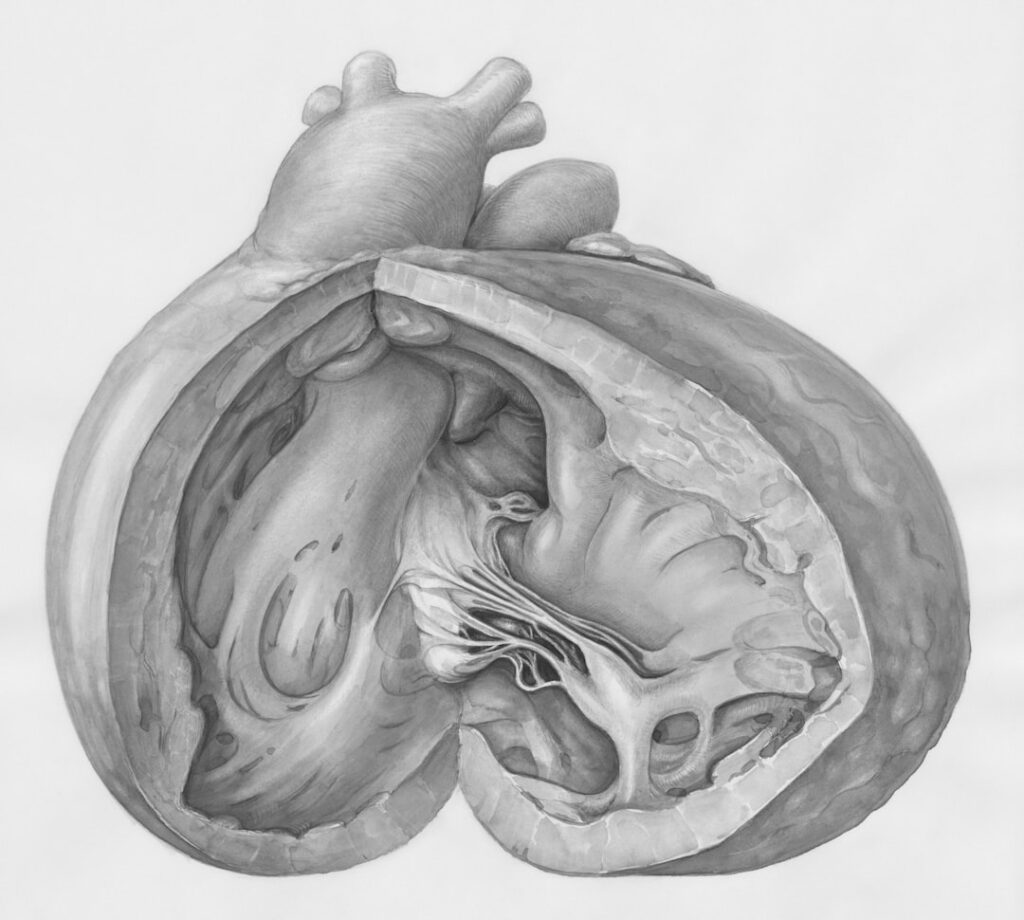
A heart murmur is the sound of turbulent blood flow within or near the heart. Normally a doctor hears two clear heart sounds; a murmur is an extra noise heard between or around them. Murmurs are graded by how loud they are and when in the heartbeat they occur, which helps the doctor judge how significant they are.
Murmurs are broadly divided into two kinds. An innocent (or functional) murmur occurs when the heart is structurally normal and blood is simply moving a little faster or more turbulently than usual, for example during a fever or pregnancy. These are very common and harmless. An abnormal murmur reflects a problem with the heart structure, most often a valve that is leaking or too narrow, and these need proper assessment.
Symptoms & signs
An innocent murmur usually causes no symptoms at all and is found only when a doctor listens to the chest. An abnormal murmur may occur on its own or alongside signs that the heart is not working as well as it should. Watch for:
- Breathlessness, especially on exertion or when lying flat
- Chest pain or tightness
- Fainting or feeling close to fainting
- Palpitations or an irregular heartbeat
- Tiredness or reduced ability to exercise
- Swelling of the ankles or legs
- In babies, poor feeding, bluish skin or slow weight gain
A murmur with any of these features deserves prompt medical attention.
Causes & risk factors
Innocent murmurs are often linked to states that increase blood flow, including:
- Childhood, where soft murmurs are very common and usually disappear with age
- Pregnancy, due to the higher volume of blood circulating
- Fever or an overactive thyroid
- Anaemia, where thinner blood flows more turbulently
Abnormal murmurs are caused by structural heart conditions, such as:
- Valve disease, where a valve leaks (regurgitation) or is narrowed (stenosis)
- Congenital heart defects present from birth, such as a hole in the heart
- Heart valve damage from past rheumatic fever or infection of the heart lining (endocarditis)
How it's diagnosed
The first step is the doctor listening carefully with a stethoscope, noting the murmur’s timing, loudness and location, plus a full history and examination. If the murmur seems innocent and you have no symptoms, no further tests may be needed.
If there is any concern, the key test is an echocardiogram, an ultrasound scan of the heart that shows the valves and chambers moving in real time and reveals leaks or narrowing. A doctor may also arrange an ECG to check the heart’s rhythm, a chest X-ray, or blood tests to look for anaemia or thyroid problems. These tests together tell the cardiologist whether the murmur is harmless or needs treatment.
Treatment options
An innocent murmur needs no treatment; the reassurance that the heart is normal is the main outcome. If a murmur is caused by a temporary condition such as anaemia, fever or pregnancy, treating or resolving that condition often makes the murmur fade.
An abnormal murmur is managed by treating the underlying heart problem rather than the sound itself. Depending on the cause and severity, this may involve regular monitoring with repeat echocardiograms, medication to ease the heart’s workload, or, for significant valve disease, a procedure or surgery to repair or replace the affected valve. The cardiologist tailors the plan to the specific condition, your symptoms and your overall health.
When to see a doctor & which specialist
Most murmurs found during a routine check in an otherwise well person are innocent and not an emergency. However, call 995 or go to the nearest A&E if you have a known or suspected heart problem and develop severe chest pain, sudden severe breathlessness, fainting, or bluish lips or skin.
You should arrange to see a cardiologist if a murmur is found together with breathlessness, chest pain, fainting, palpitations, or in a baby with feeding or breathing difficulties, and whenever a doctor advises further assessment. A cardiologist can perform an echocardiogram and advise on whether any treatment is needed. Find one through our directory of cardiologists in Singapore.
What to expect at the appointment
If a murmur has been picked up, the cardiologist will start by listening carefully and asking about symptoms such as breathlessness, chest discomfort, palpitations or fainting, as well as any family history of heart problems. The main test is usually an echocardiogram, a painless ultrasound of the heart done while you lie on your side; it takes around 20 to 40 minutes and needs no special preparation. An ECG and sometimes blood tests may be done at the same visit. For many people, the reassuring outcome is confirmation that the heart is structurally normal.
Special situations
In children, soft innocent murmurs are very common and often fade as they grow; a doctor will advise whether any follow-up is needed. In pregnancy, the extra blood the body circulates frequently produces a harmless flow murmur that settles after delivery. In older adults, a newly noticed murmur is more likely to reflect age-related valve changes, so it is reasonable to have it assessed even without symptoms.
Common questions
Does an innocent murmur ever need treatment?
No. An innocent murmur means the heart is structurally normal, so no medication or procedure is required — the reassurance itself is the result.
Can a murmur appear and then disappear?
Yes. Murmurs linked to fever, anaemia or pregnancy often fade once that condition resolves, which is one reason doctors look at the whole picture rather than the sound alone.
Should I limit exercise if I have a murmur?
Most people with an innocent murmur have no restrictions. If a murmur is linked to a valve or structural problem, your cardiologist will advise what level of activity is safe for you.
Related guides
- Best Cardiology Clinics in Singapore — our editorial shortlist
- cardiology clinics directory
- Angiogram
- Heart bypass (CABG)
- Vasovagal syncope
- Runny nose
- Tonsillectomy
Sources
- NHS: Heart murmurs (overview)
- Mayo Clinic: Heart murmurs
- HealthHub Singapore
- SingHealth: Conditions and treatments
Part of our Heart & vascular guides · Browse all health topics