
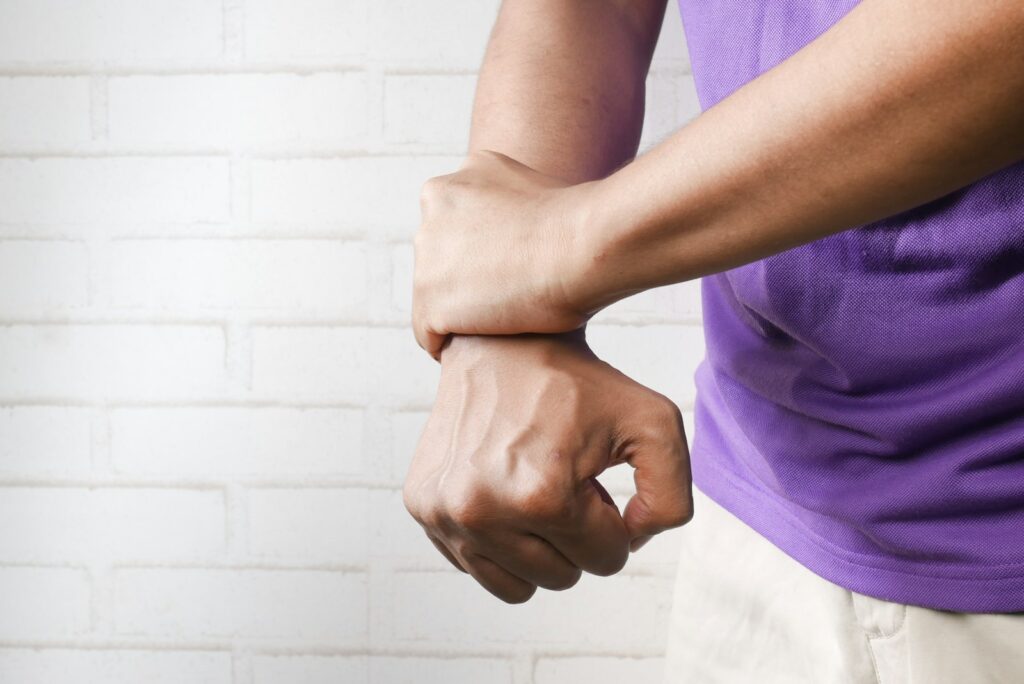
Complex regional pain syndrome (CRPS) is a chronic pain condition that usually affects one limb after an injury, surgery, fracture or a period in a cast. Its defining feature is pain far more severe and longer-lasting than the original injury would explain, along with changes in skin colour, temperature, swelling and sensitivity. It is a real, physical (neuro-inflammatory) condition — not imagined — and it responds best to early, multidisciplinary treatment that keeps the limb moving.
Living with pain that’s hard to control?
Message our care team on WhatsApp. Tell us what’s going on and we’ll help you find the right pain specialist — free, with no obligation.
Chat with our care team on WhatsAppNot sure who to see? Find the right specialist →
In a medical emergency, or for severe or sudden symptoms such as breathing difficulty, chest pain, fainting or stroke signs, call 995 immediately.
Seek prompt care for signs of infection, rapidly worsening swelling, colour change or loss of function, or uncontrolled pain. CRPS is exhausting — if you feel unable to cope, help is available (SOS 1767, mindline 1771; call 995 in an emergency).
What causes it
CRPS is commonly triggered by fractures (especially wrist or ankle), sprains, crush injuries, burns, surgery, or immobilisation in a cast — and sometimes the triggering injury is so minor that a person cannot recall it. There are two types: type I (formerly reflex sympathetic dystrophy) with no confirmed nerve injury, and type II (formerly causalgia) following a distinct nerve injury; the symptoms are similar. The exact cause is not fully understood, but it is thought to involve over-excitable peripheral nerves and local neurogenic inflammation, amplification of pain signals in the spinal cord and brain (central sensitisation), and changes in the brain’s “map” of the limb. It is not caused by anything the patient did wrong and is not a psychiatric illness, though living with it strongly affects mental health.
Symptoms
The main symptom is continuous pain — often burning, stabbing or throbbing — usually out of proportion to the injury, with marked hypersensitivity so that light touch, clothing or a breeze can be intensely painful. Alongside this are changes and fluctuations in skin colour (red, blue, blotchy or pale), temperature (warmer or cooler than the other side), and sweating, together with swelling and, over time, stiffness, weakness, tremor and reduced movement. In longer-standing cases there may be changes in hair, nail and skin growth and reduced bone density in the limb. The course varies: many improve significantly, especially with early treatment, though some have flare-ups and a minority develop long-standing symptoms.
How it is diagnosed
CRPS is a clinical diagnosis — there is no single blood test or scan that confirms it. Doctors use the internationally recognised Budapest criteria: the person must report symptoms across most of four categories (sensory, blood-vessel/skin-colour, sweating/swelling, and movement/tissue changes) and the doctor must find matching signs on examination, with no other diagnosis that better explains the findings. Tests such as X-rays, MRI or nerve studies are used to rule out other causes, not to prove CRPS. It is usually managed by a pain specialist and a rehabilitation-medicine team, often with physiotherapists, occupational therapists and psychologists.
Treatment
Multidisciplinary care is the standard, and treatment works best when it starts early. Early movement and physiotherapy are central — keeping the limb moving, graded exercise, desensitisation and restoring function help prevent stiffness and long-term disability, whereas resting or immobilising the limb tends to make CRPS worse. No single medicine works for everyone; options include simple painkillers, neuropathic-pain medicines such as gabapentin, pregabalin, amitriptyline or duloxetine, short courses of steroids in early cases, and sometimes bone-targeted drugs, with opioids generally limited. Brain-retraining techniques such as mirror therapy and graded motor imagery aim to normalise the brain’s map of the limb, and psychological support helps a person live with and reduce a genuinely physical condition. In selected, resistant cases a specialist may consider sympathetic nerve blocks or spinal cord stimulation.
Self-management and staying active
Alongside medical treatment, day-to-day self-management makes a real difference in CRPS. Pacing is central: doing a little regularly, and gradually increasing what the limb can tolerate, tends to work far better than long rest followed by overactivity, which often triggers flares. Simple desensitisation — gently and repeatedly touching the sensitive skin with different textures — can, over time, help the nervous system tolerate normal contact again, and your therapist can guide this. Protecting sleep, managing stress, and keeping up enjoyable activity within your limits all help, because tiredness, stress and low mood tend to amplify the pain. It is also worth planning around flare-ups rather than being derailed by them: a simple plan for a bad day — gentle movement, pacing and your agreed medication — keeps setbacks from spiralling. Because CRPS can be isolating, staying connected with family, friends or a support group matters, and it is entirely reasonable to ask for psychological support to help you cope with a demanding condition. The overall goal is to keep the limb working and your life moving, not to wait for the pain to disappear before living.
When to see a doctor
See a doctor promptly if pain after an injury, surgery or fracture is more severe or lasts longer than expected, or comes with swelling, skin colour or temperature changes, sweating changes, or difficulty moving the limb. Early referral to a pain or rehabilitation specialist improves outcomes — do not wait it out. Seek urgent care for signs of infection, rapidly worsening symptoms, or uncontrolled pain, and reach out for support if the condition is affecting your mental health.
Related pain-management topics
- Neuropathic (nerve) pain
- Myofascial pain syndrome
- Cancer pain
- Postherpetic neuralgia
- Phantom limb pain
- Coccydynia (tailbone pain)
- Spinal cord stimulation
- Nerve blocks & injections
- Opioids & chronic pain
- Fibromyalgia
- Pain specialists in Singapore
Sources
- SingHealth — Post-Injury Chronic Pain (Complex Regional Pain Syndrome): singhealth.com.sg
- NHS — Complex regional pain syndrome: nhs.uk
- NINDS — Complex Regional Pain Syndrome: ninds.nih.gov
- Cleveland Clinic — Complex Regional Pain Syndrome (CRPS): clevelandclinic.org