
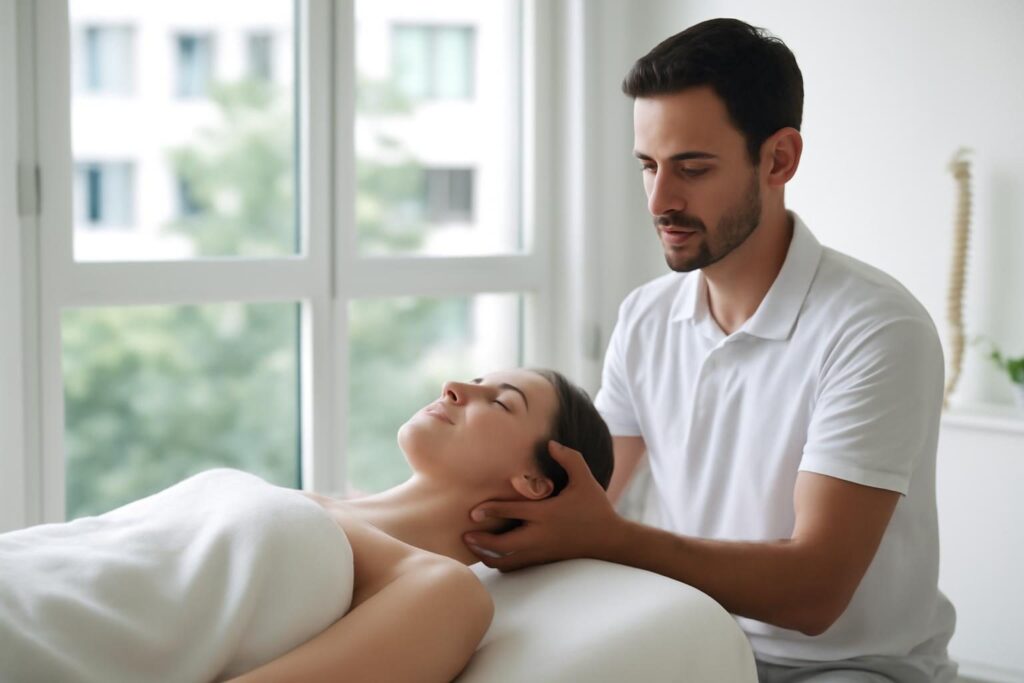
A neutral, editorial directory of notable osteopaths practising in Singapore, grouped by sub-specialty to help you find the right expertise. This is not a ranking and not a paid listing.
How we compiled this directory
We list established, currently-practising osteopaths with a clear public professional footprint, chosen to cover the main areas of osteopathy and manual therapy care — not by who pays. Profiles are compiled from public sources and we omit ratings and prices, which we cannot independently verify. This is an independent editorial selection, not an advertisement — see our editorial policy. Note that osteopathy is not statutorily regulated in Singapore — there is no government register — so confirm an osteopath’s recognised overseas qualification (e.g. UK/Australia) and any professional-body registration directly, and choose based on your own needs and your doctor’s advice.
Musculoskeletal — back & neck
- Martin John — Orchard Health Clinic (musculoskeletal / back & neck)
- Aman Bancil — Edge Healthcare (posture)
Sports osteopathy
- Arthur Codsi — City Osteopathy & Physiotherapy (sports osteopathy)
Paediatric & infant osteopathy
- Sara Bailes — Essence Osteopathy (paediatric & infant osteopathy)
Cranial osteopathy
- Gregory Durand — The Osteopathic Centre (cranial osteopathy)
Women’s health & pregnancy
- Grace Yap — City Osteopathy & Physiotherapy (women's health & pregnancy)
Headaches & TMJ
- Dr Jon Marshall — Back In Health Osteopathy (headaches & tmj)
General osteopathy
- Anselina Tay — The Osteopathy Clinic, SG (general osteopathy)
How to choose
- Understand the regulation — osteopathy is not statutorily regulated in Singapore. Look for a recognised overseas qualification (e.g. UK/Australia) and registration with a body such as the UK General Osteopathic Council. Where shown, “Dr” is a courtesy title, not a medical degree.
- Match the focus — musculoskeletal/back & neck, sports, paediatric & infant, cranial, women’s health/pregnancy, or headaches/TMJ.
- See a doctor first for red flags — severe or worsening pain, numbness, weakness or bladder/bowel changes need medical assessment before manual therapy.
- See our guide on osteopath vs physiotherapist vs chiropractor.
Looking for a clinic rather than a named doctor? See our shortlist of osteopathy clinics in Singapore.
Independent editorial directory — not a paid listing or ranking, and not medical advice. See our editorial policy and disclaimer.
What an osteopath treats, and when to see one
Osteopaths use hands-on (manual) techniques such as soft-tissue work, stretching and joint mobilisation to help with musculoskeletal complaints. People commonly consult an osteopath for back and neck pain, recurring headaches, posture-related strain, sports injuries, jaw (TMJ) discomfort, and pregnancy-related aches. Some practitioners also offer gentler approaches for infants and children. Osteopathy aims to improve movement and reduce pain; it is not a substitute for medical diagnosis, and longstanding or unexplained symptoms should be assessed by a doctor first.
What to look for when choosing an osteopath in Singapore
Because osteopathy is not statutorily regulated here, there is no government register to check, so it is worth doing your own due diligence:
- Qualification: Ask where they trained and whether the qualification is recognised in countries with established osteopathic regulation, such as the United Kingdom or Australia.
- Professional registration: Membership of a recognised body, for example the UK General Osteopathic Council, signals adherence to professional standards.
- Relevant focus: Match the practitioner to your need, whether that is back and neck pain, sports, paediatric care, cranial work, women’s health, or headaches and TMJ.
- Clear communication: A good first session should include a history, an examination and a plan you understand, including how many sessions might be expected.
Where you see “Dr” before a name, treat it as a courtesy title rather than evidence of a medical degree, and ask directly about training if you are unsure.
Costs and financing
Osteopathy is generally provided privately and paid out of pocket. As a complementary manual therapy, it is typically not claimable under MediSave or MediShield Life. Some private health or accident insurance plans may reimburse manual-therapy sessions, sometimes only with a doctor’s referral, so check your policy terms before booking. Always confirm the fee per session in advance.
Questions to ask at your first consultation
- Where did you train, and which professional body are you registered with?
- What do you think is causing my symptoms, and is osteopathy appropriate for it?
- How many sessions might I need before we review progress?
- Are there any signs that mean I should see a doctor instead?
Common questions
Do I need a doctor’s referral to see an osteopath?
No referral is required to consult an osteopath privately in Singapore. However, severe or worsening pain, numbness, weakness, or changes in bladder or bowel control should be assessed by a doctor before any manual therapy.
How is an osteopath different from a physiotherapist or chiropractor?
All three use hands-on care, but their training and emphasis differ. Osteopaths often blend soft-tissue, stretching and joint techniques across the whole body, while physiotherapists are statutorily regulated and lean on exercise rehabilitation, and chiropractors focus on the spine. The right choice depends on your condition and preferences.
Is osteopathy safe?
For most musculoskeletal complaints the techniques are gentle and well tolerated, though mild soreness afterwards is common. Discuss your medical history and any concerns about specific techniques beforehand so the practitioner can adapt the treatment.
Part of our Allied health & therapy guides · Browse all health topics
Listed here, or want to be? If you are a doctor or clinic featured on this page and would like your entry corrected, updated or removed — or you would like to be added or featured — please reach out to us or use our contact form.