
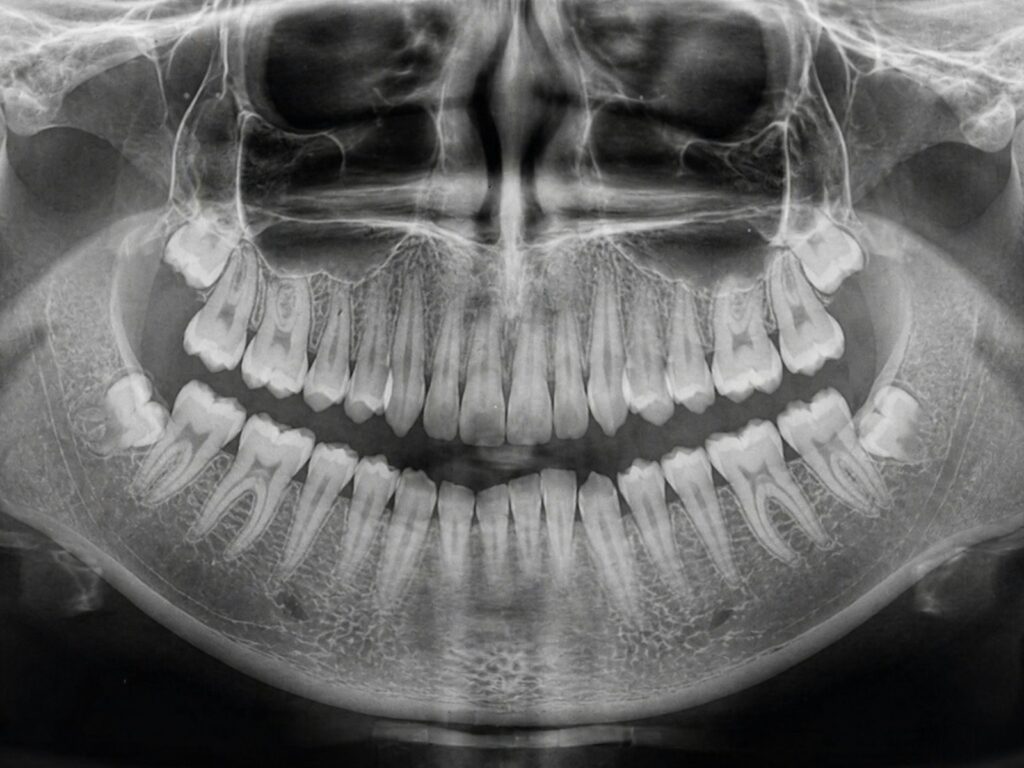
Wisdom teeth are the third and final molars, usually appearing in the late teens to early twenties. An impacted wisdom tooth cannot fully erupt because there is not enough room or it is blocked by other teeth, bone or gum — and a partially erupted tooth, left with a hard-to-clean flap of gum, is the most problem-prone. Crucially, not all wisdom teeth need removal: healthy, well-positioned, fully erupted and cleanable ones can simply be kept and monitored. Removal is a treatment for problems, not an automatic step for everyone.
Troubled by tooth pain, gum problems or a dental concern?
Message our care team on WhatsApp. Tell us what’s going on and we’ll help you find the right dentist — free, with no obligation.
Chat with our care team on WhatsAppNot sure who to see? Find the right specialist →
In a medical emergency, or for severe or sudden symptoms such as breathing difficulty, chest pain, fainting or stroke signs, call 995 immediately.
Facial or neck swelling with a wisdom-tooth infection, fever, an inability to open the mouth, or difficulty swallowing needs same-day dental or medical care — and if swelling affects breathing, call 995.
Why wisdom teeth cause problems
The modern jaw is often too small to fit the third molars, so they erupt at an angle, get stuck, or only partly break through. A partially erupted tooth leaves a gum flap and a pocket where food and bacteria collect, which drives most complications. Because they sit right at the back, wisdom teeth are hard to brush and floss even when fully through, raising the risk of decay and gum disease on both the wisdom tooth and the neighbouring second molar.
Signs and consequences
Common signs are pain or an ache at the back of the jaw, a red, swollen or sore gum over the tooth, a bad taste or bad breath, and difficulty opening the mouth or chewing. Pericoronitis — infection of the gum flap over a partially erupted tooth — is a frequent cause of acute pain and swelling. Decay and gum disease can affect both the wisdom tooth and its neighbour, and, less commonly, a cyst or (rarely) a tumour can form around an impacted tooth and slowly damage bone with few early symptoms, which is why periodic X-ray review matters. The common worry that wisdom teeth push the front teeth crooked is debated, so it is best not treated as a definite cause.
Red flags
A dental infection is not “just a toothache.” Seek urgent care for facial or jaw swelling with a wisdom-tooth infection, fever and feeling generally unwell; an inability to open the mouth normally with swelling; or — most seriously — difficulty swallowing, drooling, difficulty breathing, or swelling spreading to the neck or towards the eye, which can become life-threatening. Airway compromise is a 995 emergency. After an extraction, uncontrolled bleeding, severe worsening pain (possible dry socket), high fever or spreading swelling all warrant urgent contact with the dental provider. Never rely on leftover antibiotics to ride out a spreading infection.
How dentists assess
Assessment involves a clinical examination of the tooth’s position, the gum condition, signs of decay or infection, and how far the mouth opens, along with a dental X-ray — often a panoramic (OPG) view — to show the tooth’s angle, depth and roots and its relationship to the nerve in the lower jaw and the adjacent teeth. General dentists manage many cases and straightforward extractions, while deeply impacted or higher-risk cases (for example close to the nerve) are commonly referred to an oral and maxillofacial surgeon.
Treatment: monitor or remove
Monitoring is a valid, evidence-based option: if the tooth is healthy, well-positioned, fully erupted and not causing problems, dentists typically leave it and review it at check-ups. Removal is advised for recurrent or severe pericoronitis, decay in the wisdom tooth or its neighbour that cannot be restored well, gum disease and bone loss around it, cysts or other pathology, damage to the adjacent tooth, or as part of certain treatment plans. Extraction is usually done under local anaesthetic, with sedation or general anaesthetic for complex cases or anxious patients; the surgeon may make a small gum incision, remove a little bone and section the tooth to remove it in pieces, then place stitches. Swelling (often peaking at two to three days), discomfort and jaw stiffness are common for several days up to about two weeks, managed with pain relief, a soft diet and gentle oral hygiene. Possible complications include dry socket, infection, bleeding and temporary (rarely lasting) numbness of the lip, tongue or chin from nerve irritation with lower extractions — which is exactly why the decision is weighed carefully.
Keeping wisdom teeth healthy
If your wisdom teeth are being monitored, good day-to-day care keeps them out of trouble. Because they sit at the very back, angle the brush to reach behind the last molar and spend extra time there, and clean along the gumline where the gum flap of a partially erupted tooth traps debris; an interdental brush or a single-tufted brush can help reach awkward spots, and an antiseptic mouthwash may be suggested during a pericoronitis flare. Attending routine check-ups matters even without symptoms, so that decay, gum disease or a developing cyst can be caught early on examination and X-ray, and rinsing with warm salty water can ease a mild gum-flap flare while you arrange to be seen. If a partially erupted tooth flares up even once, it is worth an assessment, because pericoronitis tends to recur.
When to see a dentist
See a dentist for recurring pain, swelling or a bad taste around a back tooth, for food constantly trapping behind the last molar, or if you cannot clean the area — and urgently for any red flag above.
Related dental & oral-health topics
- Oral thrush
- Tooth erosion
- Geographic tongue
- Leukoplakia
- Burning mouth syndrome
- Plaque & tartar
- Oral hygiene
- Tooth loss
- Teething
- Gum disease
- Dentists in Singapore
Sources
- NHS — Wisdom tooth removal: nhs.uk
- National Dental Centre Singapore — Impacted Wisdom Teeth: ndcs.com.sg
- SingHealth — Wisdom Tooth Surgery: singhealth.com.sg
- ADA MouthHealthy — Wisdom Teeth: mouthhealthy.org