
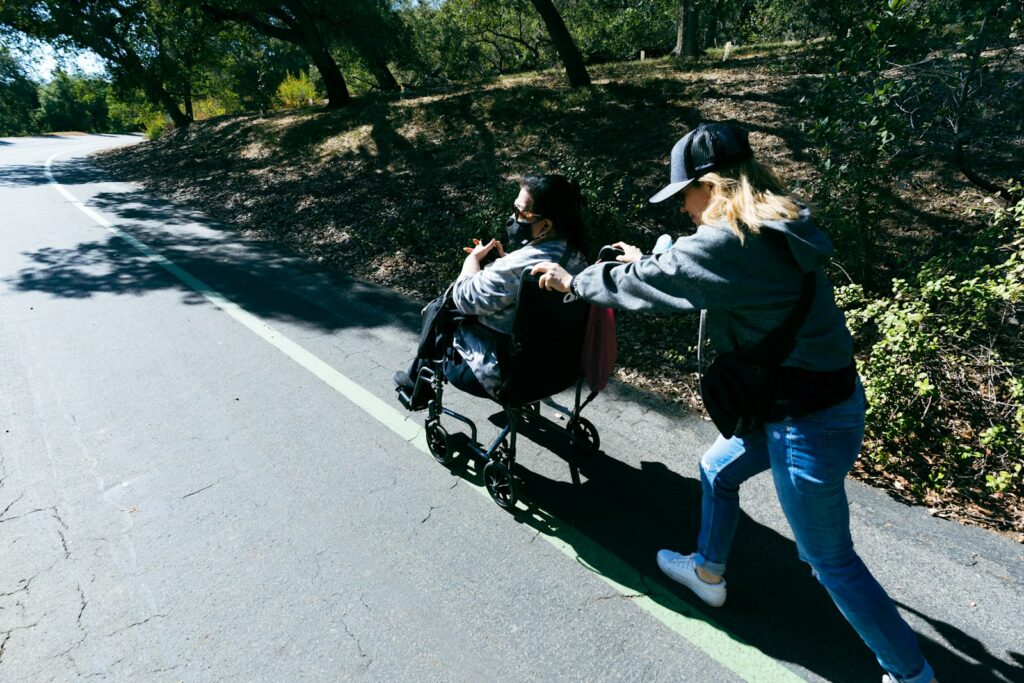
Quick answer. Getting the right wheelchair – assessed and prescribed by a therapist rather than bought off the shelf – is central to mobility, independence and skin health after a spinal cord injury. A properly fitted pressure-reducing cushion, good seating, and wheelchair skills all matter. Protecting your shoulders through good technique and lightweight, well-maintained equipment is essential, because shoulder overuse is common. Staying physically active brings real benefits for strength, mood, sleep, energy, pain and long-term health, and adaptive sport is a great route to it. Build up gradually with guidance from your physiotherapist and rehabilitation team.
Recovering from injury, pain or surgery and want to move better?
Message our care team on WhatsApp. Tell us what’s going on and we’ll help you find the right physiotherapist — free, with no obligation.
Chat with our care team on WhatsAppNot sure who to see? Find the right specialist →
In a medical emergency, or for severe or sudden symptoms such as breathing difficulty, chest pain, fainting or stroke signs, call 995 immediately.
Getting the right wheelchair
The right wheelchair depends on your function, level of injury, environment and goals, which is why professional assessment by a therapist or seating clinic is strongly advised rather than buying something off the shelf. Choices include manual versus powered, the frame and drive type, and the controls, and the best option is the one matched to you. A properly fitted, pressure-reducing cushion lowers the risk of pressure injuries compared with basic foam, and the seating, tilt or recline and overall set-up affect your posture and skin. Taking the time to get this right, with expert help, pays off every day in comfort, function and health.
Manual wheelchairs and your shoulders
If you use a manual wheelchair, small choices protect your shoulders over the long term. Use the lightest suitable frame, keep the tyres inflated and the chair well maintained to reduce rolling resistance, and use long, smooth propulsion strokes – letting the hand drift low, below the push-rim – rather than short, rapid pushes. These techniques make each push more efficient and reduce the strain on your shoulders, which do a great deal of work in daily wheelchair use. Because shoulder overuse injuries are common and accumulate over time, building good habits from the start is one of the best investments you can make in your future mobility.
Building wheelchair skills
Wheelchair skills – steering, efficient propulsion, managing kerbs and ramps, and safe transfers – are trained by physiotherapists and occupational therapists, and they make a big difference to your independence and ability to get around your home and community. These skills take practice, but they open up access to places and activities that might otherwise feel out of reach. Asking your therapy team for skills training, and practising regularly, builds confidence as well as competence. The more capable you become at handling your wheelchair in different situations, the more freely and safely you can take part in everyday life.
Safer transfers and pressure relief
How you transfer and relieve pressure has a direct effect on your shoulders and skin. Repeated push-up-style pressure reliefs and overhead lifting load the shoulder heavily, so it is better to use side-to-side or forward-lean pressure reliefs, and safer transfer techniques, all trained and reviewed by a therapist. Getting your technique checked periodically, as your strength and circumstances change, helps you keep transferring safely. These everyday movements happen many times a day, so small improvements in technique add up to real protection for your shoulders over the years, while also reducing the risk of falls and skin damage during transfers.
Why staying active matters
Staying physically active after a spinal cord injury has clear and wide-ranging health benefits: better strength and flexibility, improved mood, sleep and energy, help with pain, and a reduced risk of heart disease and diabetes. Activity is not just about fitness – it supports mental wellbeing and independence too. Because a spinal cord injury changes how the body responds to exercise, it is important to check with your doctor before starting or stepping up activity and to build up gradually. Your rehabilitation team can help you find activities that suit your level of injury, your interests and your goals, so that staying active becomes sustainable.
Building an activity routine
A well-rounded activity programme includes several elements: aerobic activity such as hand-cycling, rowing, swimming, brisk pushing or wheelchair sports; strengthening, especially of the shoulder-stabilising muscles; flexibility and stretching; and functional and balance work. Adaptive sport is a recognised and enjoyable route to activity and to taking part in community life, and occupational therapy additionally supports home and community access, equipment and daily-living adaptations. Starting small and increasing gradually, with your physiotherapist helping set safe, individual goals, works best. The aim is an active routine you can enjoy and sustain, rather than short bursts of intense effort.
Staying safe during activity
A few safety points help you stay active without setbacks. Address any persistent shoulder pain early rather than pushing through, since overuse injuries are common and largely preventable. Watch for triggers of autonomic dysreflexia during activity if your injury puts you at risk, and be mindful of skin and pressure during exercise, as well as the body’s reduced ability to regulate temperature. New pain, skin marks that do not fade, or a sudden change in spasticity during activity should be checked. Your physiotherapist can help you set safe, individual intensities and progress them sensibly, so that activity supports your health rather than causing new problems.
Support in Singapore
You have support to draw on. In Singapore, physiotherapists and occupational therapists in the public hospitals, including at the Tan Tock Seng Hospital Rehabilitation Centre, can assess your wheelchair and seating, train transfers and wheelchair skills, and help you build a staying-active programme. SPD and the Handicaps Welfare Association offer rehabilitation, assistive technology and support, SG Enable can advise on assistive technology and community access, and the Singapore Disability Sports Council is the national body for adaptive sport. Connecting with these organisations opens doors to the right equipment, skills and activities, and to a community of others living active lives after spinal cord injury.
Related spinal cord injury topics
- Living with a spinal cord injury
- Understanding spinal cord injury & recovery
- Bladder management
- Bowel management
- Autonomic dysreflexia
- Preventing pressure injuries
- Spasticity & pain
- Emotional wellbeing & adjusting
- Caring for someone with a spinal cord injury
- Physiotherapists in Singapore
Sources
- MSKTC – The power wheelchair: what the SCI consumer needs to know: msktc.org
- MSKTC – Exercise after spinal cord injury: msktc.org
- Spinal Injuries Association – Knowledge Hub: spinal.co.uk
- MSKTC – Spinal cord injury factsheets: msktc.org