
Quick answer. A heart valve is replaced when valve disease becomes severe – most commonly severe aortic stenosis. There are two main approaches. Surgical valve replacement is open-heart surgery using either a mechanical valve (very durable but requiring lifelong blood-thinning with warfarin) or a tissue valve (avoids long-term blood thinners but wears out sooner). TAVI (transcatheter aortic valve implantation) is a minimally invasive alternative that threads a new valve to the heart through a catheter, usually via the groin, without opening the heart – giving a shorter recovery. A heart team decides which option suits each patient; TAVI is available at Singapore’s national heart centres.
Chest pain, palpitations or breathlessness on your mind?
Message our care team on WhatsApp. Tell us what’s going on and we’ll help you find the right cardiologist — free, with no obligation.
Chat with our care team on WhatsAppNot sure who to see? Find the right specialist →
In a medical emergency, or for severe or sudden symptoms such as breathing difficulty, chest pain, fainting or stroke signs, call 995 immediately.
Coming to Singapore from overseas for treatment? See our guide for international patients — costs, visas, travel and language support — or chat with our care team on WhatsApp.
Choosing how to replace a valve is a genuine trade-off – between durability, the need for blood thinners, and how big an operation a person can tolerate. The heart team matches the approach to the individual.
What heart valve replacement is
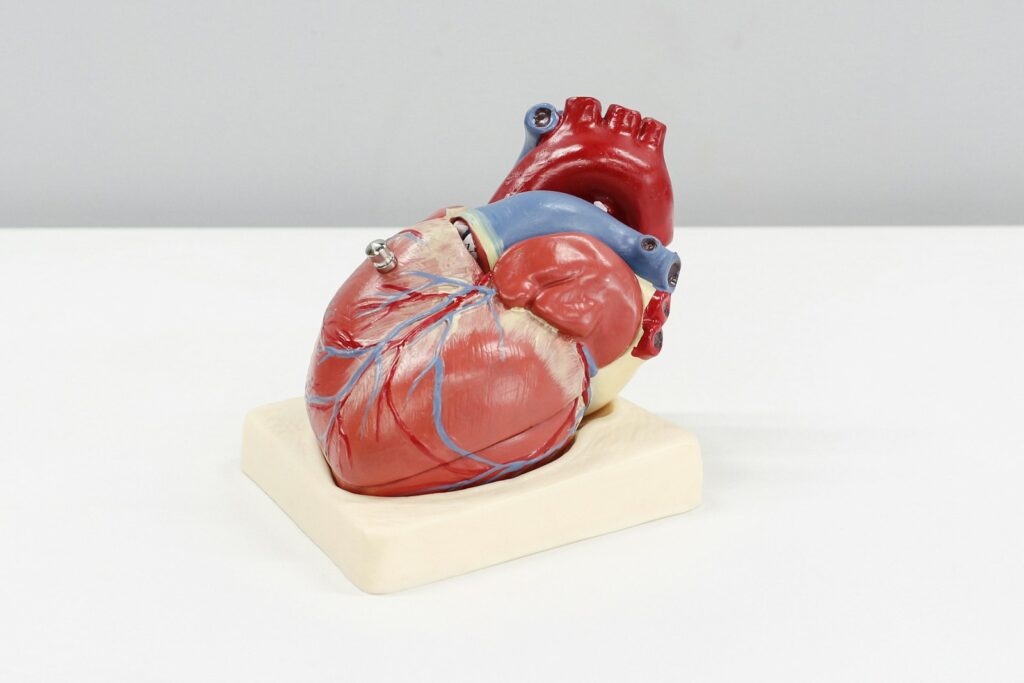
The heart has valves that open and close to keep blood flowing in one direction through its chambers. When a valve becomes badly diseased – either too narrow to open fully, or too leaky to close properly – the heart has to work harder and blood flow suffers. Valve replacement means removing or bypassing the diseased valve and putting a new, artificial valve in its place to restore normal flow and relieve symptoms. The valve most often replaced is the aortic valve, the main outlet valve of the heart, usually because it has narrowed – a condition called aortic stenosis. A leaking valve can also be replaced when the leak is severe.
There are two broad ways to do this. The first is traditional open-heart surgery, in which the surgeon reaches the valve directly and fits the new one. The second is TAVI (transcatheter aortic valve implantation), a minimally invasive, catheter-based method in which a new valve is guided to the heart through a blood vessel, without opening the chest. Both aim to restore normal blood flow; they differ in how the valve is delivered and in what recovery involves.
Why valve replacement is done
Replacement is considered when valve disease is significant and is either causing symptoms or beginning to affect how well the heart pumps. Common symptoms of a failing valve include breathlessness – especially on exertion or when lying flat – chest tightness or pain, dizziness, and fainting or near-fainting. Some people notice tiredness, palpitations, or swelling of the ankles. When such symptoms appear alongside severe valve disease, the valve is usually the underlying cause, and replacing it is the definitive treatment. Replacement may also be advised, after specialist assessment, when tests show the valve is severely affected and the heart muscle is under strain, even before symptoms become obvious. A cardiologist weighs the findings and the person’s overall health before recommending it.
Valve types – mechanical and tissue
Whichever route is used, the new valve is one of two general kinds, and the choice is itself a trade-off that the team discusses with each person.
- Mechanical valves are made from hard-wearing man-made materials and are very durable, often lasting for the rest of a person’s life without wearing out. The trade-off is that they need lifelong blood-thinning medicine to stop clots forming on the valve, along with regular blood tests to keep the dose right. Because of the long lifespan, they are often considered for younger people.
- Tissue (biological) valves are made from specially treated animal or human tissue. Their advantage is that they usually do not require long-term blood thinners, which lowers the day-to-day burden and bleeding risk. The trade-off is that they can wear out over time and may need replacing later. They are often chosen for older people, or where long-term blood-thinning medicine would be unsuitable.
There is no single right answer. The team advises which valve suits the individual, weighing age, other health conditions, lifestyle, the ability to attend regular monitoring, and personal preference.
Surgical replacement versus TAVI – who each suits
Open surgical valve replacement is a long-established, well-proven operation with a strong track record, and it allows the surgeon to address the valve directly and deal with other heart problems at the same time if needed. TAVI is a newer, minimally invasive approach. It was first developed for people who were considered too high-risk for open surgery, and its use has since broadened. Today the choice between the two is made by a multidisciplinary heart team – typically a cardiologist, a cardiac surgeon, and imaging and anaesthetic specialists – who consider the person’s age, general fitness, the anatomy of the heart and blood vessels, and other medical conditions. In general terms, TAVI is often favoured for older people or those at higher risk from open surgery, while open surgery remains a mainstay for many others; the heart team’s judgement, rather than any single factor, guides the decision.
How each procedure is done
Surgical valve replacement is carried out under general anaesthetic, so the person is fully asleep. The surgeon opens the chest to reach the heart, removes or repairs the diseased valve, secures the new one, and closes the chest, after which there is a hospital stay and a structured recovery. TAVI is done through a blood vessel – most often an artery in the groin – through which a catheter carries the folded new valve up to the heart, where it is expanded into position inside the old valve using imaging for guidance; the chest is not opened. Because it is less invasive, TAVI is sometimes performed with sedation while the person is awake or lightly sedated rather than under full general anaesthetic, and it usually involves less downtime. The heart team explains beforehand which approach and which form of anaesthesia are planned.
Preparation and the heart team assessment
Before either procedure there is a thorough assessment. This typically includes heart imaging to measure the valve and to map the size and shape of the blood vessels and the heart’s chambers, blood tests, and a review of the person’s general health and medicines. The findings let the heart team judge whether surgery or TAVI is more appropriate and plan the details safely. People are usually advised on which medicines to continue or pause, on fasting before the procedure, and on stopping smoking. It is a good time to ask questions about the valve type, the recovery, and what to expect afterwards, so that the decision is a shared one.
Recovery
Recovery after open surgical replacement takes longer, because the chest and breastbone need time to heal. There is a hospital stay followed by a gradual return to activity over weeks, guided by a structured cardiac rehabilitation programme that builds up exercise, offers advice on daily activity and lifestyle, and supports the heart’s recovery. Heavy lifting and driving are restricted for a period while healing takes place. Recovery after TAVI is usually quicker, with a shorter hospital stay and an earlier return to normal activities, because there is no chest wound to heal – though the access site in the groin still needs care. Both groups have ongoing follow-up with the heart team, including checks of the new valve and of general heart health, and medicines are reviewed at these visits.
Risks and complications
As with any heart procedure, valve replacement carries risks, which the team weighs against the benefits for each person. Possible complications include bleeding, infection, and stroke. Heart rhythm problems can occur, and some people need a permanent pacemaker afterwards to keep the heartbeat steady. There can be problems with the valve itself, such as a small leak around it, or with the access site used for TAVI, such as damage to the blood vessel. General anaesthetic, where used, carries its own small risks. The overall level of risk depends on the person’s age, heart function, and other health conditions, and this is exactly what the heart team assesses in advance so that the safest approach is chosen.
Living with a new valve
After valve replacement, taking medicines exactly as prescribed is important. For a mechanical valve, the blood-thinning medicine must not be stopped without medical advice, because stopping it risks a dangerous clot forming on the valve; any planned change, including before dental work or other surgery, should be discussed with the heart team first. People with any artificial valve should keep up good dental hygiene and tell dentists, doctors, and other healthcare providers that they have a replacement valve, because this helps reduce the risk of a valve infection and guides safe care. Regular follow-up appointments allow the valve and the heart to be monitored over time. A heart-healthy lifestyle – not smoking, staying active as advised, and attending cardiac rehabilitation – supports long-term recovery. In Singapore, valve replacement and TAVI are performed at the national heart centres, with care shared between a cardiologist and, where surgery is involved, a cardiac surgeon; general information for patients is also available through HealthHub.
When to seek help after the procedure
After valve replacement, seek urgent medical care if you develop a fever, or if the surgical wound or the groin access site becomes red, swollen, painful, or starts to ooze or bleed. Also seek urgent care for new or worsening breathlessness, chest pain, fainting or blackouts, or any sign of stroke. Call 995 immediately for chest pain, severe breathlessness, or stroke signs – face drooping, arm weakness, or slurred speech. It is always safer to be checked than to wait. Anyone with known severe valve disease, or with breathlessness, chest pain, dizziness or fainting, should see a cardiologist to assess whether valve replacement is needed and which approach is appropriate.
Related heart conditions & procedures
- Aortic stenosis (narrowed valve)
- Aortic dissection
- Carotid artery disease
- Heart block & slow heart rate
- Infective endocarditis
- Rheumatic heart disease
- Pulmonary hypertension
- Heart bypass surgery (CABG)
- Cardiac catheterisation & angiogram
- Heart valve disease
- Coronary artery disease & angina
- Cardiologists in Singapore
Sources
- SingHealth — TAVI (minimally invasive catheter procedure via a small groin/chest incision; recovery; suited to high-surgical-risk patients).
- National Heart Centre Singapore (NHCS) / National University Heart Centre (NUHCS) — structural heart disease and treatment options (surgical replacement, off-pump/minimally invasive surgery, and TAVI decided by a heart team).
- Mayo Clinic / Edwards Lifesciences — mechanical vs tissue valve trade-off (durability vs lifelong anticoagulation).