
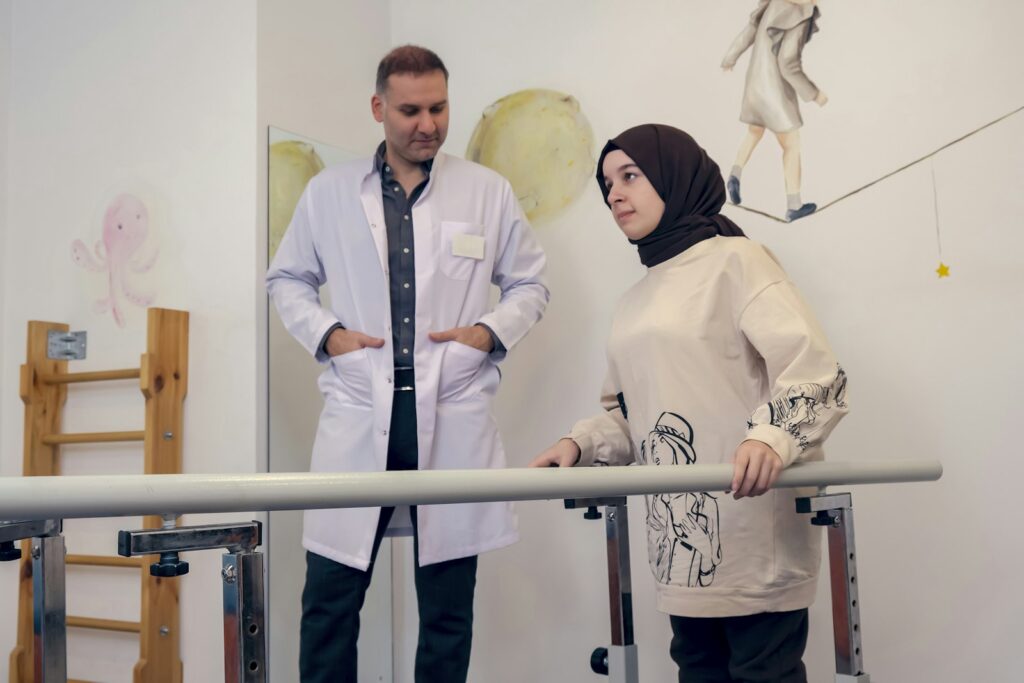
Quick answer. Recovery after a stroke is genuinely possible, and rehabilitation is the central part of it. Because a stroke damages the brain, survivors often have to relearn skills – walking, using a hand, speaking, swallowing – and structured rehabilitation helps the brain rewire so lost function can be regained. In Singapore, rehabilitation is delivered by a multidisciplinary team across a care continuum: the acute hospital stroke unit, then a community or rehabilitation hospital, day rehabilitation, and therapy at home. Improvement is often fastest in the first weeks and months but can continue over many months to years. (A stroke is still an emergency – remember FAST and call 995.)
Troubled by headaches, dizziness, numbness or memory changes?
Message our care team on WhatsApp. Tell us what’s going on and we’ll help you find the right neurologist — free, with no obligation.
Chat with our care team on WhatsAppNot sure who to see? Find the right specialist →
In a medical emergency, or for severe or sudden symptoms such as breathing difficulty, chest pain, fainting or stroke signs, call 995 immediately.
Life after a stroke is a marathon, not a sprint. With skilled, sustained rehabilitation and good secondary prevention, many survivors regain substantial function and independence.
What stroke recovery and rehabilitation are
Stroke recovery is the process of regaining abilities and adapting to changes after a stroke has injured part of the brain. Rehabilitation is the structured, guided work that supports this. Through repeated, task-specific practice, the brain can relearn skills and reorganise itself, forming new pathways so that other regions take on lost functions. Rehabilitation aims to help each person become as independent as possible and to protect their quality of life – not only to move or speak again, but to return to the roles, routines and relationships that matter to them.
An important and encouraging truth is that recovery varies a great deal from person to person. Some regain function quickly; for others progress is slower and steadier. Improvement is often fastest in the early weeks and months, but the brain can keep adapting for a long time, so continuing to work at rehabilitation remains worthwhile well beyond the initial period. Progress is rarely a straight line, and plateaus do not mean the end of recovery.
The rehabilitation team
Stroke rehabilitation is teamwork. A multidisciplinary team works alongside the survivor and their family, setting shared goals and adjusting the plan as things change:
- Rehabilitation physician and doctors – oversee the medical plan, manage complications and coordinate care.
- Physiotherapist – strength, standing, balance, walking and safe movement.
- Occupational therapist – everyday activities, arm and hand use, aids and home adaptations.
- Speech and language therapist – speech, language, communication and swallowing.
- Dietitian – nutrition, including safe textures where swallowing is affected.
- Nurses – day-to-day care, skin, continence and medicines.
- Psychologist and medical social worker – mood, thinking, coping, and community and financial support.
The survivor and family are the most important members of this team. Sharing what daily life looks like and what a good day would feel like helps everyone aim at goals that truly matter.
Common effects of a stroke – and how rehab helps
A stroke can leave a range of effects, and rehabilitation has a targeted response to each. Not everyone has all of these, and many improve with practice and support.
- Weakness or paralysis on one side, and mobility. Physiotherapy rebuilds strength, balance and walking through graded, repeated practice, and where helpful introduces aids to keep moving safely.
- Difficulty with everyday tasks and returning to activities. Occupational therapy helps with washing, dressing, cooking and getting around, retrains arm and hand use, and suggests simple home changes and equipment so daily life becomes more manageable.
- Speech, language and communication difficulties. Speech and language therapy supports understanding and being understood – through speech practice and, where needed, other ways to communicate – so the person can stay connected to others.
- Swallowing difficulties. The team assesses swallowing and provides safe-swallowing techniques and modified food and drink textures to reduce choking risk and protect the chest, adjusting as swallowing improves.
- Vision, and thinking, memory and attention changes. Therapy uses strategies, practice and adaptations to help with visual changes and with concentration, memory and planning, so tasks feel less overwhelming.
- Fatigue. Post-stroke tiredness is real and common; the team helps with pacing, rest and gradually building activity so energy is used well.
- Emotional effects. Low mood, anxiety and frustration are common after a stroke – and they are treatable. Talking to the team opens the door to psychological support and other help, which also aids physical recovery.
Where rehabilitation happens
Rehabilitation follows a continuum rather than a single place. It usually begins in the acute hospital, often on a stroke unit, soon after the person is stable. Many then move to an inpatient rehabilitation or community hospital for more intensive daily therapy. As independence grows, care shifts to day rehabilitation while living at home, and to therapy and exercises at home, sometimes supported remotely. Wherever it happens, the value of keeping up exercises between and after formal sessions is hard to overstate – the regular, repeated practice built into daily routines is what helps gains take hold and continue.
Why early and ongoing rehab – and your active role – matter
Rehabilitation tends to work best when it starts early, is done often, and involves many repetitions of meaningful tasks. Beginning soon after a stroke, and then keeping going, gives the brain the best chance to reorganise. Just as important is the active role of the survivor and family: practising between sessions, celebrating small wins, and staying engaged with the plan. Setbacks and slow patches are normal; steady effort over time is what carries recovery forward.
Preventing another stroke – a key part of recovery
Having one stroke raises the risk of another, so secondary prevention is part of recovery, not separate from it. The main steps are:
- Take prescribed medicines and do not stop them without advice. These may include blood thinners and treatment for blood pressure and cholesterol. Stopping suddenly can be dangerous – always speak to your doctor first.
- Control blood pressure, diabetes and cholesterol with your doctor’s guidance.
- Stop smoking – one of the most powerful ways to lower risk.
- Eat well and stay active as you are able, working within what your therapists advise.
- Treat atrial fibrillation (an irregular heartbeat), an important and manageable cause of stroke.
Your exact targets and medicines are set by your doctor. Attending follow-up appointments keeps this prevention on track.
Support for caregivers
Caring for someone after a stroke is meaningful but can be demanding, physically and emotionally. Caregivers should know that looking after themselves is part of looking after their loved one. Learning practical skills from the team, accepting help, and using respite care when needed all help sustain caregiving over the long haul. Support, information and someone to talk to are available – asking for them is a sign of strength, not failure.
Stroke rehabilitation and support in Singapore
Singapore offers rehabilitation across the whole continuum, from acute stroke units through community and rehabilitation hospitals, day rehabilitation and home therapy, with longer-term co-management by a family doctor. The National Neuroscience Institute provides specialist stroke care and multidisciplinary rehabilitation. Community care and caregiver support are coordinated with help from the Agency for Integrated Care, and stroke-specific programmes, activities and peer support are offered through organisations such as the Singapore National Stroke Association and the Stroke Support Station. HealthHub is a trusted local source of information on post-stroke care and support services.
Setting goals and staying hopeful
Clear, personal goals give rehabilitation direction – whether that is walking to the coffee shop, holding a spoon, or joining a family conversation. Working with the team to set goals that are meaningful to you, then breaking them into small steps, makes progress visible and keeps motivation up. Recovery is deeply individual, and while it takes patience, many survivors continue to improve and to build a full, connected life after stroke. Hope, paired with steady practice and good prevention, is well founded.
When to seek help
See a doctor promptly for new or worsening problems – increasing weakness, swallowing trouble, low mood, falls, or difficulty coping at home – so your plan can be adjusted. Most importantly, because a survivor is at higher risk of another stroke, recognise a new stroke with FAST: Face drooping, Arm weakness, Speech difficulty, Time to call 995. Call 995 immediately for any new stroke symptoms, even if they pass, and never stop your prescribed stroke-prevention medicines without medical advice (see stroke warning signs).
Related brain & nerve conditions
- Transient ischaemic attack (TIA / mini-stroke)
- Brain aneurysm & subarachnoid haemorrhage
- Meningitis
- Encephalitis (brain inflammation)
- Motor neurone disease (MND / ALS)
- Guillain-Barré syndrome
- Normal pressure hydrocephalus
- Dystonia
- Functional neurological disorder (FND)
- Stroke warning signs (FAST)
- Neurologists in Singapore
Sources
- National Neuroscience Institute (NNI), Singapore — stroke and TIA (multidisciplinary stroke team; co-management with family physicians).
- HealthHub (MOH) — post-stroke care and stroke care teams (rehabilitation goals; inpatient and day-rehab pathways; family involvement; support organisations).
- Singapore Stroke Rehabilitation Guideline and NHS — the rehabilitation continuum and the problems rehab addresses; secondary-prevention guidance (targets individualised by the doctor).