
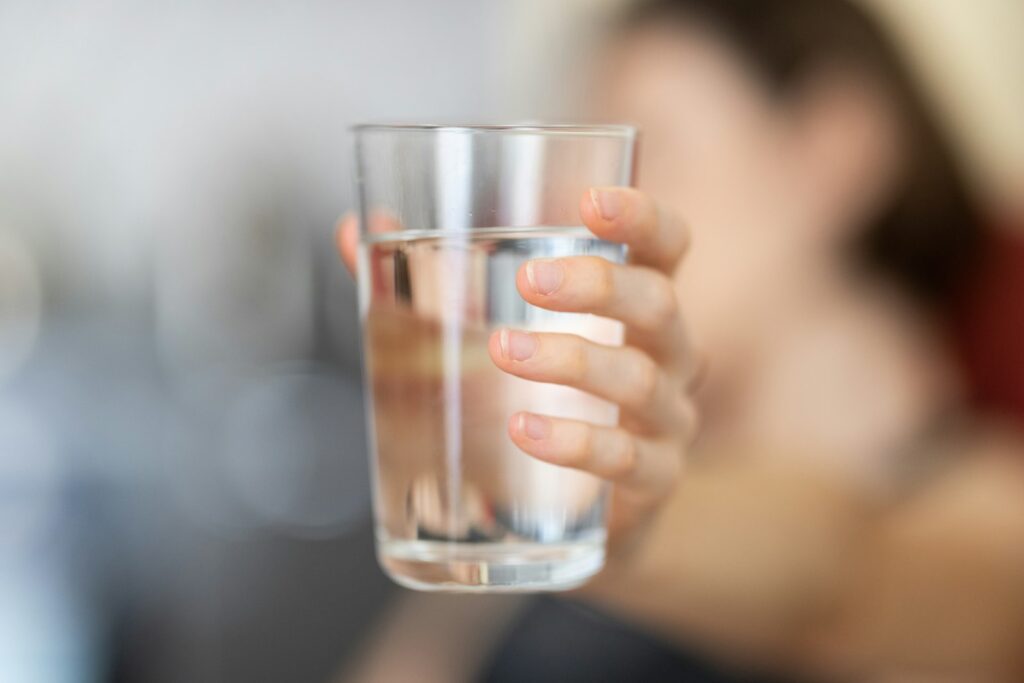
Quick answer. A common guide is about 6–8 glasses (roughly 2 litres) of water a day, but this is a rule of thumb, not a strict rule – your needs vary with body size, activity, health and the weather. In Singapore’s hot, humid climate, sweating raises fluid needs, so many people need more. Water is the best default drink; sugary drinks add sugar and calories. Watch for signs of dehydration – dark urine, thirst, tiredness, headache, dizziness, a dry mouth – and use urine colour as a quick check: pale straw means you’re well hydrated.
Staying hydrated matters more in Singapore than in cooler climates, because you lose fluid through sweat all year round. The good news is that your body gives clear signals, so you don’t need to overthink it.
How much water – and why “8 glasses” is a guide
Around 6–8 glasses (about 2 litres) a day is a helpful starting point, but the well-known “8 glasses” figure is a simplification. Real needs depend on your body weight, activity level and environment, and fluid also comes from other drinks and water-rich foods, not water alone. Use thirst and urine colour to adjust rather than fixating on a number.
Singapore’s climate raises your needs
The consistent heat and humidity increase sweating and fluid loss, so people who are active or outdoors often need more than the baseline. Drinking regularly through the day also helps prevent heat exhaustion and heat stroke.
Water is the best drink
Plain water is the healthiest default – no sugar, no calories. For flavour without sugar, infuse it with fruit, cucumber or mint. When choosing packaged or prepared drinks, use the Nutri-Grade grade to steer toward A or B and away from high-sugar options.
Signs of dehydration and the urine check
Common signs include thirst, dark and strong-smelling urine, passing urine less often, a dry mouth, tiredness, headache, and dizziness or light-headedness (especially on standing). A simple test is urine colour: pale straw means well hydrated; darker yellow means drink more. Severe dehydration – persistent dizziness, very dark or greatly reduced urine, confusion or a racing heartbeat – needs prompt medical attention.
Who needs more
Outdoor and manual workers, athletes and anyone exercising, people in hot weather, and those who are ill with fever, vomiting or diarrhoea all need extra fluids, as do women who are pregnant or breastfeeding. Replace fluids actively during and after exertion or illness rather than waiting until you feel very thirsty.
Older adults, and can you drink too much?
Older adults often have a reduced sense of thirst, so they can become dehydrated without feeling thirsty – they should sip regularly through the day rather than relying on thirst. At the other extreme, drinking too much water too quickly can dilute the blood’s sodium (hyponatraemia), but this is rare and mainly seen in extreme endurance events. For most people, the practical risk is drinking too little, not too much.
Related healthy-living guides
- Sleep hygiene: how to sleep better
- How much exercise you need
- Healthy eating: a balanced diet
- How to quit smoking
- Alcohol and your health
- Managing stress
- How to lower your blood pressure
- How to lower your cholesterol
- Healthy weight & BMI
- Preventing type 2 diabetes
- Health screening packages
Sources
- HealthHub (HPB), Singapore — hydration guidance and tips to make water more appealing.
- NHS — Dehydration (signs; urine-colour guide; when to seek help).
- Council for Third Age (C3A) / Singapore clinical sources — “8 glasses” as a rule of thumb; needs vary by person and climate.
- Mayo Clinic — water needs vary and total fluid includes food and other drinks.