
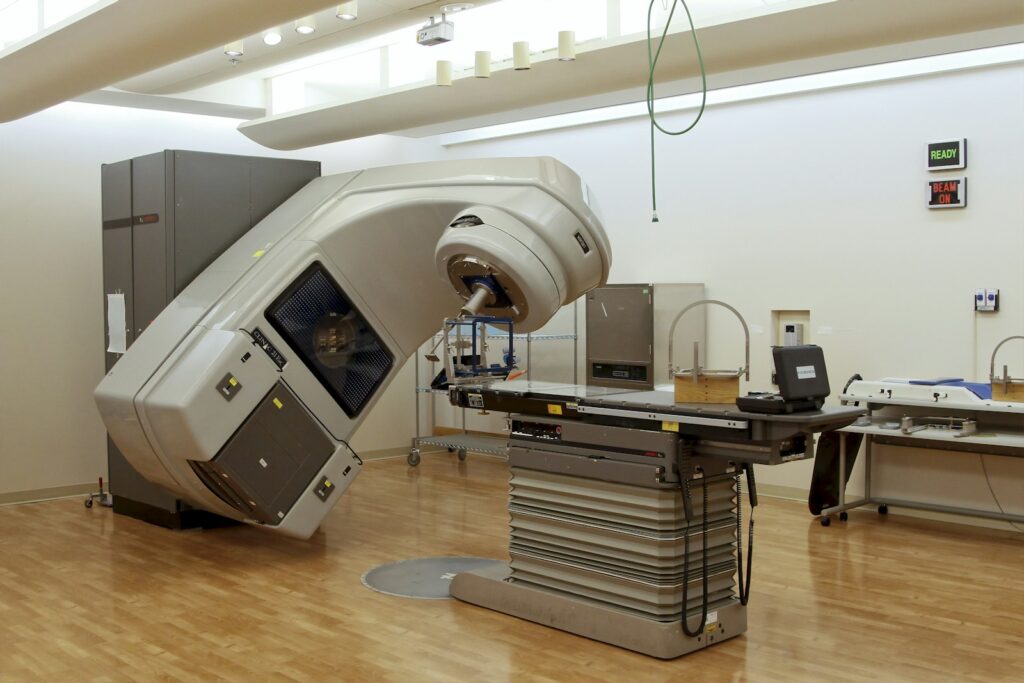
Quick answer. Radiotherapy uses high-energy radiation – usually X-rays – to destroy cancer cells in one targeted area of the body, so it’s a local treatment (unlike chemotherapy, which works throughout the whole body). With the common “external beam” type you feel nothing during treatment and you do not become radioactive, so it’s completely safe to be around family and friends.
Facing a cancer diagnosis, or worried about a symptom?
Message our care team on WhatsApp. Tell us what’s going on and we’ll help you find the right oncologist — free, with no obligation.
Chat with our care team on WhatsAppNot sure who to see? Find the right specialist →
In a medical emergency, or for severe or sudden symptoms such as breathing difficulty, chest pain, fainting or stroke signs, call 995 immediately.
Coming to Singapore from overseas for treatment? See our guide for international patients — costs, visas, travel and language support — or chat with our care team on WhatsApp.
The reassurance patients most often need: with external beam radiotherapy the radiation passes through, does its job and is gone. You are not radioactive – it’s safe to hug your children and be around pregnant women.
What radiotherapy is and how it works
Radiotherapy is one of the most widely used cancer treatments. It uses carefully measured, carefully targeted high-energy radiation – most often X-rays – aimed precisely at a tumour to destroy or damage cancer cells while sparing surrounding healthy tissue as much as possible. It works by damaging the DNA inside cancer cells so they lose the ability to grow and divide. Healthy cells in the path of the beam can be affected too, but they are generally better at repairing this kind of damage – one reason a course of treatment is usually broken into small, repeated doses rather than given all at once. Because it treats one defined area, radiotherapy is a local treatment, and every plan is worked out individually for the person and the cancer being treated.
Why radiotherapy is used – curative and palliative
Radiotherapy is a flexible treatment that can be used at different points in a person’s cancer care. Broadly, the aims fall into a few groups:
- Curative – to try to cure or control a cancer, sometimes as the main treatment on its own;
- Alongside other treatments – before surgery to shrink a tumour, after surgery to reduce the chance of the cancer coming back, or together with chemotherapy;
- Palliative – to relieve symptoms such as pain or bleeding in more advanced cancer, and to help someone feel more comfortable.
Your radiation oncologist will explain what the aim is in your situation, because this shapes how the treatment is planned and what to expect from it.
The main types of radiotherapy
There are two broad ways radiation can be delivered, and your team will tell you which applies to you:
- External beam radiotherapy – the most common form. A machine directs radiation at the tumour from outside the body, without anything being placed inside you. It is painless and is given as a series of separate sessions;
- Internal radiotherapy (brachytherapy) – a small radioactive source is placed inside or right next to the tumour, so the radiation is delivered from within the body, close to where it is needed.
Beyond these, advanced and highly precise techniques exist that shape the dose tightly around a tumour and help protect nearby healthy tissue. The right approach depends on the type of cancer, where it is and its size, and your radiation oncologist will explain which technique suits you and why.
How treatment is planned and given
Radiotherapy is carefully planned before it begins so the radiation reaches the tumour accurately and consistently. Planning usually starts with a dedicated session that involves detailed scans and careful mapping of the exact area to be treated. To make sure you are in precisely the same position each time, the team may make small marks on the skin, or make a custom-fitted mould or mask to hold the area still – often used for treatment around the head or neck.
Once planning is complete, treatment is given as a course of individual sessions, typically spread over a period of days to weeks. Each session itself is usually quick and painless; much of the appointment is spent getting you lined up correctly, and the radiation delivery lasts only a short while. A common and important reassurance is that with external beam radiotherapy you do not become radioactive – the radiation does its work and is gone, so it is safe to be with family, children and pregnant women between sessions.
What to expect during your course
For each external beam session you will usually lie still on a treatment couch while the machine moves around you and delivers the radiation. You will not feel the treatment as it happens. The radiographers position you carefully, step out of the room during delivery, and watch and speak with you throughout – you are never truly alone. During the course you will have regular reviews with your team so they can check how you are coping, look at any side effects and adjust support as needed. If you are having internal radiotherapy, your team will explain the specific arrangements and whether any short-term precautions apply.
Side effects – mostly local, and build up over time
Side effects depend on which part of the body is being treated and tend to build up gradually over the course rather than appearing all at once. Common effects include:
- Tiredness (fatigue) – very common, and it can continue for a while after treatment finishes;
- Skin changes in the treated area – such as redness, darkening, dryness or soreness, a little like sunburn;
- Area-specific effects – for example a sore mouth or throat and swallowing changes when the head and neck are treated, bowel or bladder effects when the pelvis is treated, and hair loss only in the treated area (radiotherapy does not cause hair loss all over the body the way some other treatments can).
Most short-term effects settle in the weeks after treatment ends, though a smaller number of longer-term (late) effects can develop later on. Your team will talk through the effects that are relevant to your treatment beforehand, and advise on how to manage them so you stay as comfortable as possible.
Skin care and self-care during treatment
Looking after yourself well can make the course easier. Follow the skin-care advice your team gives for the treated area – usually gentle washing, avoiding harsh products or rubbing, and protecting the skin. Beyond the skin, rest and pace yourself to manage fatigue, and try to eat and drink well to keep your strength up, which is especially important if treatment affects your mouth, throat or digestion. Just as importantly, report any troublesome side effects to your team promptly rather than waiting – there is usually something that can be done to help.
Emotional support and practical aspects
Radiotherapy is not only a physical experience. Attending sessions, often day after day, can be tiring and can take an emotional toll, and it is normal to feel anxious or low at times. Practical things like transport and time off can add to the strain. You do not have to manage this alone: support services exist for people having cancer treatment and their families, and your team can point you towards counselling, cancer support groups and practical help. In Singapore, cancer centres such as the National Cancer Centre Singapore and NCIS, along with community cancer support organisations and HealthHub, offer information and support alongside your treatment.
Follow-up after treatment
After the course finishes, you will have follow-up appointments so your team can check how the cancer has responded, keep an eye on any lingering or late side effects, and support your recovery. Some side effects continue to settle in the weeks after treatment ends, so follow-up is also a chance to raise anything new or persistent. Keep going to these appointments even if you feel well, and contact your team between visits if you have concerns.
When to seek help – red flags
During or after radiotherapy, contact your cancer team promptly for severe or worsening side effects, including significant skin breakdown or blistering, severe pain, difficulty swallowing or eating and drinking, signs of dehydration, or a fever or feeling very unwell – which can be a sign of infection, and is especially important if you are also having chemotherapy.
Seek urgent or emergency care (A&E or call 995) if you have a high fever with feeling very unwell, severe breathlessness, or uncontrolled bleeding. A cancer specialist (radiation oncologist) plans and supervises your treatment, and your team would always rather hear from you early than have you wait.
Related cancer & treatment topics
- Liver cancer
- Nasopharyngeal cancer
- Bile duct cancer
- Chemotherapy
- Immunotherapy
- Targeted therapy
- Tumour markers
- Cancer staging & grading
- Palliative care
- Cancer screening
- Oncologists in Singapore
Sources
- National Cancer Centre Singapore — Radiation therapy: how it damages cancer-cell DNA; external beam, brachytherapy and advanced precise techniques.
- Cancer Research UK — Radiotherapy: how it works, types, planning (scan, marks, masks), side effects; external-beam patients are not radioactive.
- Macmillan Cancer Support — radiotherapy: external vs internal, planning, short-term vs late effects, and support.
- NHS — Radiotherapy: external radiotherapy doesn’t make you radioactive and is safe around others.