
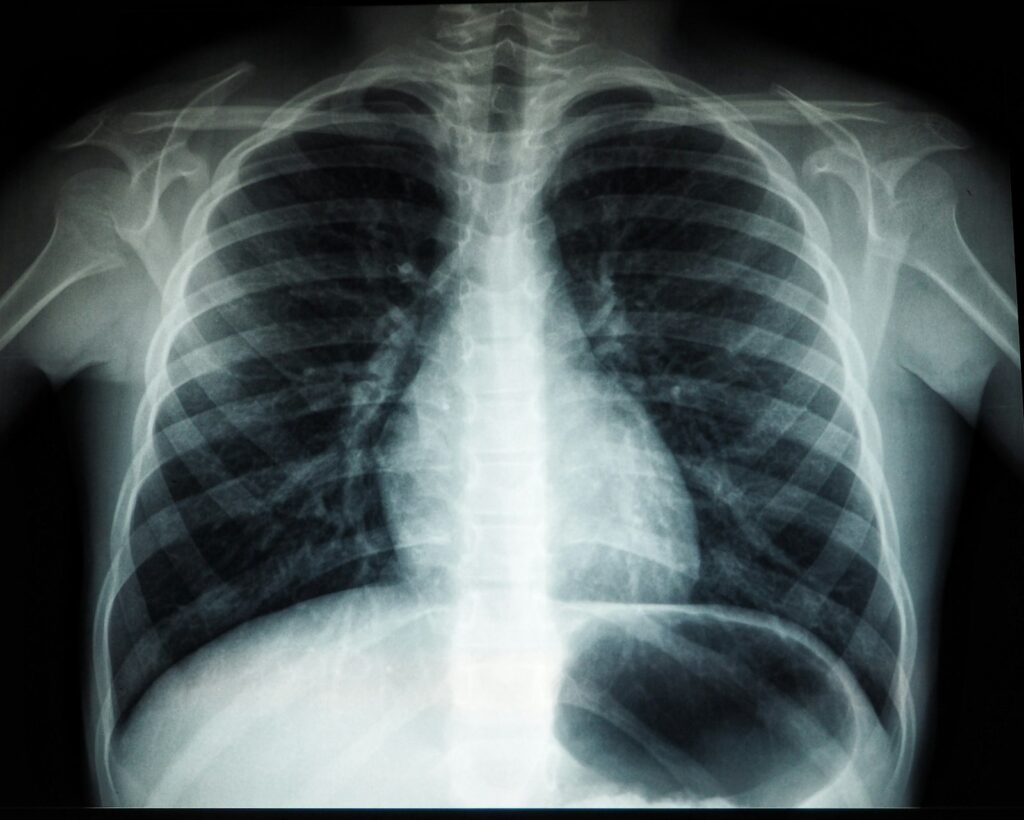
Quick answer. A pulmonary (lung) nodule is a small, rounded spot in the lung, usually 3 cm or less, often found by chance on a chest X-ray or CT scan done for another reason. The great majority are benign (not cancer) – commonly old infection scars, granulomas (including from past tuberculosis, relevant in Singapore), or benign growths. A minority need monitoring or further tests to rule out early lung cancer, so doctors weigh size, shape, growth over time, density, and risk factors like age and smoking. Most nodules are simply watched with repeat CT scans, and a nodule that stays stable is reassuring.
Breathless, wheezy, or living with a persistent cough?
Message our care team on WhatsApp. Tell us what’s going on and we’ll help you find the right respiratory physician — free, with no obligation.
Chat with our care team on WhatsAppNot sure who to see? Find the right specialist →
In a medical emergency, or for severe or sudden symptoms such as breathing difficulty, chest pain, fainting or stroke signs, call 995 immediately.
Being told you have a “spot on the lung” is understandably worrying – but it is common, and the odds are firmly in your favour that it is not cancer.
What a lung nodule is
A pulmonary nodule is a small, roughly round spot of denser tissue within the lung, seen on imaging as a well-defined dot against the darker, air-filled lung around it. By convention a nodule is a focal spot around 3 cm or less; a larger spot is called a “mass” and is taken more seriously from the outset. Nodules are extremely common, and most are picked up incidentally – found by chance on a scan ordered for something entirely unrelated, such as a chest X-ray before surgery, a CT for chest pain, or a scan of the heart or abdomen. In other words, having one usually means a scan happened to catch it, not that you had any warning sign. It is best thought of as a description of what the radiologist sees, not a diagnosis in itself – the next step is simply to work out what the spot represents.
Are lung nodules usually serious?
For most people, the answer is reassuring: the great majority of lung nodules are benign – that is, not cancer. Common harmless explanations include old, healed infections, small areas of scarring, and non-cancerous growths that will never cause trouble. A smaller proportion do need follow-up to be certain, because a nodule can occasionally be an early lung cancer or, less often, a spread (metastasis) from a cancer elsewhere in the body. This is why doctors do not simply reassure and forget – nor do they assume the worst. Instead they take a measured, structured approach that sorts nodules into lower- and higher-risk groups and matches the amount of follow-up to the actual level of concern.
Symptoms
Lung nodules are typically silent – they cause no symptoms at all, which is exactly why they are usually found by accident rather than because someone felt unwell. A nodule is generally far too small to affect breathing or to be felt in any way. If you do have symptoms such as a cough, breathlessness or chest discomfort at the time a nodule is found, these are usually due to the reason the scan was done in the first place, rather than the nodule itself. Because they are silent, the discovery of a nodule is not a sign that something has been “missed” – it simply reflects how imaging has improved at catching very small things.
What causes them
Benign nodules most often reflect the lung’s memory of past events. Common causes include granulomas (small clusters of immune cells left behind after an infection has healed), areas of scar tissue, and benign tumours such as hamartomas. Infections that can leave granulomas include fungal infections and tuberculosis; a healed, walled-off TB focus (a tuberculoma) is a well-recognised benign cause of nodules in Singapore, given the region’s history with TB. Inflammation from other conditions can also leave a mark. A minority of nodules have a more serious cause – an early lung cancer arising in the lung, or a deposit that has spread from a cancer elsewhere – and it is this smaller group that follow-up is designed to identify safely and in good time.
What raises concern
Not all nodules carry the same weight, and a doctor weighs several features together rather than any single one. Features that raise concern include a larger size, an irregular or spiky (spiculated) outline, and growth over time on repeat scans. The nodule’s density matters too – solid, part-solid and hazy “ground-glass” nodules behave differently and are followed in different ways. Personal factors add context: older age and a significant smoking history raise the baseline risk. Reassuring features point the other way – a small, smooth-edged nodule, certain patterns of calcium within it, and, above all, stability over time. It is worth knowing that in Singapore a large share of lung cancers occur in people who have never smoked, so a nodule is always assessed on its own imaging features and not dismissed on smoking history alone.
How they are assessed
The single most useful step is often comparison with old scans. If a nodule can be shown to have been present and unchanged for a long time, that stability is strongly reassuring, and sometimes no further action is needed. For this reason it is very helpful to tell your doctor about any previous imaging and to bring prior scans if you have had them elsewhere. When comparison is not possible or the nodule warrants watching, doctors use CT surveillance – a planned series of repeat CT scans over time to see whether the nodule stays the same, shrinks, or grows. The timing and number of scans are guided by size, density and your individual risk, following established guidelines that respiratory physicians and radiologists apply. For higher-risk nodules, additional tests may be added, such as a PET scan to look at how active the nodule is, or a biopsy to sample it directly and reach a definite answer.
What follow-up involves – and why watchful waiting is common
For many people, the plan is simply a repeat scan after a set interval, then another if needed. This “watchful waiting” can feel counter-intuitive – it is natural to want a nodule investigated straight away – but it is a deliberate, safe strategy. Small, low-risk nodules grow slowly if at all, and a short period of monitoring reliably separates the harmless majority (which stay stable) from the few that change and need action. Watching also spares people the risks and discomfort of invasive tests when the chance of cancer is low. A solid nodule that remains unchanged over an adequate interval is very unlikely to be cancer, at which point surveillance can usually stop. The key to making this work is keeping to the schedule your doctor sets, so that any change is caught early.
Treatment
Most nodules need no treatment at all – only monitoring, and often only for a limited time. Where a benign cause is confirmed, no further action is usually required. If assessment points to a suspicious nodule, the next steps are aimed at reaching a diagnosis, and if an early lung cancer is confirmed it is treated on its own merits – which is why finding these small and early can be an advantage. Because the right path depends entirely on the individual nodule’s features and your overall health, a respiratory physician is best placed to explain what your particular result means and what, if anything, needs to be done.
Living with it and what to expect
For most people, living with a lung nodule means little more than remembering to attend a follow-up scan or two, and then being reassured. The two most helpful things you can do are practical: keep to the follow-up schedule so a stable nodule can be confirmed as such, and, if you smoke, stop smoking – this lowers future lung-cancer risk and benefits your health broadly. It is normal to feel some anxiety while waiting between scans; understanding that the great majority of nodules are harmless, and that the plan exists precisely to be sure, can help. Your GP, polyclinic or respiratory clinic can answer questions along the way, and HealthHub offers general information on lung health if you would like to read more.
When to see a doctor and red flags
If you have been given a follow-up plan, the main thing is to keep to it. Separately, see a doctor promptly if you develop coughing up blood, a persistent or worsening cough, unexplained weight loss, or breathlessness. These symptoms are not caused by a small nodule itself, but they are worth checking without delay whatever their cause. A GP or polyclinic can make an initial assessment and refer you to a respiratory physician if needed.
Related respiratory & lung topics
- Pneumothorax (collapsed lung)
- Coughing up blood (haemoptysis)
- Lung function tests & spirometry
- Whooping cough (pertussis)
- Bronchiolitis in children
- Mesothelioma
- Occupational lung disease
- Interstitial lung disease (ILD)
- Pulmonary rehabilitation
- COPD
- Asthma
- Respiratory physicians in Singapore
Sources
- Cleveland Clinic — pulmonary (lung) nodules: definition, benign causes, most are non-cancerous.
- Fleischner Society 2017 guidelines (Radiology) — size/density/risk-based CT surveillance for incidental nodules.
- American Family Physician — pulmonary nodules: risk features and follow-up.
- NCCS / Annals Singapore — LDCT screening for high-risk individuals; ~half of local lung cancer patients are never-smokers.