
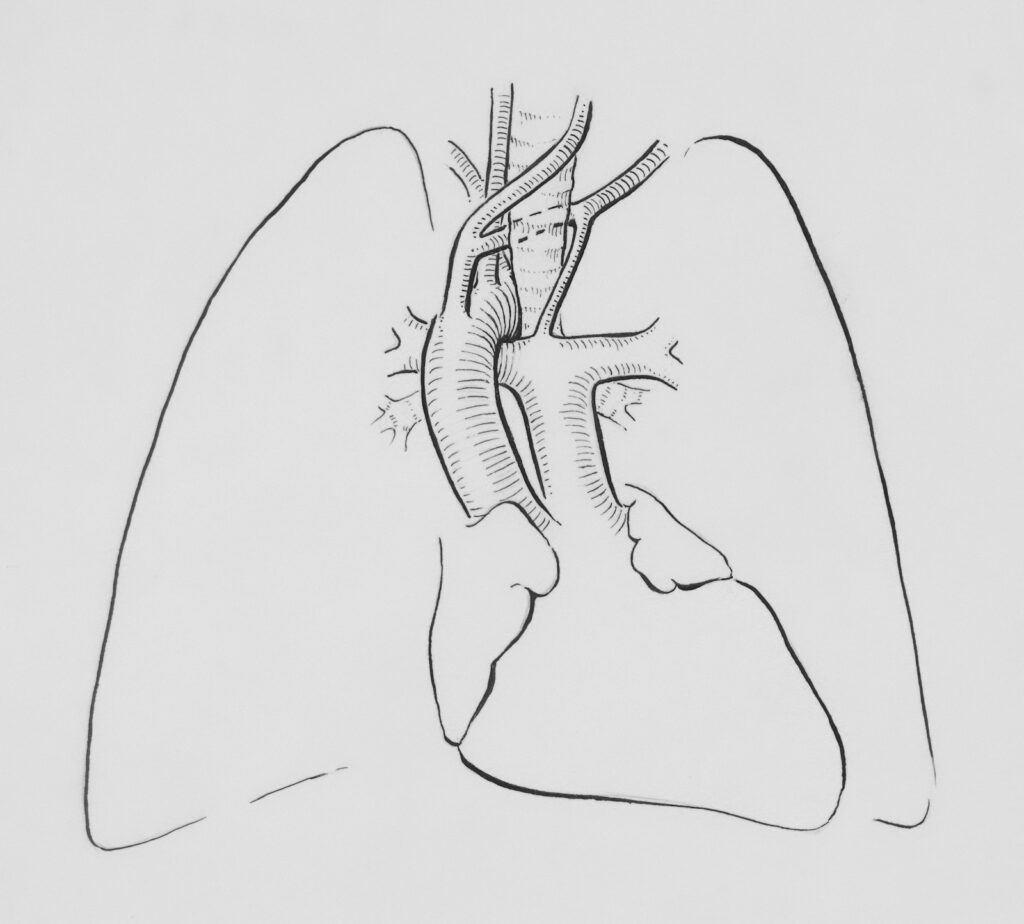
Quick answer. Lung function tests are simple breathing tests that measure how well your lungs work. The main one is spirometry, where you breathe out hard into a mouthpiece so the machine records how much air you can exhale and how fast – the key numbers are FEV1 (air blown out in the first second), FVC (total air blown out), and the FEV1/FVC ratio. Doctors use these to diagnose and monitor asthma, COPD and other lung conditions, and sometimes before surgery. The test is painless and safe but effort-dependent, so you may repeat the blow a few times.
Breathless, wheezy, or living with a persistent cough?
Message our care team on WhatsApp. Tell us what’s going on and we’ll help you find the right respiratory physician — free, with no obligation.
Chat with our care team on WhatsAppNot sure who to see? Find the right specialist →
In a medical emergency, or for severe or sudden symptoms such as breathing difficulty, chest pain, fainting or stroke signs, call 995 immediately.
If your doctor has asked for a “breathing test,” it is almost always spirometry – quick, painless, and one of the most useful tools for sorting out cough, wheeze and breathlessness.
What lung function tests are
Lung function tests are a group of breathing tests that measure how well your lungs work – how much air they hold, how quickly you can move air in and out, and in some cases how efficiently oxygen passes from the lungs into the bloodstream. Spirometry is by far the most common. In spirometry you take a full breath in, seal your lips around a mouthpiece (with a soft clip on your nose so no air escapes), and blow out as hard and as long as you can. A machine records the airflow and volume. The test is quick, non-invasive and painless, and it can be done in a GP clinic, a polyclinic, a specialist’s rooms or a hospital lung function laboratory.
Because spirometry depends on your effort, the technician will coach you carefully and ask you to repeat the manoeuvre a few times so the readings are reliable and consistent.
Why lung function tests are done
A doctor may arrange breathing tests for several reasons. Common ones include investigating unexplained breathlessness, a long-term cough, or wheeze; and diagnosing and monitoring chronic lung conditions such as asthma and COPD. The tests help show whether a problem lies in the airways or in the lung tissue itself, and they can track whether a condition is stable, improving or worsening over time, and whether treatment is working.
Spirometry is also used before some types of surgery to gauge how well the lungs are likely to cope with an operation and anaesthetic, and to assess occupational lung risks in people exposed to dusts, fumes or other irritants at work (see occupational lung disease). It may form part of assessing conditions such as interstitial lung disease as well.
Types of lung function test
Spirometry measures how much air you can breathe out and how fast – the total air you can forcibly exhale after a full breath in (FVC), how much of that comes out in the first second (FEV1), and the proportion of the two (the FEV1/FVC ratio), which is especially useful for spotting narrowed airways.
Reversibility testing repeats spirometry before and again a short time after you take a reliever (bronchodilator) inhaler. A clear improvement suggests the airway narrowing is reversible, which fits asthma; little change fits more fixed obstruction, as in COPD. This before-and-after comparison helps tell the two conditions apart.
Other, more detailed tests are usually done in a hospital lung function laboratory. Lung volume measurement assesses the full capacity of the lungs and how much air remains after breathing out, which helps confirm a restrictive picture. Gas transfer testing (also called diffusing capacity) checks how well oxygen crosses from the lungs into the blood. A simple peak flow meter, which measures the fastest speed you can blow out, is often used at home mainly to monitor asthma.
How to prepare
Your doctor or the lung function laboratory will give you specific instructions, and it is important to follow them. You may be asked to hold certain inhalers for a set period beforehand so they do not mask the results – only do this on your doctor’s advice, and never stop regular medication on your own. General advice usually includes avoiding a heavy meal, vigorous exercise, smoking and alcohol for a period before the test, as these can affect your breathing or the readings.
Wear loose, comfortable clothing that does not restrict your chest or tummy, so you can take a full deep breath. Allow time to sit and rest before you start, and tell the staff about any recent illness or surgery.
What happens during the test
You will usually be seated. A soft clip is placed on your nose so all your breathing goes through your mouth, and you seal your lips tightly around a mouthpiece. The technician will talk you through each step and coach you loudly to blow out hard, fast and fully – often encouraging you to keep going until your lungs feel empty – and then to breathe in fully.
The manoeuvre is repeated several times so the best and most consistent readings can be recorded. For reversibility testing you will take a reliever inhaler and then repeat the blows a short while later. The whole appointment is usually straightforward; it can feel tiring because it takes real effort, but it is not painful.
Is it safe?
Spirometry is very safe. The main effects people notice are feeling briefly light-headed or dizzy from the forceful breathing, or a short cough; these settle quickly with a rest. Tell the staff beforehand if you have had recent chest, eye or abdominal (tummy) surgery, a heart problem, a recent heart attack, a collapsed lung (pneumothorax), or if you are coughing up blood (haemoptysis), as the hard forced breathing may occasionally need to be delayed. If you feel unwell at any point, let the technician know so they can pause.
What the results mean
Your results are compared with predicted values calculated for your age, sex, height and ethnicity, because normal lung capacity varies from person to person. Broadly, spirometry can suggest one of two patterns. An obstructive pattern points to narrowed airways, as in asthma or COPD, where the FEV1 falls more than the FVC and the FEV1/FVC ratio drops. A restrictive pattern suggests the lungs cannot expand fully – for example in pulmonary fibrosis – where both values fall but the ratio is preserved; this is usually confirmed with lung-volume measurement.
These labels are only a guide. Numbers on their own do not make a diagnosis: a doctor interprets your results alongside your symptoms, examination and medical history, and sometimes other tests, before deciding what they mean for you.
After the test and next steps
There is no recovery time and you can return to normal activities straight away, including any inhalers you were asked to pause. If your doctor performed the spirometry, they may discuss the findings with you at the same visit. If it was done in a lung function laboratory, the results are sent to the doctor who requested them, and you will usually go over them at a follow-up appointment.
Depending on what the tests show, next steps might include starting or adjusting treatment, arranging further tests such as a chest X-ray or scan, a referral to a respiratory physician, or simply repeating spirometry later to monitor a condition. Ask your doctor to explain your particular results in plain language.
Common questions
Does it hurt? No. Spirometry is painless, though the forced breathing takes effort and can feel tiring. How long does it take? The blowing itself is quick, but the appointment allows time for coaching and repeat attempts, and longer if reversibility or laboratory tests are added. Can I eat beforehand? Usually a light meal is fine, but avoid a large or heavy meal – follow your clinic’s instructions. What if I cannot do it perfectly? That is common; the technician will coach you and take the best of several attempts.
When to speak to your doctor
See a doctor – a GP, polyclinic doctor or respiratory physician – if you have a persistent cough, ongoing breathlessness or wheeze, if you smoke and are worried about your lungs, or if a known lung condition seems to be getting worse. You can also read general information on Singapore’s HealthHub. Breathing tests are a helpful piece of the picture, but your doctor puts them together with everything else to guide your care.
Related respiratory & lung topics
- Pneumothorax (collapsed lung)
- Coughing up blood (haemoptysis)
- Pulmonary (lung) nodule
- Whooping cough (pertussis)
- Bronchiolitis in children
- Mesothelioma
- Occupational lung disease
- Interstitial lung disease (ILD)
- Pulmonary rehabilitation
- COPD
- Asthma
- Respiratory physicians in Singapore
Sources
- American Family Physician — office spirometry: FEV1/FVC, reversibility, indications and interpretation.
- Zero To Finals — lung function tests: spirometry, lung volumes, DLCO, peak flow; obstructive vs restrictive.
- Geeky Medics — spirometry interpretation and the bronchodilator (reversibility) method.
- StatPearls (NCBI) — forced expiratory volume: definitions and pattern classification.