
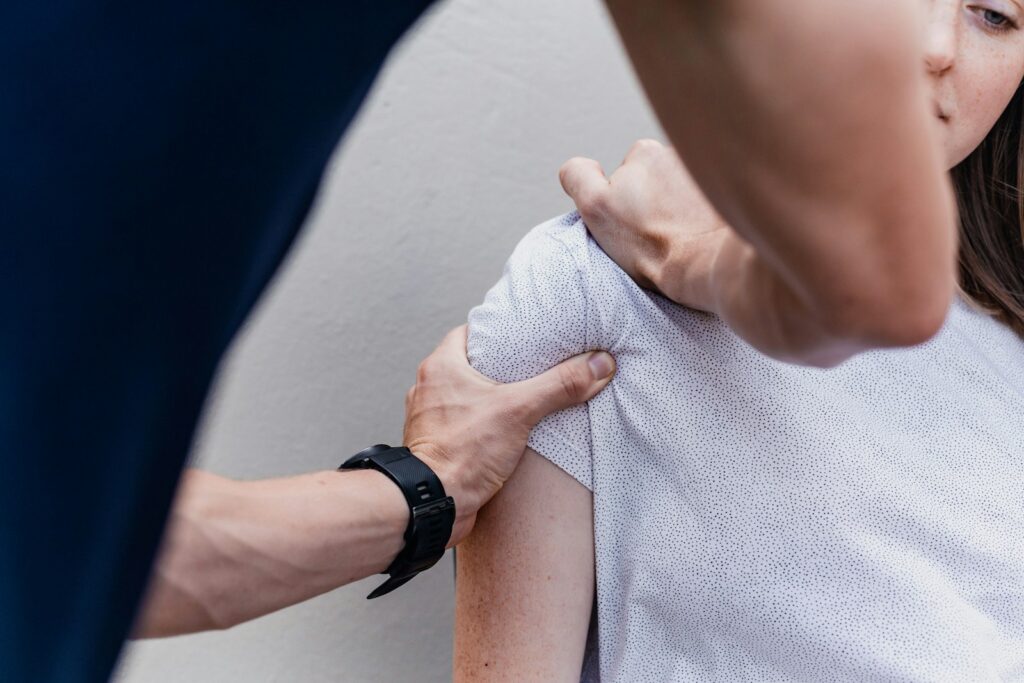
Quick answer. Golfer’s elbow (medial epicondylitis) is an overuse injury of the forearm tendons where they attach on the inner side of the elbow, causing pain and tenderness there that can spread down the forearm and worsen with gripping and wrist bending. It’s the inner-elbow counterpart to tennis elbow (which affects the outer elbow), and despite the name it usually comes from everyday gripping, manual work or weight training rather than golf. Most cases settle over weeks to months with rest, technique changes and a proper exercise programme.
Living with joint, back or bone pain that won’t settle?
Message our care team on WhatsApp. Tell us what’s going on and we’ll help you find the right orthopaedic surgeon — free, with no obligation.
Chat with our care team on WhatsAppNot sure who to see? Find the right specialist →
In a medical emergency, or for severe or sudden symptoms such as breathing difficulty, chest pain, fainting or stroke signs, call 995 immediately.
The reassuring reality: golfer’s elbow is a tendon overuse problem, not a sign of damage that needs surgery – the great majority recover with patient, graded rehab.
What golfer’s elbow is (and how it differs from tennis elbow)
The muscles that flex the wrist and grip the hand share a common tendon that anchors to the medial epicondyle, the bony bump on the inner elbow. When these forearm flexor muscles bend the wrist and close the fingers around an object, they pull on that shared anchor point. With repeated loading, the tendon develops tiny tears and gradually wears down faster than the body can repair it – a tendinopathy rather than the short-lived inflammation the older word “-itis” implies. That distinction matters, because it explains why the problem responds to steady loading and time rather than to prolonged complete rest.
Its well-known cousin, tennis elbow, is the very same process on the outer side of the elbow, where the wrist-extensor tendons attach. The simplest way to tell them apart is the location of the pain: golfer’s elbow is felt on the inner elbow (the side nearest the body when the palm faces forward), while tennis elbow is felt on the outer elbow. Despite its sporty name, most people who develop medial epicondylitis have never picked up a golf club; it comes from any repeated gripping and wrist-bending, whether at work, at home, in the gym or on the field.
Symptoms
The hallmark is pain and tenderness on the inner elbow, often described as an ache or burning that can radiate down the inner forearm towards the wrist. It typically flares with gripping, shaking hands, turning a key or a doorknob, carrying shopping, lifting, twisting the forearm, or bending the wrist forwards against resistance. Many people notice the elbow feels stiff, particularly first thing in the morning or after a period of rest, and that it eases a little once the arm is moving.
A weakened grip is common – objects may feel harder to hold, and some people find they drop things or tire quickly during tasks that were once effortless. Because the ulnar nerve runs in a groove just behind the medial epicondyle, a minority of people also feel tingling, pins-and-needles or numbness in the ring and little fingers. This nerve-related symptom is worth mentioning to a doctor, as it can point to irritation of the nerve alongside the tendon problem and may change how the condition is managed.
Causes and who is at higher risk
Golfer’s elbow is fundamentally an overload injury: the tendon is asked to do more than it can currently tolerate, repeatedly, without enough recovery in between. Almost any activity that involves gripping combined with wrist bending or forearm twisting can bring it on. Sporting triggers include golf, racquet sports such as tennis and badminton, throwing sports, and weight training – especially pulling, carrying or curling movements done with heavy loads or poor form. But everyday and occupational tasks are just as often to blame: manual and trade work, using hand tools, hammering, gardening, cooking and chopping, carrying young children, playing a musical instrument, and long stretches of typing or mouse use.
The risk rises when technique is off, when equipment such as grip size or racquet tension is ill-suited to the person, or when activity is increased suddenly – doing too much, too soon, after a break, or on top of an existing routine. It becomes more likely with age as tendons naturally lose some of their resilience, and in people whose work or hobbies load the forearm day after day. Identifying your own trigger is one of the most useful steps, because the movement that caused the problem is usually the one that needs adjusting for it to settle.
How it is diagnosed
Diagnosis is usually clinical – based on the story and a hands-on examination rather than tests. The doctor asks about aggravating activities, the location and pattern of the pain, and any grip weakness or finger tingling. On examination they press over the medial epicondyle to pinpoint the tender spot, and ask you to bend the wrist or rotate the forearm against gentle resistance to see whether this reproduces the familiar pain. They will typically check the ulnar nerve and the movement of the elbow and neck to make sure another problem is not responsible.
Imaging is not routinely needed. An ultrasound scan or an MRI may be arranged if the diagnosis is unclear, if symptoms are not improving as expected, or if the doctor wants to look for another cause. For most people, though, the diagnosis is confidently made in the clinic and treatment can begin without any scan.
Treatment
Care is mostly non-surgical and largely self-managed, and the aim is to calm the pain while gradually rebuilding the tendon’s capacity. Key elements include:
- Relative rest and activity modification – cut back on, adapt or temporarily swap the movements that provoke pain, rather than stopping all activity; the tendon still needs some load to recover;
- Ice over the inner elbow after aggravating activity, and simple pain relief where appropriate and advised;
- Physiotherapy with a structured exercise programme – the cornerstone of recovery. A physiotherapist guides progressive stretching and, importantly, strengthening and loading exercises for the forearm flexors, which stimulate the tendon to remodel and regain strength;
- A forearm brace or counterforce strap for some people, worn during activity to reduce the pull on the tendon’s attachment;
- Correcting technique and equipment – reviewing swing or lifting mechanics, grip size, tool use and workstation set-up to remove the underlying overload;
- Steroid injections used cautiously and selectively for stubborn pain; they may ease symptoms in the short term but do not fix the underlying tendon and can work against longer-term recovery, so they are not a routine first step;
- Surgery is rarely needed, reserved for the small number of people whose symptoms persist despite a sustained and well-followed course of conservative treatment.
In Singapore, a GP is a sensible first stop and can start treatment, advise on pain relief and refer onward. Physiotherapists deliver the exercise programme that does most of the work, while sports medicine physicians and orthopaedic specialists can help with persistent cases, injections or, rarely, surgery. Reliable general information is also available through HealthHub.
Recovery
Golfer’s elbow tends to be self-limiting but slow to settle, and this is the part people most often find frustrating. Tendons respond to consistent, graded loading over time, so patience and sticking with the exercises – even on days when progress feels invisible – matter more than any single treatment. Some soreness during rehab exercises can be acceptable and does not necessarily mean harm, but a physiotherapist can guide how much is reasonable. Rushing back to full loading before the tendon is ready is a common reason the pain lingers or returns, so a gradual, staged return to sport, training or heavy tasks – building up rather than jumping straight back in – gives the best chance of a lasting recovery.
Prevention
Once settled, the same habits that aid recovery help keep golfer’s elbow from coming back. Warm up before sport or demanding manual work, and build up load gradually rather than making sudden jumps in intensity, duration or weight. Use correct technique and well-fitted equipment – appropriate grip size, tools and set-up for the task. Keep the forearm strong and flexible with regular conditioning, and take breaks from repetitive gripping and typing, varying tasks where possible so the same tendons are not loaded continuously.
When to see a doctor
Golfer’s elbow can usually be managed at home, but see a doctor if the elbow pain is severe, follows an injury or fall, or is not improving with self-care. Seek assessment too if you have significant numbness, tingling or weakness in the hand or fingers (particularly the ring and little fingers, which can indicate ulnar-nerve involvement), or if the elbow is swollen, red or hot, or you feel feverish – features that can point to other causes needing separate attention. A GP, sports physician, physiotherapist or orthopaedic surgeon can assess the elbow, confirm the diagnosis and tailor treatment to you.
Related bone, joint & muscle topics
- ACL knee injury
- Herniated (slipped) disc
- Spinal stenosis
- Ankle sprain
- Achilles tendon injuries
- Bunion (hallux valgus)
- Stress fracture
- Shoulder dislocation
- Osteomyelitis (bone infection)
- Tennis elbow
- Sciatica
- Orthopaedic surgeons in Singapore
Sources
- OrthoInfo (AAOS) — Medial epicondylitis (golfer’s elbow): tendinopathy at the medial epicondyle, ulnar-nerve tingling, clinical diagnosis, conservative care and eccentric exercise, injections cautioned.
- OrthoInfo (AAOS) — therapeutic exercise programme for epicondylitis (eccentric strengthening).
- Mayo Clinic — Golfer’s elbow: symptoms, risk factors and when to see a doctor.
- Cleveland Clinic — Golfer’s elbow: overuse cause, symptoms and conservative-first treatment.