
Noticed a breast change, or due for a check?
Message our care team on WhatsApp. Tell us what’s going on and we’ll help you find the right best breast clinic — free, with no obligation.
Chat with our care team on WhatsAppNot sure who to see? Find the right specialist →
In a medical emergency, or for severe or sudden symptoms such as breathing difficulty, chest pain, fainting or stroke signs, call 995 immediately.
At a glance
- A fibroadenoma is a common, non-cancerous (benign) breast lump, most often in women in their 20s and 30s.
- It typically feels smooth, firm and movable — like a marble under the skin.
- It is not cancer and does not usually turn into cancer.
- Many are simply monitored; some are removed.
A fibroadenoma is one of the most common reasons a younger woman finds a lump in her breast. The reassuring news is that it is benign. The important message is that you cannot tell a fibroadenoma from any other lump by feel alone — so any new, changing or persistent breast lump, skin change, nipple change or bloody discharge should always be checked by a doctor.
What a fibroadenoma is
A fibroadenoma is a common, benign — non-cancerous — solid breast lump. It is made from the normal glandular tissue and the surrounding connective (fibrous) tissue of the breast, which is where the name comes from. It is the commonest type of breast lump found in younger women. Because it is a solid growth of ordinary breast tissue rather than a fluid-filled sac, it differs from a breast cyst, and it belongs to the group of benign breast conditions that a breast surgeon sees very often. Fibroadenomas can be single or, in some women, multiple, and they can occur in one or both breasts. Most are small, but some grow larger; occasionally a larger, faster-growing type is described, which is why any lump that is enlarging deserves review.
Symptoms — what it feels like
A fibroadenoma usually feels like a smooth, firm, well-defined lump with a clear edge that moves easily under the fingers. This mobility is so characteristic that it is sometimes nicknamed a “breast mouse”, because it seems to slip away as you try to press on it. It is usually painless, though some women notice mild tenderness, particularly in the days before a period. A fibroadenoma can be single or multiple, and its size may change slightly with the menstrual cycle or increase during pregnancy and breastfeeding when hormone levels are high. Some fibroadenomas are too small to feel at all and are only picked up on imaging done for another reason. Even when a lump feels typical, only examination and tests can confirm what it is — the feel of a lump can be reassuring but is never proof on its own.
Causes and who is at risk
The exact cause of a fibroadenoma is not fully understood, but it is thought to be hormone-related — it develops from breast tissue that is sensitive to the female hormone oestrogen. This is why fibroadenomas are most common in women from their late teens to their 30s, when hormone levels are high, and why they may fluctuate with the menstrual cycle, grow in pregnancy, and often become smaller after the menopause when hormone levels fall. They can also appear or change during hormonal treatments such as hormone replacement therapy. Having a fibroadenoma is common and, on its own, does not usually raise your future risk of breast cancer in any meaningful way — but knowing your personal history matters, so it is worth discussing with your doctor.
How it is diagnosed
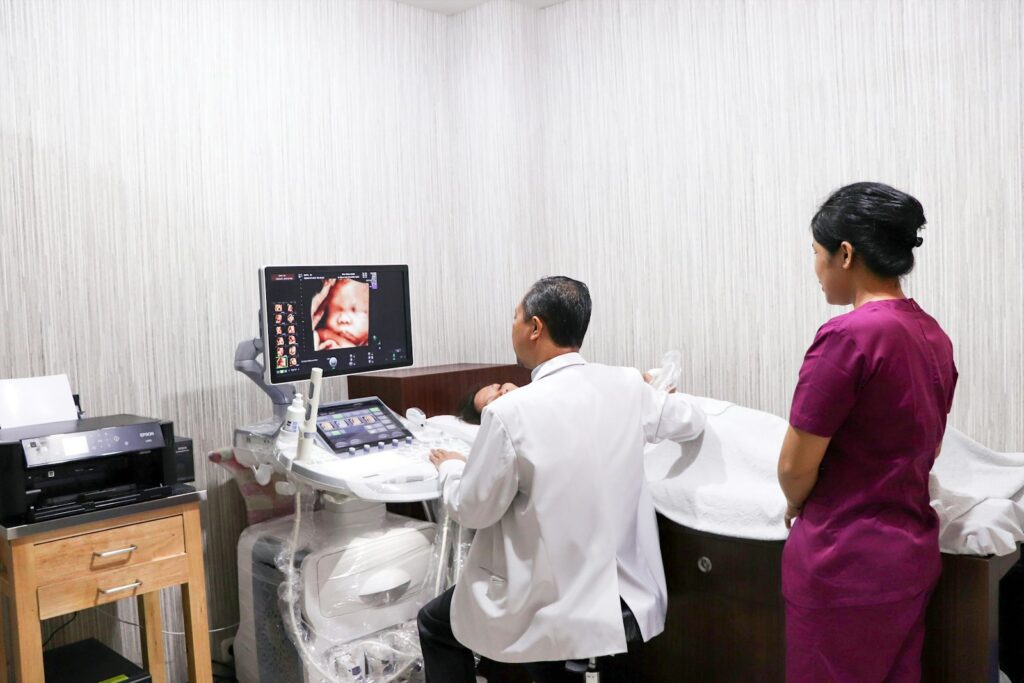
Because any new lump must first be confirmed as benign, a fibroadenoma is assessed with the same care as any breast lump, using an approach called “triple assessment”. This combines three parts: a clinical breast examination by a doctor; imaging — usually an ultrasound in younger women, with a mammogram added in older women whose breast tissue is denser to interpret; and often a needle biopsy, in which a fine needle or a slightly larger core needle takes a small sample of cells or tissue to examine under a microscope. Together these three strands are far more reliable than any one alone, and they allow a doctor to distinguish a fibroadenoma confidently from other causes of a breast lump. In Singapore this assessment may begin with a GP or polyclinic doctor, who can refer you to a breast surgeon or a breast clinic where imaging and biopsy are available.
When a breast lump needs checking
This is the most important point to take away: although fibroadenomas are benign, you cannot tell one from other kinds of lump yourself. A cancerous lump, a cyst and a fibroadenoma can feel similar, and a lump that seems “typical” is not a guarantee. For that reason, any new breast lump should be assessed by a doctor, even though most turn out to be harmless. You should seek prompt review if you notice a new or growing lump; a lump that feels hard, fixed or irregular; any change in the skin of the breast such as dimpling, puckering or redness; a change in the nipple such as it turning inwards; or any nipple discharge, especially if it is blood-stained. Getting a lump checked early is never an overreaction — it is exactly what breast clinics are there for, and in most cases the result is reassurance.
What happens next
Once triple assessment has confirmed a small, typical fibroadenoma, treatment is often not needed at all. Many confirmed fibroadenomas can simply be watched, because they frequently stay the same size or shrink over time, particularly in younger women and after the menopause. Your doctor may suggest a follow-up scan after a period of months to check that it is stable. Removal tends to be offered when a fibroadenoma is large, is clearly growing, is causing troublesome symptoms, or when there is any diagnostic uncertainty on examination, imaging or biopsy. It may also be removed if you would simply prefer not to keep it — this is a reasonable personal choice once cancer has been excluded.
Treatment options
Broadly, there are two paths: observation or removal. Observation (“watchful waiting”) means leaving a confirmed benign fibroadenoma in place and keeping an eye on it, usually with a repeat examination and ultrasound after an agreed interval, and returning sooner if it changes. Removal may be done through a small operation (a minor excision under local or general anaesthetic) or, in selected cases, with minimally invasive techniques that take the lump out through a small entry point. Because a fibroadenoma is benign and only very rarely linked to cancer, the decision to remove one is usually driven by symptoms, size, growth or personal preference rather than medical necessity. A breast surgeon can explain the options for your particular lump, including what each involves and how the breast usually looks and heals afterwards.
Living with a fibroadenoma and breast awareness
Living with a monitored fibroadenoma mostly comes down to breast awareness — getting to know what is normal for you, so you can spot a change early. There is no need to examine your breasts to a rigid routine, but do become familiar with their usual look and feel, and check in from time to time, including the sides and up towards the armpit. If you have a known fibroadenoma, note whether it stays the same, and see a doctor if it grows, becomes painful or changes character, or if a new lump appears elsewhere. Continue to attend breast screening as advised for your age — in Singapore, women are encouraged to take up mammographic screening through programmes such as BreastScreen Singapore, and breast clinics and HealthHub can guide you on what is recommended. Having a fibroadenoma does not replace the need for age-appropriate screening.
When to see a doctor
See a doctor for any new breast lump so it can be assessed, and return promptly if a known fibroadenoma grows, becomes painful, or changes in character. Seek review sooner rather than later for a hard, fixed or irregular lump, skin dimpling or puckering, redness or a rash on the breast, a newly inverted nipple, or any nipple discharge — particularly if it is blood-stained. Remember the core message: fibroadenomas are benign, but because you cannot tell one from another type of lump yourself, any new, changing or persistent breast lump, skin change, nipple change or bloody discharge should always be checked by a doctor.
Common questions
Can a fibroadenoma turn into cancer?
Fibroadenomas are benign and very rarely associated with cancer; confirming the diagnosis provides reassurance.
Do fibroadenomas go away?
Some shrink or disappear over time, especially in younger women, while others stay the same or slowly grow.
Should I have it removed?
Not always — small, typical fibroadenomas can be monitored; removal is considered if it is large, growing, symptomatic or uncertain.
Related guides
Sources
- HealthHub Singapore — benign breast conditions.
- National Cancer Centre Singapore — breast lumps.
- American Cancer Society — fibroadenomas.
This article is for general information only and does not replace a consultation with a qualified doctor. Please seek personalised medical advice for your situation.