
Quick answer: A coronary calcium score is a fast, painless CT heart scan that measures how much calcium has built up in the walls of the coronary arteries. Because calcium marks fatty plaque (atherosclerosis), the score helps a doctor estimate your future risk of heart problems and decide whether preventive treatment is worthwhile. A score of zero is reassuring, while a higher score points to more plaque and higher risk. It is a risk-and-prevention tool, not a test for current chest pain. Sudden chest pain or pressure is an emergency — call 995 or go to A&E.
Not sure which specialist you need?
Message our care team on WhatsApp. Tell us what’s going on and we’ll help you find the right specialist — free, with no obligation.
Chat with our care team on WhatsAppNot sure who to see? Find the right specialist →
In a medical emergency, or for severe or sudden symptoms such as breathing difficulty, chest pain, fainting or stroke signs, call 995 immediately.
If you have been told your heart-disease risk is somewhere in the middle — not clearly low, not clearly high — a coronary calcium score can help sharpen the picture. This guide explains what the scan measures, why a doctor might suggest it, what your result means in plain terms, and how it fits into everyday heart care in Singapore. It is general information and does not replace personalised advice from your own doctor or cardiologist.
What it is
A coronary calcium score comes from a quick CT (computed tomography) scan of the heart. The scan looks specifically at the coronary arteries — the small vessels that supply the heart muscle — and measures the amount of calcium in their walls. Calcium collects in these walls as part of atherosclerosis, the slow build-up of fatty plaque over many years. Because calcified plaque and fatty plaque tend to go together, the amount of calcium acts as a marker for how much plaque is present. The scanner turns this into a single number, the calcium score, that a radiologist and your doctor use to gauge how much silent disease may be developing in your arteries.
Why it is done
The main purpose is to refine your estimated risk of heart disease when that risk sits in an intermediate range. Standard risk calculators use things like age, blood pressure, cholesterol, smoking and diabetes, but two people with similar numbers can still have very different arteries. A calcium score adds direct information about your own vessels, which can tip a borderline decision one way or the other — for example, whether to start cholesterol-lowering medicine or to focus first on lifestyle change. It is a screening and prevention tool used in people without symptoms. It is not a test for someone who currently has chest pain, breathlessness on exertion or other warning signs; those situations need different, more urgent assessment.
What the score means in general terms
The result is interpreted qualitatively alongside your other risk factors. A score of zero is reassuring, suggesting little or no calcified plaque and a lower short-term risk of heart events. A higher score means more calcified plaque has accumulated and generally signals a higher risk that warrants closer attention to prevention. The score is not a diagnosis on its own and it does not tell you that a heart attack is about to happen. Your doctor weighs it together with your blood pressure, cholesterol, family history, smoking status, diabetes and lifestyle to decide what, if anything, should change. Two people can share the same score yet receive different advice because the rest of their picture differs.
How to prepare and what happens
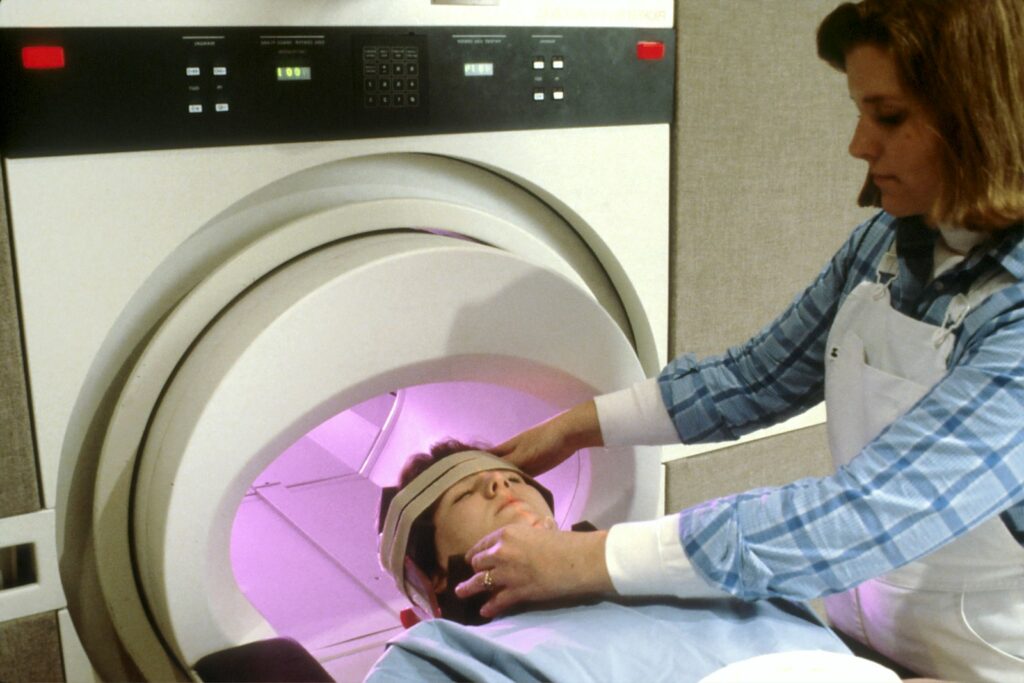
The scan itself is quick and painless. For a basic calcium score there is usually no injection and no contrast dye. You lie on a table that slides into the ring-shaped scanner, small electrodes are placed on your chest to track your heartbeat, and you are asked to lie still and hold your breath for a few seconds while images are captured. The imaging part takes only moments, and you can return to normal activities straight away. Staff may ask you to avoid caffeine beforehand so your heart rate stays steady, and the radiology team will confirm any specific instructions when you book. Wear comfortable clothing, as you may be asked to change into a gown.
Benefits and limitations
The key benefit is that a calcium score personalises prevention. It can give a borderline patient and their doctor the confidence to either begin protective treatment or to hold off and concentrate on diet and exercise. It is also non-invasive and needs no dye for the basic study. However, it has real limits. It does not show whether an artery is narrowed enough to cause symptoms, so it cannot explain chest pain. It can be normal even when soft, non-calcified plaque is present, because that early plaque may not yet contain calcium. And it involves a small amount of radiation. For these reasons it is used selectively for people in whom the result is likely to change management, rather than as a routine test for everyone.
Who might consider it
A calcium score is worth discussing with a doctor if your estimated heart-disease risk is borderline or uncertain, or if you have a strong family history of early heart disease and want to understand your own arteries better. People who are unsure about starting long-term preventive medicine sometimes find the result helpful in reaching a decision. It is generally not suggested for those already known to have heart disease, or for younger people with no risk factors, where it adds little. Your doctor or cardiologist can advise whether it is likely to be useful for you.
What happens after
The value of the scan lies in what you do with the result. If the score is low, it may reassure you and your doctor that intensive medication is not needed now, while healthy habits stay important. If it is higher, it usually prompts firmer action on prevention — this may include cholesterol-lowering medicine, better blood-pressure and blood-sugar control, a heart-friendly diet, regular physical activity, weight management and stopping smoking. Your doctor will explain what your particular score means for you and agree a plan. A calcium score is typically a one-off risk assessment rather than a test that is repeated often.
When to see a doctor
See a doctor if you are unsure about your heart-disease risk, have a family history of early heart problems, or want to review whether preventive treatment is right for you — these are the situations where a calcium score is discussed. Importantly, a calcium score is not the right test for symptoms. If you have chest pain or pressure, pain spreading to the arm, jaw or back, sudden breathlessness, cold sweats or fainting, treat it as an emergency: call 995 or go to the nearest A&E. Do not wait to arrange a scan.
Common questions
Is a coronary calcium score the same as an angiogram?
No. A calcium score is a quick, dye-free CT that estimates risk by measuring calcium. A CT coronary angiogram uses contrast dye to look at the artery lining in detail, and an invasive angiogram threads a catheter into the arteries. These are used for different reasons, usually when symptoms or higher risk are involved.
Does the scan hurt or require an injection?
The basic calcium score is painless and generally needs no injection or dye. You simply lie still and hold your breath briefly while the scanner works.
Can my score be zero and I still be at risk?
Yes. A zero score is reassuring but not a guarantee. Early soft plaque may not contain calcium yet, and other risk factors still matter, so healthy habits remain important.
Will a calcium score explain my chest pain?
No. It is a risk tool, not a test for symptoms. Chest pain needs urgent, different assessment. If pain is sudden or severe, call 995.
Who should I speak to about having one?
Start with your GP or a cardiologist. They can judge whether your risk is in the range where the result would change your care, and arrange the scan through a radiology service if appropriate.
Related guides
Sources
- National Heart Centre Singapore
- Singapore Heart Foundation
- HealthHub
- American Heart Association
Disclaimer: This article is general information and does not replace advice from your doctor or cardiologist. A coronary calcium score is a risk tool, not a test for acute symptoms. If you have chest pain or pressure, sudden breathlessness or other warning signs, call 995 or go to the nearest A&E immediately.