
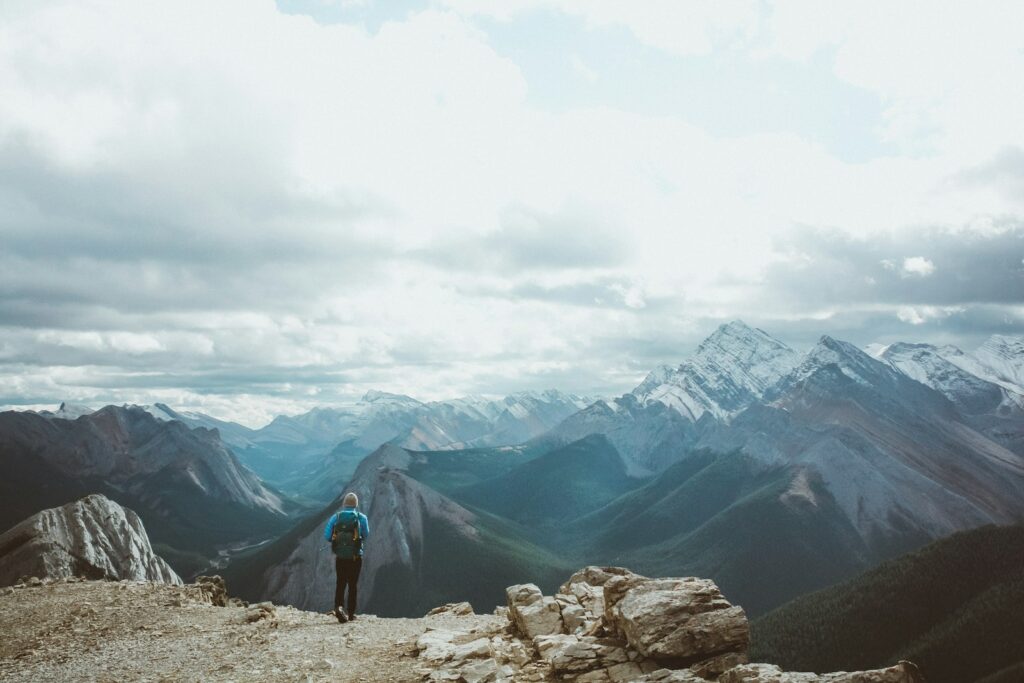
Altitude sickness is a group of conditions caused by the body not having time to adjust to the lower oxygen at high altitude. It generally becomes a risk above roughly 2,400–2,500 m, especially when people ascend “too high, too fast.” It ranges from mild acute mountain sickness (AMS) to two life-threatening forms — HACE (fluid on the brain) and HAPE (fluid in the lungs). Being fit does not protect you; gradual ascent does, and the single most important response to severe symptoms is to descend.
Not sure which travel clinic you need?
Message our care team on WhatsApp. Tell us what’s going on and we’ll help you find the right travel clinic — free, with no obligation.
Chat with our care team on WhatsAppNot sure who to see? Find the right specialist →
In a medical emergency, or for severe or sudden symptoms such as breathing difficulty, chest pain, fainting or stroke signs, call 995 immediately.
Confusion, unsteadiness, drowsiness, breathlessness at rest, or a cough with frothy or pink sputum are signs of HACE or HAPE — descend immediately and get emergency help. In remote areas, 995 does not apply: use local or expedition emergency services and evacuation.
Why it happens
As you go higher, air pressure falls and there is less oxygen in each breath. The body needs days of gradual acclimatisation to adjust, and if it cannot keep up, altitude illness develops. AMS is often likened to a bad hangover; HACE and HAPE are dangerous progressions that can be fatal within hours, and HAPE can occur without preceding AMS.
Who is at risk
Anyone can be affected regardless of age or fitness, and susceptibility varies widely between people. The main triggers are rapid ascent — especially flying or driving straight to a high-altitude destination — the altitude reached (particularly the sleeping altitude), and a prior history of altitude sickness, which is the strongest predictor. Common scenarios for Singapore travellers include treks in Nepal, Ladakh or Tibet, and trips to Cusco, La Paz or Kilimanjaro. Certain heart or lung conditions and pregnancy warrant specific pre-travel advice.
Symptoms
AMS usually begins within hours of arriving at altitude, with a headache (the cardinal symptom), nausea, loss of appetite, fatigue, dizziness and disturbed sleep — treat it as a warning. HACE affects the brain, causing confusion, behaviour change, loss of coordination (classically an inability to walk a straight line), drowsiness and a severe worsening headache. HAPE affects the lungs, causing breathlessness at rest, a cough sometimes with frothy or pink sputum, chest tightness, extreme fatigue and a blue tinge to the lips or skin.
Red flags — the descend rule
HACE and HAPE are life-threatening emergencies. The single most important rule is to descend immediately — descent is the definitive, life-saving treatment, and you should not wait for morning if symptoms are severe. Never continue ascending with any symptoms of altitude sickness, and never leave someone with symptoms alone. In a remote high-altitude setting the Singapore 995 number does not apply, so activate local emergency services, guides or expedition medical support and your evacuation plan, and descend or seek supplemental oxygen as fast as safely possible. Portable oxygen and hyperbaric bags are only temporising measures — they do not replace descent.
Prevention and treatment
Prevention rests on gradual ascent and acclimatisation. Avoid going too high too fast, limit the increase in sleeping altitude once above about 3,000 m, build in rest days, and use the “climb high, sleep low” approach — these are principles, and an individual plan should come from a clinician. Stay well hydrated, avoid alcohol in the first days, and eat adequately. If symptoms appear, stop ascending and rest until they fully resolve; if they are severe or worsening, descend and seek emergency help. Medicines such as acetazolamide may be used for prevention or treatment of AMS, and others for severe illness, only on medical advice — medication never substitutes for descent, and no dosing is given here.
Getting pre-travel advice
Before any trip involving significant altitude, ideally four to eight weeks ahead, see a GP or travel clinic as part of your pre-travel health advice. The clinician will review your itinerary, altitudes and rate of ascent, your past altitude history, fitness for the activity, and any heart or lung conditions or pregnancy, and can advise on an acclimatisation plan, red-flag recognition, and whether preventive medication suits your trip. On the mountain, assessment is clinical — watch symptoms and coordination rather than relying on gadgets.
Planning a high-altitude trip
Much of the risk is designed out at the planning stage. Build an itinerary that gains height gradually, with rest and acclimatisation days built in rather than a rush to the summit, and where possible avoid flying or driving straight to a high sleeping altitude. Know the early symptoms and agree with your group that anyone who develops them stops ascending, and that a companion goes down with anyone who needs to descend — never leave a symptomatic person alone. Check that your travel insurance specifically covers high-altitude trekking and, importantly, emergency evacuation, which can be extremely expensive in remote mountains. It helps to research in advance where the nearest medical help and lower-altitude options are along your route, and to plan a realistic schedule that has room to wait an extra day if someone is unwell. These simple preparations make it far easier to follow the golden rule — descend if symptoms are severe — without it derailing the whole trip.
When to see a doctor
See a doctor before travel if you are heading to high altitude, especially with a rapid-ascent itinerary, prior altitude sickness, or a heart or lung condition. During travel, any AMS symptoms mean stop ascending; severe symptoms mean descend now and get emergency care. After returning, see a doctor if breathlessness, a persistent cough or neurological symptoms continue at low altitude.
Related travel-health topics
- Pre-travel health advice
- Travel vaccinations
- Travellers’ diarrhoea
- Food & water safety abroad
- Motion sickness
- Travel-related DVT
- Rabies
- Japanese encephalitis
- Insect bite prevention
- Travelling with medication
- Malaria prevention
- Travel clinics in Singapore
Sources
- HealthHub (Singapore) — Mountain Sickness: healthhub.sg
- CDC Travelers’ Health — Travel to High Altitudes: cdc.gov
- NaTHNaC / TravelHealthPro — Altitude illness: travelhealthpro.org.uk
- Wilderness Medical Society — Acute Altitude Illness guidelines: wms.org