
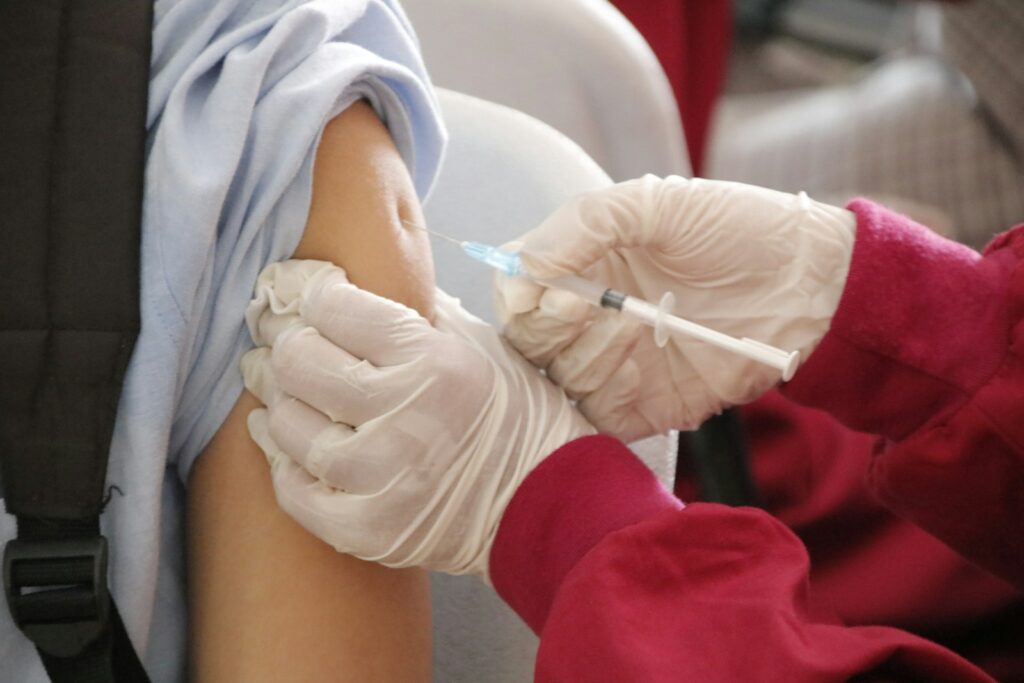
Allergen immunotherapy (AIT) — often called desensitisation or “allergy shots” — is a treatment that retrains the immune system to tolerate a specific allergen. Small, gradually increasing amounts of the actual allergen (house dust mite, pollen, animal dander or insect venom) are given regularly over years. Unlike antihistamines or steroids, which only suppress symptoms, AIT is potentially disease-modifying: it can reduce symptoms and medication needs and keep working for years after a completed course.
Troubled by allergies, sensitivities or recurring reactions?
Message our care team on WhatsApp. Tell us what’s going on and we’ll help you find the right allergist — free, with no obligation.
Chat with our care team on WhatsAppNot sure who to see? Find the right specialist →
In a medical emergency, or for severe or sudden symptoms such as breathing difficulty, chest pain, fainting or stroke signs, call 995 immediately.
This is a multi-year commitment guided by an allergist, not a quick fix — and because the treatment contains the very allergen you react to, the injections and first doses are given under medical supervision.
How it works
Repeated, controlled exposure gradually shifts the immune response away from the allergic IgE pathway, encourages protective “blocking” antibodies, calms the allergy cells that release histamine, and builds regulatory immune cells that promote tolerance. In plain terms, the immune system slowly learns that the allergen is not a threat.
The two main forms
Subcutaneous immunotherapy (SCIT) — allergy shots. Injections under the skin, given in an allergist’s clinic. A build-up phase of roughly weekly injections with an increasing dose (usually a few months) is followed by a maintenance phase at a steady dose spaced to about every four weeks, continued for years.
Sublingual immunotherapy (SLIT) — tablets or drops. The allergen is placed under the tongue daily. The first dose is usually given in the clinic and later doses are taken at home. SLIT generally causes fewer whole-body reactions than SCIT, with local mouth or throat itch being the usual side effect.
Venom immunotherapy is a form of SCIT using purified insect venom for people who have had serious systemic reactions to stings — one of the most effective preventive treatments in allergy.
What it treats and who it suits
The strongest evidence is for allergic rhinitis and rhinoconjunctivitis, allergic asthma, and insect-venom allergy, including cases driven by house dust mite. It is considered when symptoms remain significant despite avoidance and medication, when medicines are not tolerated or not wanted long-term, when the allergy is clearly linked to a specific confirmed allergen, or after a dangerous systemic sting reaction. It is generally not a routine treatment for food allergy or chronic hives. Suitability is decided by an allergist; uncontrolled asthma raises the risk of reactions, and certain medicines (such as beta-blockers) and health conditions need review first.
Duration and realistic expectations
AIT is a long-term commitment. International guidance supports treating for at least around three years, with the decision to continue reviewed after an initial three to five years, to achieve lasting tolerance. Benefit is usually gradual — improvement over months, not days — and the durable benefit that persists after stopping comes from completing the full course. It reduces symptoms and medication needs and improves quality of life; it does not guarantee a total, permanent cure for everyone, and adherence strongly affects results, especially with daily SLIT.
Safety
The main risk of AIT is an allergic reaction to the treatment itself, ranging from local swelling to, rarely, anaphylaxis — precisely because the dose contains the allergen. This is why SCIT and the first SLIT dose are given where anaphylaxis can be treated, and why patients are observed for about 30 minutes after each shot, with adrenaline on hand. Warning signs during or after a dose — throat tightness, difficulty breathing, wheeze, widespread hives, swelling, dizziness or faintness — mean telling staff immediately, or using adrenaline and calling 995 if at home. Patients are usually advised to avoid vigorous exercise, alcohol and hot showers around dosing times and to report any new wheeze, illness or new medicines before a dose.
What a typical course involves
Knowing the practical shape of a course helps people commit to it. With allergy shots, the early build-up phase means regular clinic visits — often weekly for a few months — before settling into maintenance injections spaced about a month apart, each followed by around 30 minutes of observation. With sublingual tablets or drops, after the supervised first dose the treatment becomes part of a daily home routine, which suits people who prefer to avoid frequent visits but depends heavily on remembering to take it. Either way, the allergist reviews progress periodically, adjusts for any missed doses or reactions, and checks that asthma stays well controlled throughout. Planning for the time commitment from the outset — work schedules, travel, and who will supervise home doses for a child — makes it far more likely you will complete the years of treatment that give lasting benefit.
Getting started and when to see a doctor
An allergist first confirms the specific allergy with a history plus skin-prick or specific-IgE testing — AIT only helps against confirmed, relevant allergens. Ask a GP for an allergist referral if nose, eye or asthma symptoms are poorly controlled despite avoidance and regular medication, if you want a longer-term option that may modify the allergy, or if you have had a systemic reaction to a bee or wasp sting, where venom immunotherapy can be life-saving.
Related allergy & immunology topics
- Allergy testing
- Angioedema
- Insect sting & venom allergy
- Allergic conjunctivitis (eye allergy)
- Eosinophilic oesophagitis
- Oral allergy syndrome
- House dust mite allergy
- Food intolerance
- Latex allergy
- Allergic rhinitis
- Drug allergy
- Allergists in Singapore
Sources
- AAAAI — Allergy Shots (Immunotherapy): aaaai.org
- ACAAI — Allergy Immunotherapy: acaai.org
- ACAAI — Insect Sting Allergies (venom immunotherapy): acaai.org
- NHS — Allergies (treatment): nhs.uk
- EAACI — Guidelines on Allergen Immunotherapy: eaaci.org