
Quick answer. Parkinson’s develops when nerve cells in a part of the brain called the substantia nigra are lost, reducing dopamine, the chemical that helps control movement. Its main motor symptoms are tremor (often at rest), slowness of movement (bradykinesia) and stiffness (rigidity), with balance problems tending to come later; non-motor symptoms such as constipation, loss of smell, sleep problems and low mood are also common and can appear early. There is no single test – diagnosis is clinical, made by a specialist. Parkinson’s progresses very differently from person to person, so stages are a general map, not a fixed timeline.
Troubled by headaches, dizziness, numbness or memory changes?
Message our care team on WhatsApp. Tell us what’s going on and we’ll help you find the right neurologist — free, with no obligation.
Chat with our care team on WhatsAppNot sure who to see? Find the right specialist →
In a medical emergency, or for severe or sudden symptoms such as breathing difficulty, chest pain, fainting or stroke signs, call 995 immediately.
What causes Parkinson’s
Parkinson’s is caused by the gradual loss of nerve cells in the substantia nigra, a small area deep in the brain. These cells produce dopamine, a chemical messenger that helps control movement, so as they are lost, dopamine levels fall and movement is affected. The NHS explains that symptoms usually begin only once around half of this area’s nerve-cell activity has been lost, which is why the condition can be developing quietly for some time before it is noticed. Exactly why these cells are lost is not fully understood, and it is thought to involve a combination of genetic and environmental factors.
Is it inherited?
For most people, Parkinson’s is not directly inherited. While a small number of cases are linked to specific genes, the NHS notes that inheritance is uncommon, and having a relative with Parkinson’s does not mean you will develop it. Researchers believe a mix of genetic susceptibility and environmental factors is involved, but the evidence around specific environmental triggers remains inconclusive, so it is best not to overstate any single cause. Understanding that Parkinson’s usually arises from a complex, not-fully-known combination of factors can help relieve the guilt or worry that families sometimes feel about what caused it.
The main motor symptoms
Parkinson’s has three cardinal motor signs. A tremor, usually starting in a hand or arm and typically present at rest, is the best-known symptom, though only around half of people get a noticeable tremor. Bradykinesia, or slowness of movement, and rigidity, meaning muscle stiffness, are the other two. Doctors particularly look for slowness combined with tremor or stiffness. Balance problems and postural instability tend to develop later; prominent balance loss very early on can sometimes point to a related but different condition. Recognising this pattern helps explain the mix of symptoms a person experiences.
Non-motor symptoms
Parkinson’s is not only about movement. Non-motor symptoms can be just as impactful and sometimes appear years before the motor ones. Common examples include loss of smell, constipation, sleep problems, low blood pressure on standing, urinary changes, pain, fatigue, and depression or anxiety, as well as cognitive and memory changes. Because these are easy to overlook or attribute to something else, they often go unreported, yet many are treatable or manageable. Raising them with your Parkinson’s nurse or specialist is worthwhile. Separate guides in this series look at non-motor symptoms and at mental health in more detail.
How Parkinson’s is diagnosed
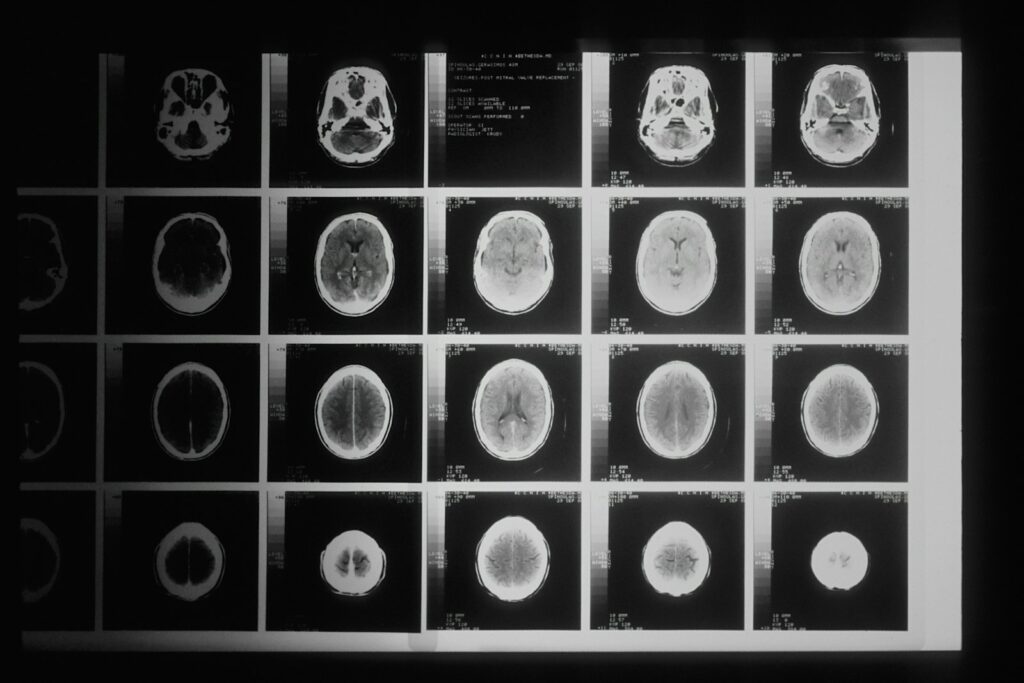
There is no single test that confirms Parkinson’s. Diagnosis is clinical, based on your medical history and a specialist’s examination, usually after a GP refers you to a neurologist or, sometimes, a geriatrician. The specialist looks for the characteristic pattern of symptoms and considers how they have developed over time. Scans, such as a DaTscan, are not used to confirm Parkinson’s itself but can help rule out other causes when the picture is unclear. Because diagnosis relies on expert assessment, it is important to see a specialist rather than trying to self-diagnose from symptoms alone.
How it progresses
Parkinson’s progresses, but how and how fast varies enormously from person to person – not everyone gets every symptom, nor in the same order, and the timeline can range from very slow over decades to faster. A commonly cited framework is the Hoehn and Yahr scale, which describes broad stages from early disease affecting one side of the body, through both sides and the onset of balance problems, to more advanced stages needing more assistance. It is best treated as a general map rather than a fixed schedule. Emphasising this variability matters, because two people with Parkinson’s can have very different experiences.
Young-onset Parkinson’s
Although most people are diagnosed at 50 or over, younger people can develop Parkinson’s too, which is known as young-onset Parkinson’s. The symptoms are broadly similar, but being diagnosed at a younger age brings distinct practical concerns around work, finances, driving and relationships, and often a longer journey with the condition. Parkinson’s UK provides information specifically for younger people, and support tailored to this stage of life can be valuable. If you are diagnosed young, it is worth seeking out that targeted support alongside your medical care, as the priorities can differ from those of older patients.
Making sense of it all
Understanding the causes, symptoms and stages of Parkinson’s helps you feel more in control and better able to work with your care team. The key messages are that it stems from a loss of dopamine-producing brain cells, that it affects both movement and many non-motor aspects of health, that diagnosis is a clinical judgement made by a specialist, and that its course is highly individual. Rather than comparing yourself to others or to worst-case scenarios, focus on your own symptoms and the treatments and habits that help you. Your specialist can explain what your particular pattern is likely to mean for you.
Related Parkinson’s topics
- Living with Parkinson’s
- Medication & managing treatment
- Movement, mobility & preventing falls
- Exercise & staying active
- Speech & swallowing
- Non-motor symptoms
- Mental health & mood
- Eating well & nutrition
- Caring for someone with Parkinson’s
- Neurologists in Singapore
Sources
- NHS – Parkinson’s disease: nhs.uk
- NHS – Parkinson’s disease symptoms: nhs.uk
- NHS – Parkinson’s disease causes: nhs.uk
- NHS – Parkinson’s disease diagnosis: nhs.uk
- Parkinson’s Foundation – Movement symptoms: parkinson.org
- Parkinson’s Foundation – Stages of Parkinson’s: parkinson.org
- Parkinson’s UK – Young-onset Parkinson’s: parkinsons.org.uk