
Quick answer. Obstructive sleep apnoea (OSA) is a common sleep disorder in which the throat and upper airway repeatedly narrow or collapse during sleep, causing brief pauses in breathing (apnoeas), drops in blood oxygen, and repeated micro-awakenings that fragment your sleep. It is very often undiagnosed, and left untreated it is linked to high blood pressure, heart disease, stroke and type 2 diabetes, plus dangerous daytime sleepiness – so loud snoring with witnessed breathing pauses or heavy tiredness should be assessed by a doctor.
Breathless, wheezy, or living with a persistent cough?
Message our care team on WhatsApp. Tell us what’s going on and we’ll help you find the right sleep & respiratory doctor — free, with no obligation.
Chat with our care team on WhatsAppNot sure who to see? Find the right specialist →
In a medical emergency, or for severe or sudden symptoms such as breathing difficulty, chest pain, fainting or stroke signs, call 995 immediately.
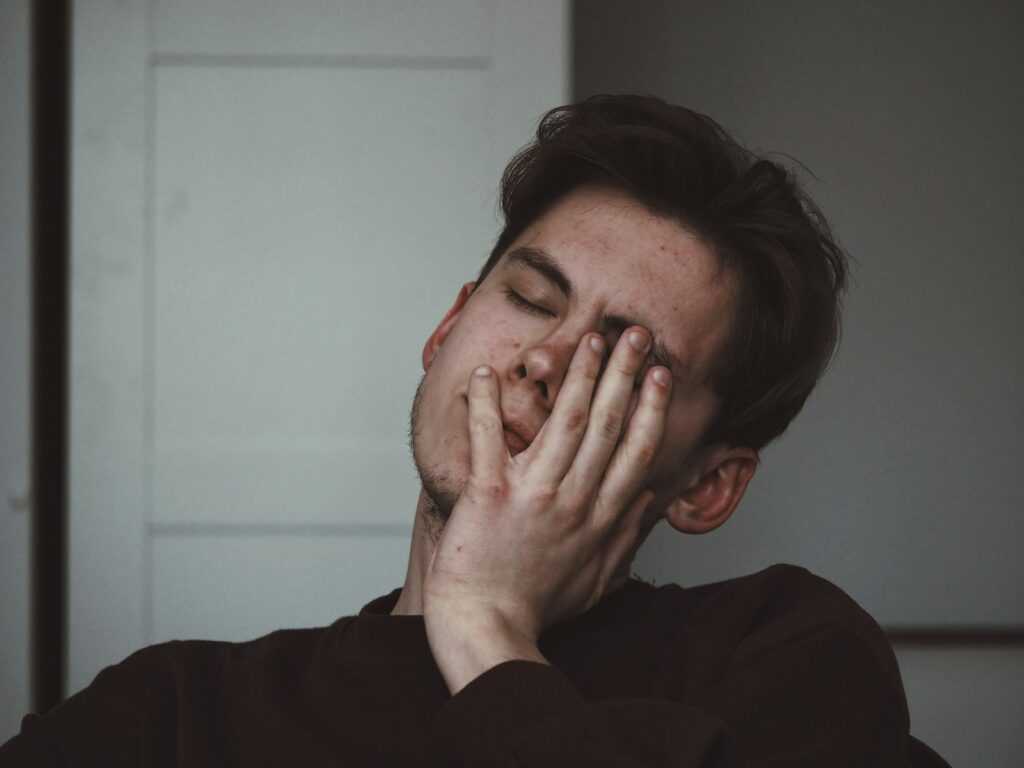
The pattern to recognise: loud snoring, a bed partner noticing you stop breathing, gasp or choke in your sleep, and feeling unrefreshed and sleepy by day – even after a full night in bed.
What obstructive sleep apnoea is
During sleep the muscles that hold your upper airway open relax. In OSA, the airway at the back of the throat narrows or collapses, so airflow stops or drops sharply for several seconds or longer. Blood oxygen falls and the brain responds with a brief arousal that reopens the airway – usually with a snort or gasp. This cycle can repeat many times a night, and because the awakenings are so brief, most people have no memory of them; they simply wake tired. (“Obstructive” distinguishes it from central sleep apnoea, where the problem is the brain’s breathing signal rather than a blockage.)
What makes OSA more than a nuisance is the combination of two stresses on the body: the sleep itself never settles into deep, restorative stages, and the blood oxygen keeps swinging down and back up. Over years, that repeated pattern nudges up the workload on the heart and blood vessels and disrupts the body’s handling of blood sugar and blood pressure. It also explains why the tiredness of OSA feels different from simply not spending enough hours in bed – the hours are there, but the quality is stolen. Because a bed partner often notices the pauses and gasps before the sleeper does, OSA is frequently first flagged by someone else in the household.
Symptoms to look for
- Loud, habitual snoring;
- Breathing pauses, gasping or choking during sleep (usually noticed by a bed partner);
- Excessive daytime sleepiness – nodding off in meetings, while reading, or at the wheel;
- Morning headaches, dry mouth on waking, poor concentration and memory;
- Irritability or low mood, waking unrefreshed, and waking to pass urine (nocturia);
- Reduced sex drive, and a sense that sleep simply isn’t doing its job.
Not everyone who snores has OSA, and snoring on its own – without pauses, gasping or daytime sleepiness – is often just snoring. But when loud snoring travels together with witnessed breathing pauses and heavy daytime tiredness, that cluster strongly suggests OSA and is worth having checked. Presentation can also differ from the classic picture: women may report insomnia-type disturbance, morning headaches or low mood rather than obvious snoring, and in children OSA shows as snoring, restless sleep, mouth-breathing, bed-wetting, poor school performance or daytime behaviour problems. Older adults and slimmer people can be caught out too, because they don’t fit the stereotype and so aren’t suspected.
Who is at risk
Key risk factors include excess weight and obesity (a major driver), male sex, older age, a large neck circumference, and a naturally narrow or crowded airway (a small or set-back jaw, a bulky tongue, or enlarged tonsils and adenoids – especially in children). Nasal blockage (a deviated septum, congestion or allergy), alcohol and sedatives, smoking, and a family history all add to risk. Alcohol and sedatives relax the throat muscles further, so an evening drink or a sleeping tablet can turn mild snoring into frank obstruction; smoking inflames and swells the airway lining. Importantly, OSA is not only a condition of larger people – slim individuals with a crowded airway can have significant OSA too, which is one reason it is so often missed. In Singapore, OSA is common and heavily under-diagnosed, and the same features that raise risk elsewhere apply here.
Why it matters – health and safety
OSA is not just noisy sleep. The repeated oxygen dips and disturbed nights strain the cardiovascular system, and untreated OSA is linked to high blood pressure, heart disease, heart-rhythm problems including atrial fibrillation, stroke and type 2 diabetes, as well as depression. Blood pressure that is hard to control despite medication is sometimes a clue that undiagnosed OSA is sitting underneath. The daytime sleepiness carries its own, more immediate danger – a well-recognised increase in road and workplace accidents. Drowsy driving is a particular concern: micro-sleeps at the wheel can happen without warning, and the risk is easy to underestimate because the tiredness has become normal. If OSA is making you dangerously drowsy, driving becomes a genuine safety issue and you should seek advice promptly rather than pushing through.
How OSA is diagnosed
A doctor starts with your history and symptoms, often using a sleepiness questionnaire (such as the Epworth Sleepiness Scale) and asking about what a bed partner has noticed, then examines the nose and throat to look for narrowing, congestion or enlarged tonsils. Diagnosis is confirmed with a sleep study – either an overnight in-lab test (polysomnography), which records breathing, oxygen levels, heart rate and sleep stages, or, for suitable people, a simpler home sleep test done in your own bed. The study confirms whether OSA is present and grades its severity using the apnoea–hypopnoea index (a measure of breathing events per hour of sleep), which helps guide how intensively to treat. A GP in Singapore can start this assessment and refer you on to a sleep, respiratory or ENT specialist for the study and its interpretation.
Treatment overview
Treatment is tailored to severity and cause, and often combines several approaches. Lifestyle measures help across the board and are the foundation: weight loss if you are overweight, avoiding alcohol and sedatives near bedtime, treating nasal congestion and allergy, stopping smoking, and positional therapy (encouraging side-sleeping) if OSA is worse when you lie on your back. CPAP (continuous positive airway pressure) is the main, gold-standard treatment for moderate-to-severe OSA: a mask worn in sleep delivers a gentle stream of air that splints the airway open, preventing the collapses. For milder OSA, or where CPAP isn’t tolerated, a custom-fitted mandibular advancement (dental) device can hold the lower jaw slightly forward to keep the airway clear. Treating specific nasal or throat problems – congestion, a blocked nose, enlarged tissues – may help on its own or make other treatments work better, and ENT surgery is used in selected cases where anatomy is the main problem. In children, removing enlarged tonsils and adenoids is often effective.
Why treatment and follow-up matter
OSA is a long-term condition, so treatment works best when it is used consistently and reviewed over time. With CPAP in particular, the early weeks matter: getting the mask fit, pressure and comfort right makes the difference between a device that gathers dust and one that restores your sleep, so it is worth going back to your team about dryness, leaks or discomfort rather than giving up. Effective treatment typically eases daytime sleepiness, sharpens concentration and lifts mood, and is aimed at lowering the longer-term strain on the heart and blood vessels. Weight and lifestyle changes can meaningfully reduce severity and, in some people, are part of keeping the condition under control alongside or instead of a device. Regular follow-up lets your doctor check that treatment is still working and adjust it as your weight, health or symptoms change.
Driving and safety
Because untreated OSA can cause sudden, hard-to-resist drowsiness, it is a real driving and workplace-safety issue – not just a matter of feeling tired. If you find yourself fighting sleep at the wheel, nodding off at traffic lights, or having near-misses, do not drive while severely sleepy, and raise it with a doctor promptly. This is especially important for people who drive for a living or operate machinery. The reassuring part is that effective treatment usually improves alertness, and getting assessed is the first step to driving safely again rather than a reason to avoid seeking help.
When to see a doctor
See a doctor if you snore loudly with witnessed pauses, gasping or choking, or if you’re excessively sleepy by day – especially if sleepiness is affecting your driving, work or safety. Also seek advice if you have morning headaches, unrefreshing sleep, difficult-to-control blood pressure, or a bed partner who is worried about your breathing at night. A GP can assess you and refer you to a sleep, respiratory or ENT specialist; reliable general information on sleep and OSA is also available through HealthHub. Untreated OSA raises the risk of heart problems and stroke over time, so it is worth acting on rather than living with.
Related sleep & health topics
- Snoring
- Insomnia
- Shift work sleep disorder
- CPAP therapy
- Sleep study (polysomnography)
- Sleep paralysis
- Sleepwalking & night terrors
- Circadian rhythm disorders
- Jet lag
- Restless legs syndrome
- Narcolepsy
- Sleep & respiratory doctors in Singapore
Sources
- SingHealth — Obstructive sleep apnoea: SG prevalence/under-diagnosis, symptoms, diagnosis, treatment ladder (CPAP, dental devices, surgery, children/tonsils).
- SingHealth Duke-NUS Sleep Centre — sleep-study types and CPAP as primary therapy.
- MOH Singapore — insomnia and OSA as the main sleep conditions treated (SG context).
- HealthHub Singapore — patient information on sleep and obstructive sleep apnoea.
- Mayo Clinic — OSA symptoms, risk factors and complications.