
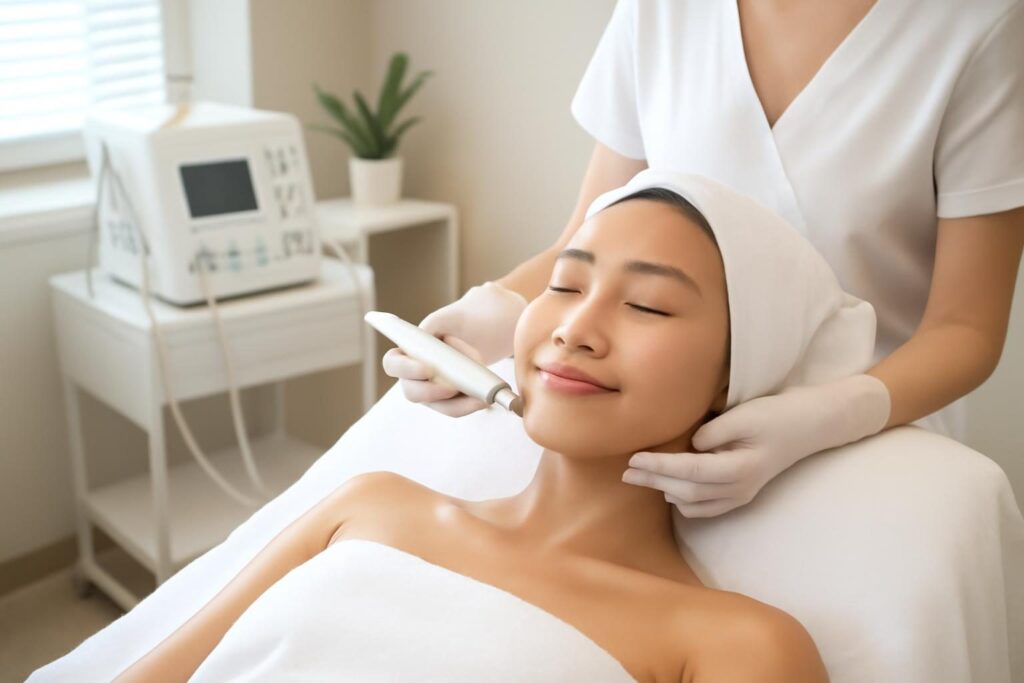
Quick answer. Enlarged pores and oily skin are driven mainly by genetics, high sebum (oil) production, ageing, sun damage and a history of acne — and Singapore’s hot, humid climate makes skin feel oilier. The honest reality: pores can be made to look smaller and skin less shiny, but they cannot be permanently shrunk or eliminated. Good daily skincare does most of the work: a gentle cleanser, sun protection, and ingredients like topical retinoids, niacinamide and salicylic acid (BHA). In-clinic options — chemical peels, lasers and radiofrequency microneedling — can give extra improvement but results are modest and not permanent. These are cosmetic treatments and not MediSave-claimable.
Oily skin and visibly enlarged pores are among the most common skin complaints in Singapore, and the city’s hot, humid climate genuinely makes skin feel oilier and pores look more obvious through the day. It is one of the areas where unrealistic marketing causes the most disappointment.
The honest framing matters here: pores are a normal part of skin anatomy and cannot be permanently closed or eliminated — but their appearance can be minimised, and oiliness can be controlled. This guide covers what actually drives enlarged pores and oily skin, what good skincare can do, and where in-clinic treatments add value (and where they are oversold).
At a glance
| Cause | How it enlarges pores | What helps |
|---|---|---|
| Genetics | Naturally larger pores and oilier skin | Management, not cure; consistent skincare |
| Excess sebum (oil) | Pores stretched and clogged by oil | Retinoids, niacinamide, BHA; oil control |
| Ageing / loss of elasticity | Pores sag and look larger | Retinoids, collagen-stimulating in-clinic treatments |
| Sun damage | Weakens supporting collagen | Daily sun protection; antioxidants |
| Acne history | Inflammation weakens pore openings | Treat acne; retinoids, peels |
What causes enlarged pores and oily skin
Pores are simply the visible openings of oil (sebaceous) glands and hair follicles. They look larger for several reasons that often overlap:
- Genetics: the biggest single factor — some people are simply prone to oilier skin and larger pores.
- High sebum production: more oil stretches and fills the pore, making it look bigger.
- Ageing and sun damage: loss of collagen and elasticity lets pores sag and appear larger.
- Acne and inflammation: repeated clogging and inflammation can permanently widen pore openings.
In Singapore’s humid heat, oil and sweat sit on the skin and pores look more prominent — a real environmental effect on top of these underlying causes.
The honest truth: minimise, not eliminate
This is the single most important point. Dermatology references are clear that treatments aimed at shrinking pores are only modestly effective, and pores cannot be permanently closed — they are a normal structure your skin needs. Anyone promising to “eliminate” or “erase” pores is overselling.
What you can realistically achieve is making pores look smaller and less noticeable, controlling shine, and keeping pores clear so they do not stretch further. Think of it as ongoing management, like managing oily skin, rather than a one-off cure. Consistency over months matters far more than any single “miracle” treatment.
Skincare that actually helps
For most people, a steady skincare routine does the heavy lifting:
- Topical retinoids (e.g. retinol, prescription tretinoin): among the best-evidenced ingredients for refining pore appearance and texture over months.
- Niacinamide: helps regulate oil and improves how pores look, though it does not physically shrink them.
- Salicylic acid (BHA): oil-soluble, helps keep pores clear of the debris that makes them look bigger.
- Gentle cleansing: twice daily; harsh scrubbing and over-stripping can backfire by triggering more oil and irritation.
- Daily sun protection: protects the collagen that keeps pores tight — essential in sunny Singapore.
Introduce active ingredients gradually to avoid irritation, and give any routine 8–12 weeks before judging it.
In-clinic treatments
When skincare alone is not enough, in-clinic options can add modest, temporary improvement — not permanence:
- Chemical peels: exfoliate and help keep pores clear and skin smoother.
- Lasers (e.g. fractional, non-ablative): can improve pore appearance and texture by stimulating collagen.
- Radiofrequency microneedling: stimulates collagen to firm skin around pores.
- Other procedures (e.g. certain injectables) are sometimes used but are off-label and not first-line.
In darker Asian skin, lasers and energy devices carry a risk of post-inflammatory hyperpigmentation; choose an accredited doctor using HSA-approved devices, with conservative settings and good sun protection. Results require maintenance — pores gradually return to baseline without ongoing care.
Realistic expectations and cost
Set goals around improvement and control, not erasure. Realistic outcomes are smaller-looking pores, less visible shine, and clearer skin — maintained with consistent skincare and, optionally, periodic in-clinic sessions.
- Manage the cause first: treat acne, control oil and protect from the sun before chasing aggressive procedures.
- Be wary of “permanent pore removal” claims — they are not realistic.
- In-clinic treatments are cosmetic and not MediSave-claimable; costs vary by clinic, device and number of sessions, so ask for a written estimate.
Building a simple daily routine
Consistency matters far more than any single product. A practical routine is a gentle cleanser twice a day, a leave-on active such as niacinamide or a salicylic acid (BHA) product, a lightweight non-comedogenic moisturiser, and daily sun protection. Many people add a retinoid at night, starting two to three times a week and building up slowly to limit irritation. Introduce one new active at a time, and give any routine 8 to 12 weeks before judging whether it helps. Resist the urge to over-cleanse or scrub harshly, as stripping the skin can trigger more oil and redness.
What to expect at a clinic consultation
If you see a doctor, they will look at your skin type, assess any acne or sun damage, and discuss realistic goals, namely improvement and control rather than erasing pores. They may suggest a tailored skincare plan first, and in-clinic options such as chemical peels, lasers or radiofrequency microneedling only where these add value. In darker Asian skin, energy devices carry a risk of post-inflammatory hyperpigmentation, so expect conservative settings, possibly a test patch, and strict sun protection. These treatments are cosmetic and not MediSave-claimable, and results need maintenance.
Common questions
Can pores be permanently shrunk?
No. Pores are a normal part of skin anatomy and cannot be permanently closed or removed. Their appearance can be minimised, and oiliness controlled, with consistent care. Be wary of any clinic promising to erase pores.
Does oily skin still need moisturiser?
Yes. Skipping moisturiser can make skin produce more oil to compensate. Choose a lightweight, non-comedogenic formula.
Will drinking more water shrink my pores?
General hydration is good for health, but it does not shrink pores. Targeted skincare and sun protection do more for pore appearance.
Related guides
- Best Aesthetic Clinics in Singapore — our editorial shortlist
- aesthetic clinics directory
- Dark eye circles & eyebags
- Tattoo removal
- Stretch marks
Sources
- DermNet – Enlarged pores
- DermNet – Oily skin (seborrhoea)
- HSA – Medical devices (aesthetic lasers and energy devices)
- American Academy of Dermatology – How to control oily skin
Related conditions & guides
Related conditions and guides you may find useful:
- Acne Scar Treatment in Singapore
- Acne Treatment in Singapore
- Melasma Treatment in Singapore
- Skin Pigmentation Treatment in Singapore
Part of our Aesthetic treatments guides · Browse all health topics