
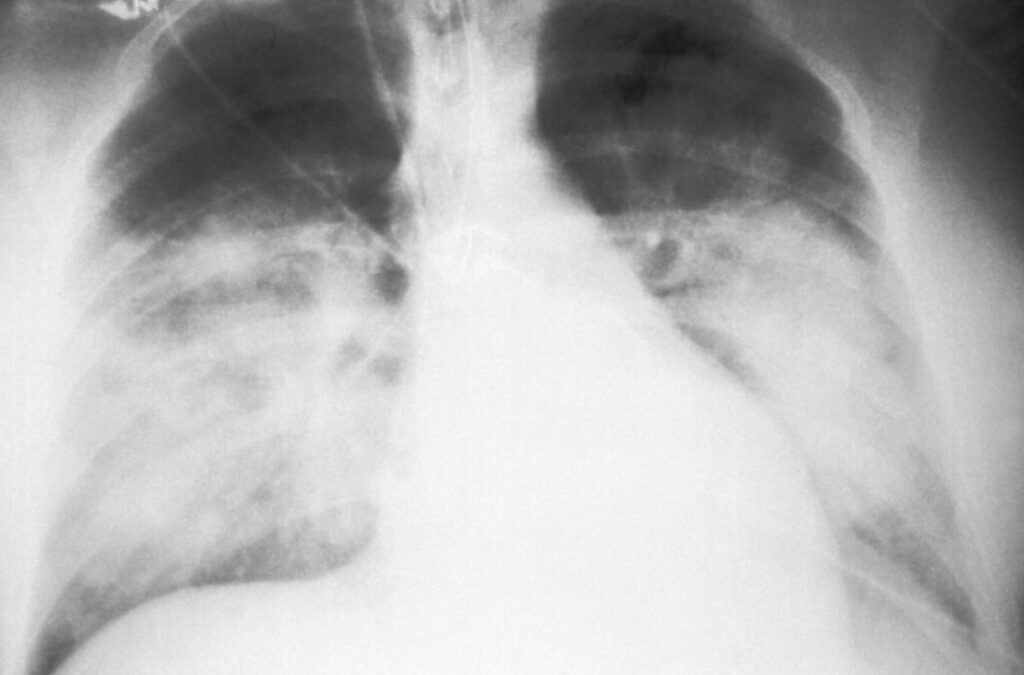
Quick answer. Bronchiectasis is a long-term condition in which the airways become permanently widened and scarred, leading to a chronic productive cough and repeated chest infections; it is managed with airway clearance, treating infections and addressing the underlying cause under a respiratory physician.
Breathless, wheezy, or living with a persistent cough?
Message our care team on WhatsApp. Tell us what’s going on and we’ll help you find the right best respiratory & lung clinic — free, with no obligation.
Chat with our care team on WhatsAppNot sure who to see? Find the right specialist →
In a medical emergency, or for severe or sudden symptoms such as breathing difficulty, chest pain, fainting or stroke signs, call 995 immediately.
Bronchiectasis is a chronic lung condition in which one or more of the airways (bronchi) become abnormally widened, thickened and damaged. These damaged airways struggle to clear mucus, so secretions pool, become infected, and cause further inflammation and damage in a repeating cycle.
The result is typically a long-standing cough that brings up phlegm, along with recurrent chest infections. While bronchiectasis cannot usually be reversed, the right management can control symptoms, reduce flare-ups and protect lung function over time.
At a glance
| Aspect | What happens | Management aim |
|---|---|---|
| Airways | Permanently widened and scarred | Slow further damage, treat the cause |
| Mucus | Builds up and is hard to clear | Daily airway clearance to move secretions |
| Infections | Recurrent chest infections / flare-ups | Prompt antibiotics, monitor sputum |
| Symptoms | Chronic productive cough, breathlessness | Reduce symptoms and exacerbations |
What bronchiectasis is
In healthy lungs, the airways are lined with tiny hair-like structures (cilia) and a thin layer of mucus that trap and sweep out germs and debris. In bronchiectasis, repeated injury and infection damage this lining and widen the airways. The widened, scarred airways no longer clear mucus efficiently, so secretions collect and become a breeding ground for bacteria.
This sets up a ‘vicious cycle’ of mucus retention, infection, inflammation and progressive airway damage. Breaking this cycle is the central goal of treatment.
Symptoms
- A persistent cough that produces phlegm (sputum), often daily
- Bringing up large amounts of mucus, sometimes thick, green or yellow
- Recurrent chest infections that need antibiotics
- Breathlessness and wheezing
- Tiredness and reduced exercise tolerance
- Occasionally coughing up blood (haemoptysis)
Symptoms tend to fluctuate, with periods of relative stability interrupted by ‘flare-ups’ (exacerbations) when the cough, phlegm and breathlessness worsen.
Causes and risk factors
Bronchiectasis can follow a severe or repeated lung infection, such as pneumonia, whooping cough, or previous tuberculosis. Other causes include immune system problems, conditions that impair mucus clearance (such as cystic fibrosis or primary ciliary dyskinesia), inhaled foreign objects, allergic reactions in the airways, and certain autoimmune or inflammatory conditions.
In many people no single cause is found. A respiratory physician will often run tests to look for a treatable underlying cause, because addressing it can change the course of the disease.
How it is diagnosed
Diagnosis usually involves a detailed history and a high-resolution CT (HRCT) scan of the chest, which shows the widened airways and confirms bronchiectasis. Additional tests may include lung function tests (spirometry), sputum samples to identify bacteria, blood tests to check the immune system, and other investigations to search for an underlying cause.
Treatment and airway clearance
The cornerstone of day-to-day management is airway clearance to help move mucus out of the lungs. Techniques include the active cycle of breathing technique, postural drainage, and devices such as positive expiratory pressure (PEP) devices or oscillating devices. A physiotherapist can teach a routine tailored to you. Regular exercise and staying well hydrated also help.
Other elements of care include prompt antibiotics for chest infections, sometimes longer or preventive antibiotic strategies in selected patients, vaccinations (such as influenza and pneumococcal vaccines), and treating any underlying cause. The aim is to reduce flare-ups and preserve lung function.
When to see a respiratory physician and red flags
See a doctor if you have a cough that brings up phlegm most days for weeks, repeated chest infections, or breathlessness that is getting worse. A respiratory (lung) physician can confirm the diagnosis, look for the cause and set up an airway-clearance and treatment plan.
Seek prompt care if a flare-up is severe, if you develop a high fever or rapidly worsening breathlessness, or if you cough up more than a small amount of blood. Coughing up a large volume of blood is a medical emergency – go to the emergency department or call 995.
Self-management at home
Day-to-day habits make a real difference in bronchiectasis. Set aside time once or twice a day for your airway-clearance routine, ideally when you are not rushed, and do it consistently even on good days. Staying well hydrated keeps mucus thinner and easier to move. Regular physical activity, such as brisk walking, helps clear the airways and maintains fitness, and a physiotherapist can suggest exercises suited to you. If you smoke, stopping is one of the most protective steps you can take, and avoiding smoky or dusty environments also helps.
Keep up recommended vaccinations, including the seasonal influenza vaccine and pneumococcal vaccination, to lower the risk of chest infections. Practise good hand hygiene and try to avoid close contact with people who have respiratory infections, especially during flare-up-prone periods.
Recognising and managing flare-ups
Learn your usual baseline, the normal colour, thickness and amount of your phlegm, so you can spot a flare-up early. Warning signs include phlegm becoming darker, thicker or more copious, increased breathlessness, new fever, or feeling generally more unwell. Some patients agree a self-management or ‘rescue’ plan with their respiratory team, including when to start a standby course of antibiotics and when to seek review. Always complete any prescribed antibiotic course fully. Keeping a record of infections and what was prescribed helps your doctor refine your plan over time.
What to expect at the clinic
At appointments, your doctor may ask about your cough, phlegm and how often you get infections, listen to your chest, and review sputum results and lung function tests. Bring a list of your medicines, your inhaler or airway-clearance devices, and notes on any recent flare-ups. Follow-up usually focuses on reducing exacerbations, ensuring your clearance technique is effective, and checking for any underlying cause that can be treated.
Costs and care in Singapore
Care for bronchiectasis is usually provided by respiratory clinics in public or private settings. Eligible Singapore Citizens and Permanent Residents receive subsidised rates at public hospitals and polyclinics, and any hospital admission for a severe flare-up may be claimable under MediShield Life and, where applicable, MediSave. Ask your clinic about costs and any assistance schemes you may qualify for, and a medical social worker can help if affordability is a concern.
Common questions
Is bronchiectasis the same as COPD?
No, although they can occur together and share some symptoms. Bronchiectasis involves permanently widened, scarred airways that struggle to clear mucus, and it has its own management approach centred on airway clearance.
Will I need antibiotics all the time?
Not usually. Most people take antibiotics only for flare-ups, but some patients with frequent infections may be offered a longer or preventive antibiotic strategy under specialist supervision.
Can bronchiectasis be cured?
The airway damage cannot usually be reversed, but good management controls symptoms, reduces flare-ups and helps protect lung function over time.
Related guides
- Best Respiratory & Lung Clinics in Singapore — our editorial shortlist
- Tuberculosis (TB)
- Pulmonary Embolism
- Pleural Effusion
Sources
- SingHealth – Conditions & Treatments
- HealthHub – Health Conditions A-Z
- Ng Teng Fong General Hospital – Respiratory Medicine
- Mount Elizabeth – Respiratory (Pulmonary) Medicine
Part of our Lungs, breathing, allergy & sleep guides · Browse all health topics