
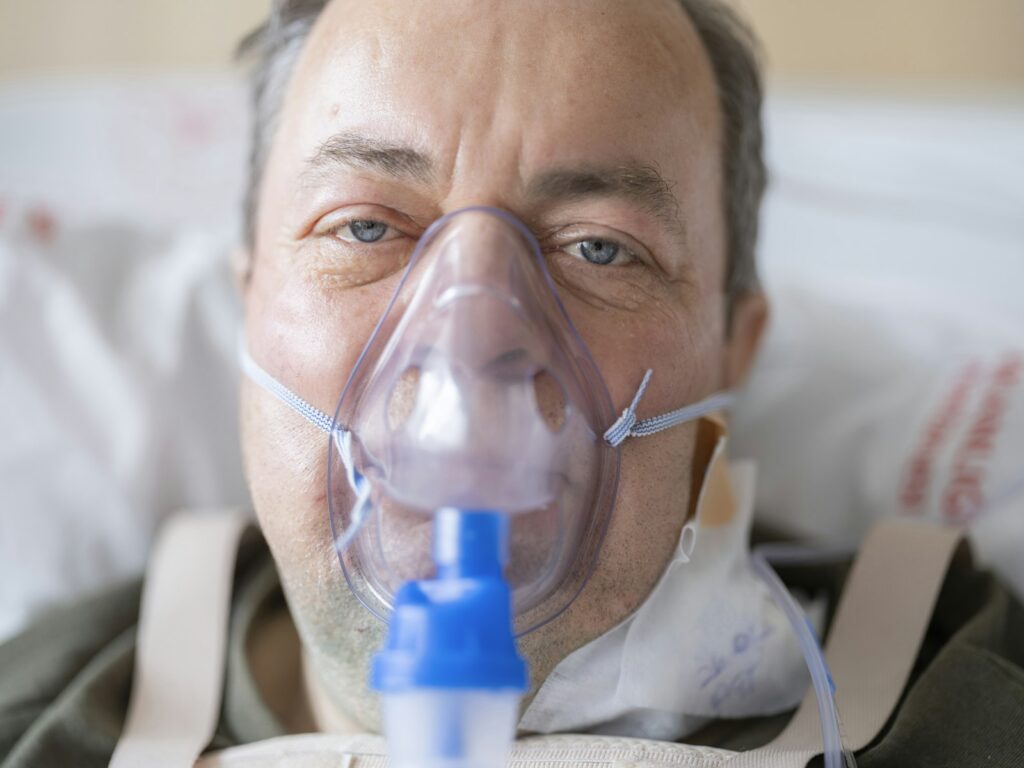
Quick answer. MND weakens the muscles used to breathe and cough – the lungs themselves are usually healthy. This causes breathlessness (first on exertion, then lying flat), a weak cough, and night-time under-breathing (poor sleep, morning headaches, daytime sleepiness). Non-invasive ventilation (NIV) – a machine supporting your breathing through a mask, usually at night first – is the key treatment and can relieve symptoms and improve quality of life. Crucially, oxygen alone is generally not the answer and can be harmful in MND, so do not self-treat breathlessness with oxygen – seek specialist respiratory assessment. Call 995 for severe breathlessness or choking. This is general information, not a diagnosis.
Troubled by headaches, dizziness, numbness or memory changes?
Message our care team on WhatsApp. Tell us what’s going on and we’ll help you find the right neurologist — free, with no obligation.
Chat with our care team on WhatsAppNot sure who to see? Find the right specialist →
In a medical emergency, or for severe or sudden symptoms such as breathing difficulty, chest pain, fainting or stroke signs, call 995 immediately.
Why MND affects breathing
An important thing to understand is that MND affects breathing by weakening the muscles that move air – the diaphragm and chest-wall muscles – and the muscles used to cough. The lungs themselves are usually healthy; the problem is the effort and strength of breathing, not lung disease. This is different from conditions such as COPD or those needing home oxygen, and it explains why the support is help with the work of breathing (ventilation) rather than treatment of the lungs. It also explains the crucial safety point about oxygen, below. Breathing changes are monitored over time so support can be offered at the right moment.
What breathing weakness looks like
Respiratory muscle weakness in MND shows up in three main ways. First, breathlessness – at first on exertion, then when lying flat (so you may need to prop up), and later at rest. Second, a weak cough, which makes it harder to clear secretions and raises the risk of chest infections. Third, and easily missed, night-time under-breathing, because the breathing muscles weaken most during sleep – the early signs are poor or disturbed sleep, morning headaches, daytime sleepiness, poor concentration, and fatigue. These night-time signs are often the first indication of respiratory involvement, so it is worth reporting them to your team, who monitor breathing with regular tests.
Non-invasive ventilation (NIV)
Non-invasive ventilation (NIV) is the key intervention, and it is a supportive, symptom-relieving treatment – not a last resort. It is a machine that gently supports your breathing through a mask (over the nose, or nose and mouth), assisting the weakened muscles, and it is usually started at night first, sometimes extended to daytime use later. NIV can relieve breathlessness, improve sleep, ease morning headaches and daytime fatigue, and improve quality of life, and for many people it helps them live more comfortably. It is a personal choice, introduced and adjusted by the respiratory team, who spend time getting the mask and settings comfortable and review them as needs change.
Why oxygen is not the answer
This is the single most important safety point in this guide. In MND, the breathing problem is weak muscles not moving enough air out, so carbon dioxide (CO2) builds up – it is not simply a lack of oxygen. Because of this, giving oxygen alone can be harmful: it can worsen the CO2 build-up and cause drowsiness, confusion and dangerous deterioration. So people with MND should not self-treat breathlessness with home or bottled oxygen. The correct response to breathlessness is a specialist respiratory assessment, and usually NIV, which supports the muscles. Oxygen is used only rarely and with great care, under specialist guidance. If you are breathless, ask for a respiratory assessment – do not reach for oxygen.
Cough support and chest infections
Because the cough is often weakened, clearing secretions and preventing chest infections matters. Assisted cough techniques (such as breath-stacking or manually-assisted coughing, taught by a physiotherapist) and cough-assist machines help clear secretions and reduce infection risk. Secretion problems can go both ways – thick, sticky mucus or thin, excess saliva – and the team manages each differently. To lower infection risk, keep up vaccinations (flu, pneumococcal and COVID), use the clearance techniques you are taught, and treat infections promptly. Agree a plan with your team so you know the warning signs and who to call – catching a chest infection early is important when the cough is weak.
Tracheostomy ventilation
In some situations, breathing can be supported longer-term through a tracheostomy – a tube placed in the windpipe and connected to a ventilator. This is a major and deeply personal decision, with significant implications for care and daily life, and it is discussed carefully with your respiratory, MND and palliative teams, in the context of your own wishes. It is one option among others, and not the right path for everyone; the planning-ahead guide in this series covers making such decisions in advance. The site’s tracheostomy guides describe what living with a tracheostomy involves, if you would like to understand that option in more detail.
Support in Singapore and red flags
In Singapore, breathing is assessed and supported through the respiratory team and services such as the Home Ventilator and Respiratory Support Service (HVRSS), which provides home-based ventilation support, mask fitting and carer training, working alongside the MND clinic at the National Neuroscience Institute (NNI). Contact your team promptly if breathlessness is worsening, you are breathless at rest or lying flat, you have new morning headaches or severe daytime sleepiness, or you have signs of a chest infection. Call 995 for severe breathlessness or choking. And, above all, do not self-administer oxygen for breathlessness – seek a respiratory assessment, as breathing is supported in other ways.
Related MND topics
- Living with motor neurone disease
- Understanding symptoms & diagnosis
- Treatment & managing symptoms
- Mobility & daily living
- Communication & speech
- Eating, swallowing & nutrition
- Emotional wellbeing
- Caring for someone with MND
- Planning ahead
- MND overview
- Living with a feeding tube
- Advance care planning
- Neurologists in Singapore
Sources
- NHS – Motor neurone disease treatment: nhs.uk
- NHS – Motor neurone disease: nhs.uk
- NHS – Motor neurone disease symptoms: nhs.uk